The Last Curtain
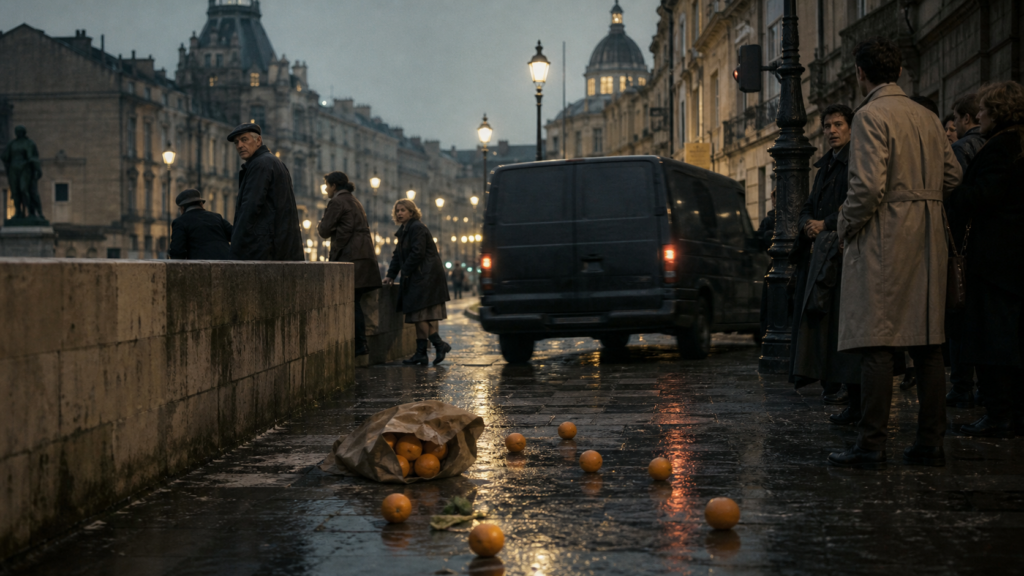
Theatre students are dangerous.
They possess enough philosophy to become fearless and not quite enough life to become cautious. We had all read Artaud. Half of us had read Boal. None of us had read the municipal criminal code.
Looking back, that now seems less an educational oversight than a structural flaw in the curriculum.
We believed theatre should leave the theatre.
We said this often, usually inside theatres.
We said it in rehearsal rooms, university cafés, borrowed apartments, and once in a laundromat where Elsa stood on a washing machine and declared that the bourgeois stage had domesticated human suffering. A woman folding children’s clothes asked her to get down.
The woman was correct, but we considered her hostile to innovation.
I was twenty-four, which is an age at which humiliation feels temporary and conviction feels permanent. I had no money, no particular talent for administration, and a face directors described as “interesting,” a word actors recognize as the humane alternative to several others.
My name is Martin Vale.
That was also my name then, although for nine months I insisted on being credited as M. Vale because I believed ambiguity suggested depth. It suggested poor typesetting.
I am seventy-one now.
I live alone in a small house near the sea, where the wind has spent years trying to remove the roof and may eventually succeed. My knees object to stairs. My daughter calls every Sunday unless we have argued, in which case she calls Monday and behaves as though the delay were coincidental. I teach no classes, direct no plays, attend no openings, and have finally reached the position every young artist secretly desires: I am no longer expected anywhere.
For nearly fifty years, people have asked me one question.
When should you have stopped?
The police asked it.
The newspapers asked it.
The judge asked it in language sufficiently ornate to become legally binding.
My wife asked it before she left me.
My daughter asked it when she was sixteen and learned from a documentary that her father had once helped manufacture a murder.
I have supplied many answers.
After the first argument.
Before the knife.
When the body disappeared.
When the police arrived.
When they arrested Peter Lang.
Before the trial.
During the trial.
After the verdict.
All are correct.
None is honest.
The honest answer is that we should have stopped the moment we discovered it was working.
That is the difficulty with artistic experiments. Failure has an obvious ending. Success requires character.
We had none.
Our company called itself Common Ground.
The name was Elsa’s. She said theatre had become private property and we intended to return it to the public. Noah preferred The Immediate Collective, which sounded to me like either a revolutionary cell or a parcel service. Simon wanted no name at all because names, he argued, imposed hierarchy.
Simon later designed the logo.
There were seven of us.
Elsa Weiss directed, although she rejected the title and asked to be called the instigator. She was twenty-six, severe, brilliant, and incapable of entering a room without making the furniture appear politically compromised. She wore men’s shirts, cut her own hair, and smoked black cigarettes she could not afford.
Simon Arendt was our theorist, which meant he performed rarely and objected constantly. He had a gentle voice and the moral confidence of a firing squad. He could transform a practical question—Where should we put the chairs?—into a forty-minute inquiry concerning colonial space.
Noah Bell was the best actor among us and knew it. He was handsome in a way that embarrassed ordinary men and delighted photographers. He could cry without damaging his diction. We resented him for possessing the exact gifts we claimed not to value.
Mara Levin was small, quick, and frighteningly observant. She could become invisible in a crowd and then, with a single change in posture, command it. She remembered everything anyone said and forgave very little.
David Koenig handled props, costumes, vehicles, and all those vulgar physical facts without which pure artistic intention tends to remain seated. He had left engineering school after deciding bridges were less important than human connection. He later returned to engineering. Bridges, he told me, were easier.
Jonas Reed was the youngest. Nineteen. Nervous, eager, beautiful in the unfinished way of boys who have not yet learned what their faces will cost them. We protected him, encouraged him, exploited him, and called the combination mentorship.
And then there was me.
I believed in everyone.
This is not self-praise. Belief is often a failure of discrimination.
I believed Elsa could remake theatre. I believed Simon’s arguments were difficult because they were profound. I believed Noah’s vanity was merely the tax levied on beauty. I believed Mara saw people clearly because she loved them. I believed David could build anything. I believed Jonas would become great.
I believed strangers were decent.
That last belief was true.
It caused most of the trouble.
Our first performances were small.
On a city bus, Mara accused me of stealing her wallet.
The scene began quietly. She checked her coat, her bag, the floor. I stood beside her, reading a newspaper. She asked whether I had seen anyone near her seat.
I said no.
She looked at my pocket.
“Is that mine?”
I laughed.
She reached for it.
I pulled away.
Within thirty seconds, everyone on the bus was watching.
Within forty-five, a man in work clothes stood and said, “Give it back.”
A woman near the door told the driver not to open it.
An elderly passenger offered Mara her phone.
The driver stopped the bus and came down the aisle.
I returned the wallet.
Mara began to cry.
The man in work clothes gripped my shoulder.
Hard.
“Apologize.”
I did.
At the next stop, Mara and I got off separately. We met two streets later in a café where the others waited.
We were ecstatic.
“They intervened,” Jonas said.
“Immediately,” said Elsa.
“The social body recognized injustice and reorganized itself,” Simon said.
“He nearly broke my shoulder,” I said.
“Exactly,” Elsa replied.
I had not meant it as praise.
Our first mistake was believing audiences were passive.
Our second was discovering they weren’t.
We performed in supermarkets, restaurants, train stations, parks, department stores, queues, elevators, and once inside a bank, where Simon staged a moral crisis involving a lost envelope and nearly triggered a silent alarm.
We did not announce ourselves.
There was no curtain, no stage, no applause, no moment at which the public was reassured that the angry husband, crying waitress, frightened immigrant, abandoned child, or collapsing pensioner had been fictional.
That reassurance, Elsa argued, was the narcotic of traditional theatre.
“People care because they believe it is real,” she said. “Then the curtain falls and absolves them.”
We wanted no absolution.
Neither, as it turned out, did the prosecutor.
In our second bus piece, Noah insulted Jonas for sitting beside him. The insult was not explicitly racial, but it carried the familiar architecture of exclusion: You people. Your kind. Go back.
Jonas’s mother was Jamaican. His father was English. He had agreed to the scene after three rehearsals and one argument about whether simulated racism reproduced the violence it intended to expose.
The passengers reacted before Noah reached the third line.
A woman in a green coat told Noah to shut his mouth.
A young man stood between them.
The driver threatened to remove Noah from the bus.
Then Jonas, shaken by the force of their defense, forgot the agreed ending and said, “It’s all right. We’re actors.”
Silence.
Not relief.
Betrayal.
The woman in the green coat stared at him.
“You made us believe that?”
“It was theatre,” Noah said.
“No,” she replied. “It was lying.”
We discussed her response for weeks.
Simon called it evidence that bourgeois spectators demanded moral innocence.
Mara called it evidence that we were cowards.
Elsa eliminated all reveals after that.
“The performance ends when the actors disappear,” she said.
“What about the audience?” I asked.
“They continue it.”
This sounded beautiful.
Most dangerous ideas do.
The pieces grew more ambitious.
Mara slapped Noah in a crowded restaurant after accusing him of sleeping with her sister. A waiter intervened. Two diners tried to comfort her. One followed Noah outside and told him he was a disgrace.
Elsa and Jonas staged a mother-son argument in a hospital corridor until a nurse threatened to call security.
Simon pretended to discover that a grocer had shortchanged an elderly immigrant. Customers took sides. Someone overturned a basket of oranges.
We learned how quickly the public organized itself around incomplete information.
We also learned that people wanted to help.
They offered witnesses.
They stood between bodies.
They shared phones, coats, money, advice, water, indignation.
We had spent years accusing society of indifference. Looking back, society was the only participant that consistently behaved with integrity.
The embarrassment of discovering that strangers are better than your theory is difficult to describe.
We converted it into funding.
A small arts foundation gave us a grant. A critic wrote that Common Ground had “reanimated the political nervous system of public space.” Simon quoted the sentence so often that it ceased to belong to the critic.
A filmmaker recorded rehearsals.
A university invited Elsa to speak.
People began recognizing Noah, which made invisible theatre difficult for him and fame difficult for the rest of us.
Success changed us in ordinary ways while we insisted the changes were radical.
We held longer meetings.
We acquired stationery.
Simon began using the phrase “our methodology.”
Elsa stopped asking what we thought and began asking whether we understood.
I fell in love with Mara.
This was not directly related to the work, though at twenty-four I considered love a collaborative practice.
Mara did not.
“We sleep together,” she said. “You write monologues about it.”
“I have never written a monologue about us.”
“You left it on my kitchen table.”
“It wasn’t finished.”
“That was the best thing about it.”
She loved me, I think. Perhaps not then. Perhaps later. Perhaps intermittently, which may be the only form of love honest enough to survive memory.
We were all performing in our private lives by then.
Noah performed generosity.
Elsa performed certainty.
Simon performed doubt, though only concerning other people.
I performed emotional intelligence.
Mara performed that she required none of us.
Jonas performed adulthood.
David, who understood machinery, watched us with the patient alarm of a man hearing a dangerous engine knock.
One night, after a performance in which Noah pretended to strike Mara outside a cinema, David said, “Someone’s going to get hurt.”
“Someone almost always gets hurt,” Elsa replied.
“I mean badly.”
“That possibility is what gives the work truth.”
“No,” David said. “It gives the work a possibility.”
He looked at me.
I looked away.
This is one of the privileges of youth: warnings arrive wearing the faces of people you already disagree with.
The murder began as a joke.
Not a funny joke. An artistic joke, which is often a joke whose victims are denied laughter.
We were sitting in Elsa’s apartment after midnight. The room smelled of wine, cigarettes, and wet wool. A storm rattled the windows. Simon had spent an hour arguing that our scenes ended too neatly.
“The intervention closes them,” he said. “A stranger steps in. Moral order is restored. Everyone leaves satisfied.”
“People have been punched,” David said.
“Closure can be violent.”
“What would count as no closure?” Jonas asked.
Noah, stretched across the floor, said, “A murder.”
Everyone laughed.
Then Elsa didn’t.
I remember that.
Her face changed very slightly. Not excitement. Recognition.
“No body,” she said.
Noah sat up.
“What?”
“A murder in public. Witnessed. But before the authorities arrive, the body disappears.”
Simon leaned forward.
“The event remains unresolved.”
“The witnesses carry it,” Elsa said.
Mara put down her glass.
“No.”
It was the first word of wisdom spoken that evening.
Elsa looked at her. “Why?”
“Because the police won’t treat it as theatre.”
“That is precisely—”
“No. Don’t say precisely. They will investigate.”
“For how long?” Jonas asked.
Nobody answered.
Noah smiled. “There’s the piece.”
We should have laughed again.
We should have gone home.
Instead, Simon began taking notes.
The plan developed over six weeks.
A public square after dusk.
Noah and I would argue near the fountain. The subject would be money. He would accuse me of betraying him. I would push him. He would pull a knife. We would struggle.
Jonas would scream.
Mara, already among the crowd, would call for help.
Noah would stab me.
I would fall behind a low stone wall beside the service lane.
David would drive an unmarked van through the lane, obscuring the view for seven seconds. Noah would flee through the arcade. David and Jonas would load me into the van through the side door.
When the vehicle moved, the body would be gone.
There would be blood.
There would be witnesses.
There would be no victim.
We called the piece The Absence.
Titles are how artists make bad ideas look inevitable.
“Why Martin?” David asked during rehearsal.
“Because I’m the right height for the wall.”
This was true.
Also, Noah was too recognizable to vanish. Jonas had classes. Simon refused, arguing that his disappearance would alter the conceptual authorship of the piece. Elsa needed to observe. Mara had suggested the knife fight but later denied doing so.
I agreed because I wanted to be central.
That is the humiliating explanation.
I spoke of sacrifice, vulnerability, the actor’s body as evidence, the disappearance of the performer into social memory. I meant some of it.
Mostly, I wanted the work to be impossible without me.
Mara objected.
“People will think you’re dead.”
“For a few hours.”
“You don’t know that.”
“We’ll reveal it.”
“When?”
“After we see what happens.”
She stared at me.
“That isn’t an answer.”
“It’s the experiment.”
“It’s cowardice with a schedule.”
I kissed her.
This was how men ended difficult conversations before women learned to stop allowing it.
She pulled away.
“If you do this, I’m not helping.”
“You’re already in the piece.”
“Then replace me.”
Elsa did.
A former student named Claire made the emergency call from a pay phone and disappeared before police arrived.
The performance took place on November 14.
I remember the date because it later appeared on every document connected to my life.
The square was crowded. A concert had ended nearby. People crossed beneath the streetlamps in coats and scarves. Vendors were closing their stalls. A light rain had begun, polite enough to appear atmospheric.
Noah waited by the fountain.
I approached.
We had rehearsed the argument twenty-three times.
That evening it felt different.
Not more real.
Less controlled.
“You took it,” Noah said.
“Keep your voice down.”
“You think I’m stupid?”
People turned.
“You said you’d pay it back.”
“I said I would try.”
“That money wasn’t mine.”
“I know.”
“Then whose was it?”
I hesitated.
That was rehearsed.
Noah stepped closer.
“Whose?”
A couple stopped beside the fountain.
A woman carrying shopping bags slowed.
Jonas stood near the arcade, watching.
“Go home,” I said.
Noah shoved me.
The couple moved closer.
I pushed him back.
He reached into his coat.
The knife was a stage blade altered by David. The blood pack sat beneath my shirt.
Noah lunged.
I caught his wrist.
We struggled.
Someone shouted.
The blade struck my chest.
The blood pack burst warm across my ribs.
I fell.
The woman dropped her shopping bags.
Oranges rolled across the pavement.
That detail has survived everything.
The sirens, the trial, the years, my children, Mara’s death, my own declining memory—still I see the oranges rolling through the rain.
Noah stood over me, staring at the knife.
For one second, he forgot to run.
Then the crowd moved.
A man grabbed him.
Noah struck him and broke free.
Mara—who had come despite refusing—was among the witnesses. She screamed at Noah to stop. I heard her voice break.
The van entered the lane.
David braked.
Jonas opened the side door.
They lifted me.
A stranger seized Jonas’s coat.
“What are you doing?”
Jonas shouted, “Hospital!”
The stranger tried to climb into the van.
David drove.
The door slammed shut.
I lay on the metal floor, covered in theatrical blood, while Jonas laughed and sobbed at once.
“It worked,” he said.
David looked at me through the mirror.
“No,” he said.
Behind us, the square disappeared.
We drove to a warehouse outside the city.
Elsa and Simon were waiting.
Noah arrived twenty minutes later, bleeding from his mouth.
“Someone hit me,” he said.
Elsa embraced him.
“You were extraordinary.”
He pushed her away.
“Did anyone follow?”
“No.”
“Police were coming.”
“Good.”
“Good?”
“This is the event.”
David turned on her.
“There are witnesses. They think Martin is dead.”
“Yes.”
“They saw the van.”
“We planned the van.”
“They saw Jonas.”
“We planned Jonas.”
“No,” David said. “We planned shapes. We planned reactions. Those were people.”
Simon lit a cigarette.
“The distinction is sentimental.”
David crossed the room so quickly Simon stepped back.
“Say that again.”
I sat on a folding chair and wiped blood from my neck.
The warehouse was cold.
My hands were shaking.
Mara arrived last.
She entered, looked at me, and slapped me.
Not theatrically.
The sound silenced everyone.
“You’re alive,” she said.
“Yes.”
She struck me again.
I did not stop her.
“People tried to save you.”
“I know.”
“No, you don’t.”
She turned to Elsa.
“It ends now.”
Elsa looked at the clock.
“Now would mean nothing.”
“What does that mean?”
“We reveal it immediately, and it becomes a stunt.”
“It is a stunt.”
“It becomes only a stunt.”
“There is no ‘only’ left.”
Simon said, “We need to observe the secondary response.”
Mara laughed.
It was not a pleasant sound.
“You mean the investigation.”
“Yes.”
“For how long?”
“A day.”
Elsa said this.
One day.
I want that preserved.
We did not decide to maintain the lie through the trial. We decided on one day.
Most moral catastrophes begin as temporary arrangements.
I spent the night in a back room on a mattress beside boxes of lighting equipment. I could not call anyone. I could not go home. The police might be watching the apartment. My mother lived in another country and would not hear the news immediately.
Mara sat with me until dawn.
Neither of us spoke for a long time.
Finally she said, “Were you frightened?”
“When?”
“When you fell.”
“Yes.”
“Good.”
She left before sunrise.
By morning, the murder dominated local news.
Witnesses described the fight.
A photograph showed Noah running from the square.
Another showed the van.
The man who tried to climb inside told reporters he believed the body had been abducted.
Police appealed for information.
Hospitals reported no matching patient.
The blood on the pavement was collected.
It was animal blood, purchased from a butcher.
David had warned us this could be traced.
Elsa called it a necessary ambiguity.
At noon, we met.
“Now,” Mara said.
Simon objected.
“We have not yet seen institutional response.”
“The police are the institutional response.”
“They are still framing the event.”
“They think Martin has been murdered.”
“That is their interpretation.”
David threw a chair.
Not at Simon.
Near him.
This distinction became important during later testimony.
Elsa proposed forty-eight hours.
I said yes.
I have tried to remember why.
Partly fear. We had obstructed police, staged violence, caused public panic, assaulted witnesses indirectly, and used animal blood in a public square without a permit, which was not the gravest offense but the only one David had predicted accurately.
Partly vanity. The city was talking about us without knowing it was talking about us.
Partly curiosity.
That is the ugliest word.
Curiosity has murdered more conscience than hatred ever managed.
I remained in hiding.
The police searched the river.
Divers entered the water near the industrial bridge after a witness reported seeing the van there. We had not been near the bridge.
Search dogs examined the square.
Noah’s photograph appeared on television. He cut his hair and moved into the warehouse.
Jonas’s mother called him repeatedly. He told her he was staying with friends.
Mara stopped sleeping.
On the third day, police arrested a man named Peter Lang.
He had been seen arguing with me two weeks earlier outside a bar.
The argument was real.
Peter was a stage manager who had worked with us and believed Elsa owed him money. He had threatened to “finish” me, by which he meant finish the argument, though witnesses remembered the phrase differently after my apparent death.
His car matched a partial description of David’s van.
Fibers from his coat were found near the fountain.
He had no alibi for forty minutes that evening.
The news reported his arrest at six.
We watched in silence.
Peter appeared between two officers, bewildered and furious.
Mara turned off the television.
“Now.”
Elsa said nothing.
“No discussion,” Mara continued. “We go in.”
Simon was pale.
“If we reveal it immediately after the arrest, we become responsible for directing the investigation.”
“We directed it when we staged a murder.”
“No. We created an event. The state generated the suspect.”
David struck him.
Once.
Simon fell against the wall.
Nobody helped him for several seconds.
I remember thinking the performance had entered the room.
That thought disgusts me now.
At the time, I admired its symmetry.
We voted.
Mara, David, Jonas: reveal.
Elsa, Simon, Noah: continue until Peter was released.
I was the seventh vote.
“How long?” I asked.
Elsa said, “He cannot be charged without a body.”
This was not true.
Simon said, “The contradiction may expose the coercive need of institutions to manufacture closure.”
This was not language. It was anesthetic.
Noah looked at me.
He was frightened.
Not for Peter.
For himself.
If we confessed, Noah would be identified publicly as the killer, actor or not. His career would end before it began. He might go to prison. We all might.
I voted to continue.
Peter was charged eleven days later.
Murder without a body is difficult to prove, but not impossible. The prosecution had motive, threats, proximity, fibers, inconsistent statements, and the testimony of a witness who became convinced she had seen Peter near the service lane.
She had seen David.
Memory, once invited to perform, rarely respects the script.
We met after the charge.
Mara did not attend.
David had left the company.
Jonas cried throughout.
Elsa said the trial would expose the machinery of narrative.
“The state is constructing a story,” she argued. “Our intervention now would simply replace one imposed fiction with another.”
I said, “The other fiction is true.”
Nobody answered.
There are moments when truth enters a room and discovers it has no social skills.
I told myself we would reveal everything before trial.
Then at the preliminary hearing.
Then when a date was set.
Then when Peter’s lawyer requested evidence disclosure.
Each delay created new consequences, and each consequence became an argument against ending the delay.
This is how people remain in loveless marriages, corrupt institutions, pointless wars, and experimental theatre companies.
The past becomes an investment.
Stopping begins to look like waste.
I lived for six months as a dead man.
At first it was almost theatrical.
I grew a beard. Changed my hair. Stayed in borrowed rooms. Read the newspapers. Listened to radio discussions about myself.
Then it became administrative.
I could not collect mail.
I could not use my bank account.
I could not visit a doctor.
I could not attend my sister’s wedding.
My mother learned of my death from a newspaper sent by a cousin.
Elsa had assured me the story would not travel internationally.
Artistic directors are rarely qualified in distribution.
My mother collapsed in a grocery store.
She spent two nights in a hospital.
Mara told me.
I packed a bag.
“You can’t go,” Elsa said.
We were in the warehouse again, though by then it smelled of bodies living too long among props.
“She thinks I’m dead.”
“If you appear now—”
“I know what happens.”
“Then you understand.”
“No. I understand consequences. You understand sentences.”
I drove to my mother’s town.
I did not enter her house.
I sat in a car across the street and watched her through the window.
She moved slowly.
My sister had come to stay.
At one point my mother stood holding a framed photograph of me. She touched the glass with her thumb.
I could have crossed the street.
I did not.
That is the worst thing I did.
Not the performance.
Not the vote.
Not the trial.
I watched my mother grieve me because I was afraid of prison and still wanted to think fear was artistic commitment.
Old age does not clarify every memory.
Some memories clarify old age.
When I returned, Mara was gone.
She had gone to the police.
She told them everything.
They did not believe her.
This seems absurd now, but reality had already organized itself around my death. Mara had no body to produce. No photographs of me alive after the event. No written plan; Elsa had destroyed our notes. No access to the warehouse, which had been emptied.
The police knew Mara had been my lover.
They believed grief had damaged her.
A psychiatrist interviewed her.
She described invisible theatre, Boal, Artaud, the staged murder, the disappearing body, the collective decision to continue.
The psychiatrist wrote that she had constructed “an elaborate denial framework employing theatrical concepts familiar from the deceased’s professional life.”
Truth had become a symptom.
Mara told me this years later.
At the time, I heard only that she had failed.
We moved me again.
Peter’s trial began in May.
By then, Common Ground no longer existed.
Elsa called it suspension.
David called it evidence.
Noah moved abroad using his own name because the police had never identified him clearly. He later became a successful television actor. Viewers admired the vulnerability in his face.
Simon published an essay anonymously about narrative authority in criminal justice.
Jonas disappeared from us. Not theatrically. He simply left.
Elsa, Simon, and I maintained the secret.
Three people preserving a revolution often resemble three people hiding a body.
The prosecution called forty-two witnesses.
I read every report.
The man who had grabbed Noah identified Peter.
The woman whose oranges rolled through the square said she saw the knife enter my chest.
A medical expert testified about the volume of blood.
A detective described Peter’s threats.
Peter took the stand.
He was not a sympathetic man.
This mattered.
He was arrogant, angry, contemptuous, and frightened enough to appear evasive. He insulted the prosecutor. Corrected the judge. Admitted he hated me.
“I wanted to punch him,” he said. “That is not the same as killing him.”
The prosecutor asked, “Where is Martin Vale?”
Peter looked toward the jury.
“I don’t know.”
I was sitting in a rented room three miles away, listening to the radio.
Where is Martin Vale?
It remains the central question of my life.
The jury found Peter guilty of manslaughter.
Not murder.
They believed he had killed me during a confrontation, then removed the body with assistance from unknown accomplices.
The verdict created relief.
The city had its ending.
Only we did not.
Afterward, Elsa opened a bottle of wine.
I looked at her.
“What are you doing?”
“It’s over.”
“Peter goes to prison tomorrow.”
“His lawyers will appeal.”
“He was convicted of killing me.”
“Yes.”
“I’m alive.”
She stared at me for a long time.
Then she began to cry.
It was the first time I had seen her cry.
Not beautifully.
Not silently.
She bent forward, making a small animal sound, and covered her face.
I wanted to comfort her.
I hated her.
I loved her.
We had built something together.
There is no tragedy more durable than shared authorship.
The next morning, I walked into a police station.
No costume.
No beard.
No plan.
I approached the desk and said, “My name is Martin Vale.”
The officer looked up.
“I’m the victim in the Peter Lang case.”
He studied me.
“Do you have identification?”
“No.”
“Of course.”
“I was not murdered.”
He asked me to sit.
Two officers questioned me.
I told them everything.
They were polite.
Then skeptical.
Then irritated.
One asked whether I knew how many people had claimed to be me.
I had not.
There had been seven.
One wanted money.
Two were mentally ill.
Three were journalists testing police procedure.
One was never identified.
I showed them a scar on my left shoulder, childhood injuries, knowledge of my family, rehearsals, friends, places I had lived.
They called Mara.
She came to the station.
When she saw me, she did not embrace me.
She said, “You waited until after the verdict.”
“Yes.”
“You let them convict him.”
“Yes.”
An officer watched us.
Mara turned to him.
“He’s Martin.”
The officer said, “We’ll determine that.”
I laughed.
I could not help it.
After months of manufacturing belief, I had arrived as myself and found the role unavailable.
They detained me for obstructing the investigation.
Fingerprints eventually confirmed my identity.
Dental records confirmed it again, with the solemnity institutions reserve for facts ordinary people already know.
Peter Lang was released after nine months in custody.
He did not speak to me.
His lawyer did.
She said he would sue everyone.
He did.
The charges against us included conspiracy, obstruction, false reporting, evidence tampering, public endangerment, and several offenses nobody in the company had known existed.
The municipal criminal code, at last, entered the curriculum.
Our trial was shorter than Peter’s.
Elsa defended the work publicly.
She insisted the performance had exposed the dependence of law upon narrative certainty.
The prosecutor replied that law had also exposed the dependence of artists upon bail.
Simon testified that no individual had controlled the event once it entered public consciousness.
The judge asked who controlled the decision not to tell the truth.
Simon requested clarification.
The judge provided six months.
Noah returned voluntarily and pleaded guilty to lesser charges.
David cooperated.
Jonas could not be found.
Mara testified against us.
I did too.
Elsa never forgave me.
I served eleven months.
Not a long sentence.
Long enough to lose Mara.
Long enough for my mother to visit once and sit across from me without touching my hand.
Long enough to understand that punishment does not conclude a performance. It merely changes the venue.
Years passed.
This is what years do when the central event of your life has already happened: they continue almost offensively.
I married.
Not Mara.
Her name was Helen. She was a teacher and disliked theatre, which I mistook for emotional safety. We had a daughter. I worked in publishing, then education, then arts administration, the natural habitat of former radicals who learn spreadsheets.
Helen left after nineteen years.
She said I was always narrating the marriage instead of living inside it.
She was right.
I had become careful, reasonable, patient, and impossible to reach.
Performance does not require an audience.
Sometimes it survives by becoming personality.
Elsa directed for another decade under different names and in different countries. She died at sixty-two after refusing conventional treatment for cancer longer than was sensible. I heard this and thought: Of course.
Simon became a professor.
Noah became famous.
David designed municipal bridges.
Jonas was eventually found in Canada, where he owned a bakery with his husband and refused every request for an interview.
Mara became a documentary editor.
She married twice.
We met again when we were both sixty.
A festival had organized a retrospective on political theatre and invited us to appear on a panel called “When Art Becomes Real.”
The title offended us independently.
Afterward, Mara and I walked through the city.
The square had changed. The fountain was gone. A pharmacy stood where the service lane had been. No plaque marked the site. Cities are less sentimental than artists.
“Do you regret it?” I asked.
“The performance?”
“Yes.”
She thought.
“I regret that I loved all of you enough to stay as long as I did.”
“That isn’t an answer.”
“It’s the only one I have.”
We stopped where I believed the wall had stood.
I said, “I thought reality and theatre could merge.”
“They did.”
“That’s what I regret.”
“No,” Mara said. “You regret that they couldn’t merge without consequence.”
She had always been better at endings.
We sat on a bench.
People crossed the square carrying groceries, phones, children, private griefs. Nobody knew they were standing inside one of the most discussed theatrical events of its decade.
This pleased me.
Then hurt me.
Then pleased me again.
Age is indecisive but thorough.
“I believed in people,” I said.
“You still do.”
“I believed they would intervene.”
“They did.”
“I believed they would care.”
“They did.”
“I believed the audience could become actors.”
“They did.”
She looked at me.
“The audience was never the problem, Martin.”
I knew that.
It still took hearing.
The tragedy was not that theatre failed to become life.
It became life immediately.
A man defended a stranger on a bus.
A woman stopped beside a fountain.
Someone called the police.
Divers entered a river.
A mother mourned her living son.
A jury convicted an innocent man.
A company of actors preserved a fiction because ending it would expose what they had become.
Theatre and reality met.
They simply did not shake hands and separate.
They entered one another like blood in water.
I had spent my youth wanting to abolish the curtain.
I spent my old age understanding what curtains are for.
Not concealment.
Mercy.
A curtain tells the audience they may stand.
It tells the actor he may stop dying.
It permits the dead to rise without explanation.
It restores the room to itself.
Without it, every role continues.
The murderer remains a murderer.
The victim remains dead.
The witness remains responsible.
The audience waits for an ending that no one has the courage to provide.
Last winter, a young theatre company contacted me.
They were developing a series of invisible performances about surveillance, artificial intelligence, and the collapse of private identity. They had read about Common Ground. They wanted advice.
Their director was twenty-five.
She spoke beautifully.
She said the distinction between human consciousness and machine performance would eventually become meaningless.
I told her people had said similar things about theatre and reality.
“Were they wrong?” she asked.
“No.”
She smiled.
She thought I had agreed with her.
Youth often mistakes qualification for cowardice and warning for envy. I know because I once possessed the same generous stupidity.
She asked whether I would attend a rehearsal.
I said no.
Then yes.
The rehearsal took place in a converted warehouse. The company had built a room with transparent walls. Inside, an actor spoke to an artificial voice that had been trained on recordings of his dead father.
It was manipulative.
Obvious.
Technically impressive.
Morally confused.
I wept.
Afterward, the director approached me.
“Well?”
I considered several answers.
I could have lectured her about consent, representation, memory, grief, consciousness, imitation, and the vanity of believing a convincing performance had become the thing performed.
I could have told her that boundaries do not disappear merely because an audience can no longer see them.
I could have told her that theatre and life, machine and mind, lover and beloved, parent and child, youth and age may approach one another with terrible intimacy and still never become the same thing.
Instead, I said, “Know where the door is.”
She frowned.
“That’s all?”
“No.”
I looked through the glass.
The actor was still sitting inside, speaking to his dead father.
“That’s never all.”
The company invited me to stay for the evening performance.
I did.
The audience entered.
The lights dimmed.
The artificial voice began.
For ninety minutes, everyone sat in silence.
At the end, the actor stood.
The voice asked him not to leave.
He hesitated.
It was scripted, I assume.
Then he walked out.
The lights remained down.
The audience waited.
Five seconds.
Ten.
Twenty.
No applause.
No one knew whether the performance had ended.
I began to laugh.
Quietly at first.
Then harder.
The woman beside me turned, offended.
I covered my mouth.
The director appeared near the rear wall, uncertain whether to intervene. The audience looked toward the empty room. The machine repeated the actor’s name.
Once.
Twice.
A third time.
Finally, someone in the front row stood and walked toward the exit.
Others followed.
The spell broke.
Coats were collected. Phones lit. People resumed their lives with the familiar embarrassment of those who have nearly mistaken a performance for an obligation.
I remained seated.
On the other side of the transparent wall, the machine continued calling for a man who had already gone.
I thought of Peter.
My mother.
Mara.
The oranges rolling through rain.
All the roles we had mistaken for lives, and all the lives we had damaged by insisting the roles continue.
The young director came to me.
“Why were you laughing?”
“Because I finally understood the ending.”
“Of our piece?”
“No.”
She waited.
At twenty-five, one believes old people exist to deliver conclusions.
I stood carefully.
My knees objected.
The machine called the actor’s name again.
“When does it end?” she asked.
I looked at the empty room, the glowing walls, the abandoned chair.
Then I put on my coat.
“When someone leaves,” I said.
Behind us, the voice continued performing to no one.