Karl Marx
In a world overflowing with noise, shallow takes, and information that evaporates the moment you hear it, Selenius Media exists for one purpose: to give you depth. Whether the subject is philosophy, psychology, history, science, artificial intelligence, literature, or the shape of the future, every series we publish is built on one idea — that thinking clearly is a form of survival. Our catalog spans dozens of long-form, story-driven shows: from Western Moral Philosophy for Beginners to Pioneers of Psychology & Psychiatry, from AI – An Uncertain Future to The Classical Music Giants. Each series is crafted to give you more than facts — it gives you the context, the conflict, and the human meaning behind the ideas that shaped our world. If you enjoy this program, explore the rest of our library. Every show is designed to stand alone, but together they form a larger project: a guided tour of the forces — intellectual, emotional, political, technological — that built the world we live in and the world we’re about to enter. Visit the Selenius Media channel to discover new series, follow your favorites, and support the work that allows us to create long-form, high-fidelity educational storytelling. And please leave comments if you enjoy our shows. Now, let’s begin.
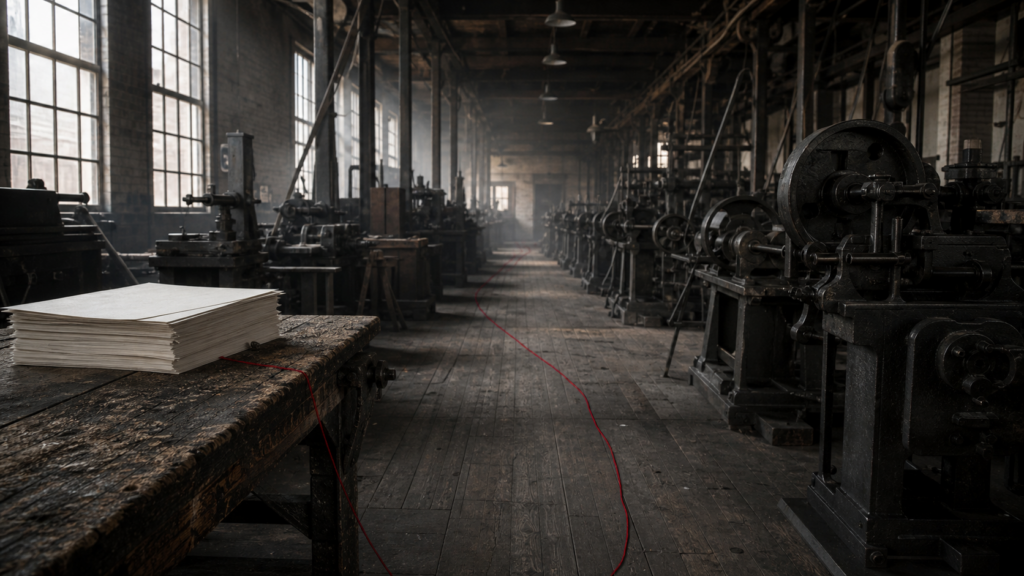
In the middle of the nineteenth century, when factory chimneys were blackening the skies of Europe and trains were stitching cities together with steel, a bearded émigré in a London reading room was trying to understand why so much new wealth seemed to bring so much new misery. Outside, the streets were full of contrasts: fine houses a carriage ride away from slums where whole families crowded into a single room; lavish shops not far from soup kitchens; workers who had left the countryside for the promise of wages now coughing themselves to death in mills and mines. Inside the British Museum’s reading room, a man in a worn coat sat hunched over economic reports, parliamentary inquiries, and statistics, his handwriting spilling across page after page as he tried to make sense of it all. His name was Karl Marx, and whatever else one says about him, his work would change the moral vocabulary of the modern world. Words like exploitation, alienation, class struggle, ideology, and revolution would never sound the same again.
Marx was born in 1818 in Trier, a small city on the Moselle in what was then the Kingdom of Prussia. His family was comfortably middle class; his father was a lawyer who had converted from Judaism to Lutheranism for professional reasons in a state that restricted Jews. Young Karl studied law and then philosophy, falling under the spell of Hegel’s vast system with its dialectic of history and Spirit. In the cafés and seminar rooms of Berlin, he mixed with radical students and intellectuals who wanted to push Hegel’s abstract ideas toward political critique. They called themselves the Young Hegelians, and they believed that history was not just a story of ideas unfolding but of oppression to be unmasked and overcome.
At first, Marx’s weapons were philosophical and journalistic. He wrote articles attacking censorship and defending freedom of the press. As editor of a radical newspaper in the Rhineland, he sharpened his prose against the petty injustices of Prussian administration: forest laws that criminalized peasants collecting fallen wood, prosecutions of critics, the cozy relations between landowners and bureaucracy. The more he reported, the more he felt that philosophy confined to the lecture hall missed something essential. Hegel’s abstractions about Spirit and Reason did not seem to grasp the hunger, fear, and anger he saw in the lives of ordinary people.
His first major intellectual break came through another émigré, the German philosopher Ludwig Feuerbach, who had argued that God was a projection of human qualities—power, knowledge, goodness—onto an imaginary being. Religion, on that view, was humanity worshipping its own essence without realizing it. Marx admired Feuerbach’s critique of religion but thought it did not go far enough. It treated religion mainly as an intellectual mistake, a kind of philosophical confusion. Marx began to think of religion as a symptom: not the root of the problem, but a sign of deeper social conditions.
This thought crystallized in a famous line: religion is the “opium of the people.” It is often quoted as a simple sneer, as if Marx were saying the masses are stupid for believing. But in context, there is more nuance. He calls religion at once the “sigh of the oppressed creature,” the “heart of a heartless world,” and the “spirit of spiritless conditions.” It is both a protest against real suffering and a consolation that keeps people from confronting its causes. The critique of religion, he concluded, must therefore be a critique of a world that needs such consolation in the first place. Moral philosophy, if it is to be honest, must look beyond doctrines and rituals to the material conditions of life.
That conviction gradually carried him out of philosophy as it was then practiced and into what he called a “critique of political economy.” If you want to understand why people believe what they believe, why some starve while others dine, why laws take the shape they do, you must look at how societies organize the production of their material life: how food is grown, who owns land, who controls factories, how labor is bought and sold. Ideas and ideals cannot be understood in isolation; they grow out of, and in turn stabilize or challenge, a particular mode of production.
Marx’s life was not the life of a detached scholar. After his writings and connections made him unwelcome in Prussia, he bounced from Paris to Brussels to London, repeatedly expelled or pressured to leave because of his politics. In Paris he met Friedrich Engels, the son of a German factory owner who had gone to work in his father’s mills in Manchester and come away appalled at what he saw: twelve-hour days, child labor, cramped tenements, drunkenness, disease. Engels’ book on the condition of the working class in England provided Marx with vivid empirical ammunition and a lifelong collaborator.
Together, they wrote a slender pamphlet that would reverberate far beyond its initial readership: The Communist Manifesto. Written hastily in 1847–48 for a small league of radicals, it opens with the thunderous sentence: “A specter is haunting Europe—the specter of communism.” The text reads like a cross between a diagnosis and a prophecy. It sketches the history of society as a history of class struggles, moving through ancient slavery, feudalism, and into the bourgeois society of their own time. It praises capitalism for having unleashed unprecedented productive power, broken feudal bonds, and transformed the world. At the same time, it condemns capitalism for reducing human relations to “naked self-interest” and “callous cash payment,” for concentrating wealth and political influence in the hands of a bourgeois minority, and for creating a vast class of workers—the proletariat—who own no productive property and must sell their labor power to survive.
The Manifesto’s moral vision is stark. Under capitalism, Marx and Engels claim, exploitation is not an accidental abuse but a structural feature. The capitalist buys labor power at a wage and uses it to produce goods that sell for more than the total wages paid. That surplus, what Marx calls surplus value, is the source of profit. The worker, in this picture, produces more value than he is paid back in wages. The difference is appropriated by the owner. Contracts may be legal, voluntary in a narrow sense, but the background conditions—workers needing to accept whatever is offered in order to eat—make this “freedom” a constrained one.
This idea sets Marx’s moral criticism apart from traditional complaints about greed or unjust rulers. He is not primarily interested in blaming bad capitalists. Even a “good” employer who pays the going wage and obeys the law, in his view, participates in a structure that systematically extracts unpaid labor. Justice, as it is usually defined in such societies, already assumes that this extraction is legitimate. For Marx, moral philosophy that starts from those assumptions will only end up rationalizing what needs to be questioned.
Alongside exploitation, Marx develops another key moral theme: alienation. In earlier societies, a craftsperson might see himself in his work: the carpenter in the chair, the potter in the pot. Under industrial capitalism, Marx argues, the worker becomes a cog in a machine, performing a small, repetitive task with no control over the overall product or process. The things he makes confront him as alien objects owned by someone else, sold for someone else’s benefit. His own activity, his creativity and energy, is turned against him. He is alienated from the product of his labor, from the act of labor itself (experienced as forced), from his “species-being” (his capacity to shape the world consciously), and from other workers (who appear as competitors for scarce jobs).
These descriptions have a clear moral tone even when Marx dresses them in analytical language. A life in which one’s work is experienced as meaningless compulsion, in which the things one produces become sources of profit for others, in which cooperation is thwarted by competition, is, for him, a stunted and distorted life. Human flourishing—what earlier moral philosophers called eudaimonia or beatitudo—cannot be achieved in such conditions. If Aristotle thought the good life involved rational activity in accordance with virtue in a well-ordered polis, Marx thinks the good life requires a form of cooperative production in which people can develop and express their capacities freely, not under the compulsion of hunger and market forces.
He expresses this positive ideal in a compressed way in a later text, imagining a future communist society where it is possible “to hunt in the morning, fish in the afternoon, rear cattle in the evening, criticize after dinner” without being fixed to one role as hunter or critic. Behind the playful list lies a serious point: the division of labor as enforced under capitalism—where some are lifelong factory workers, others lifelong managers, others lifelong owners—locks individuals into narrow functions. A just society, for Marx, would be one in which people can develop a rich plurality of talents and relations, no longer stamped by the job they have to do to live.
At the center of his broader outlook is what he calls historical materialism. History, on this view, is not driven by ideas alone, nor by the will of great men, nor by divine providence, but by changes in the way humans collectively produce their means of subsistence. When the productive forces—technology, skills, the organization of labor—outgrow existing social relations, tension builds. Feudalism, with its serfs bound to land and lords, could not accommodate the growth of commerce and manufacture. Capitalism emerged, often violently, as a new set of relations better suited to factories, trade, and wage labor. But capitalism, in turn, generates contradictions: crises of overproduction, concentration of capital, immiseration of workers alongside abundance.
For moral philosophy, this is both a demotion and a challenge. It is a demotion because Marx denies that moral doctrines drive history. Appeals to justice, rights, and duties, he suggests, often ride on the back of more basic economic changes. The lofty language of the French Revolution about liberty and equality, for example, makes sense in a context where a rising bourgeoisie needs to sweep away feudal privileges and establish legal frameworks for buying and selling labor freely. It is a challenge because it implies that moral philosophers who present their principles as timeless may be unwittingly expressing the interests of particular classes.
This is where his concept of ideology comes in. Ideology, for Marx, is not simply lying propaganda. It is the whole way a society comes to see its arrangements as natural, inevitable, and just. Law, religion, philosophy, art, and common sense can all become vehicles for ideology when they present historically contingent relations as eternal truths. A moral theory that says “justice consists in freely agreed contracts between individuals” might sound universal, but in a society where many have no realistic alternative to selling their labor cheaply or starving, that definition reflects and legitimizes a particular class arrangement. The moral philosopher who ignores this, Marx thinks, becomes a “flunky” of the ruling class even without intending to.
In this light, much of traditional moral philosophy looks to Marx like a kind of imaginative gloss over underlying material conflicts. The Stoic notion that virtue is sufficient for happiness, regardless of external conditions, might encourage people to endure poverty without complaint. The Christian emphasis on storing up treasures in heaven rather than on earth might help the poor accept their lot as part of a divine plan. The liberal claim that success is the fruit of merit might justify vast inequalities as simply the outcome of talent and hard work. This does not mean that everything in these traditions is mere illusion; Marx is not always subtle, but he does recognize that genuine human longings for justice and community often express themselves in religious and philosophical forms. His point is that as long as the material conditions that generate exploitation and alienation remain unchanged, such moral and spiritual consolations cannot eliminate the underlying misery.
Where, then, does his own moral commitment lie, if he distrusts moralizing? He often insists that he is doing “science,” revealing the laws of motion of capitalist society, not preaching. He mocks “utopian socialists” who draw up detailed plans for ideal communities without understanding the real structure of existing ones. And yet, he cannot hide his outrage at child labor, at the mutilation of workers by unsafe machines, at the hunger and overcrowding that coexist with luxury. His pages are full of statistics, but they are not cold. They are chosen and arranged to provoke moral horror. He quotes factory inspectors describing children deformed by long hours at machines, families living in damp cellars, women miscarrying from overwork. Capitalism, he concludes, comes into the world “dripping from head to toe, from every pore, with blood and dirt.”
These images are not neutral. They are meant to make readers feel that such a system is intolerable. He may avoid the language of rights and duties, but he clearly assumes that a social order that systematically damages human bodies and stunts human capacities is a bad one, one that ought to be overcome. In place of abstract moral principles, he offers a vision of human emancipation rooted in the abolition of class exploitation: the end of a state in which one class lives by appropriating the surplus labor of another.
His most controversial claim is that this emancipation can only come through class struggle: through workers organizing, resisting, and eventually overthrowing the capitalist class. He does not imagine this as a polite reform. He speaks of expropriating the expropriators, of smashing the old state apparatus that serves bourgeois interests. In the Communist Manifesto and other writings, he calls on workers of the world to unite, insisting that they have “nothing to lose but their chains.” Violence, for him, is part of the birth of new orders; history, as he sees it, has never advanced by mere persuasion when deep material conflicts are at stake.
From a moral point of view, this raises troubling questions. Can the pursuit of a classless society justify violent revolution? How many lives may be upended or destroyed for the sake of breaking exploitative structures? Marx wrote mostly in the prophetic tone of one confident that the proletarian revolution was historically inevitable. He did not spell out clear limits on what means were permissible. Later regimes claiming his legacy would use his rhetoric to legitimize terror, forced labor, and authoritarian control. Whether these are distortions of his thought or realizations of its inner logic is a matter of intense debate.
Even before those later histories, however, Marx’s approach forces moral philosophy to face some hard facts. It is one thing to talk about justice in general; it is another to confront how deeply economic structures shape who gets to talk about justice, whose voices are heard, whose interests are advanced. When he says that “the ruling ideas of each age have ever been the ideas of its ruling class,” he is not saying truth is impossible, but he is warning that what passes as common sense will tend to support the status quo. Moral philosophers must therefore, in his view, practice a double critique: examining not only whether their principles are logically consistent, but whose material interests they serve.
He also leaves a positive legacy: the idea that a good society is one in which people are not forced by the threat of destitution to sell their time and energy on terms they cannot shape, and in which work can become a realm of self-realization rather than mere survival. In such a society, the question “What is the right thing to do?” might shift from obeying external rules to asking how we can organize our collective life so that each person’s development enriches others rather than coming at their expense.
In the century and a half since Marx wrote, his ideas have been taken up, revised, criticized, and sometimes used to excuse horrors. But even critics often find themselves responding to a picture he helped fix in our minds: capitalism as not just a set of markets, but a way of structuring power, shaping consciousness, and distributing life chances. Debates about minimum wage, workers’ rights, the ethics of vast inequality, the morality of profit in healthcare or education—all echo, however faintly, his insistence that moral questions cannot be separated from the organization of production.
For your listeners, encountering Marx in a series on Western moral philosophy means entering a different register. Before him, many philosophers framed morality in terms of virtues, duties, rights, divine commands, social contracts. Marx does not discard these words so much as put them under suspicion. He asks, of any moral language: whose world does this describe? Whose experience does it ignore? What material arrangements does it take for granted? He urges us to see morality not just as a matter of personal conscience, but as something tangled up with class positions, interests, and struggles.
Imagine him again in the reading room, late in the day, ink on his fingers, notes piled around him. He is coughing—he will battle ill health for much of his life—and his family struggles with money. He is dependent on small fees for articles and on Engels’ support. Sometimes his children go without shoes; one of his daughters dies young. It is not a life of comfort. Yet he returns, day after day, to the dense reports of factory inspectors and trade figures, the abstract theories of economists and philosophers, trying to pierce through them to the underlying patterns.
He is far from a saint. He could be domineering in argument, intolerant of rivals, blind to how his expectations burdened the women in his family. Some of his predictions—for example, that capitalism would homogenize the working class into an ever-poorer mass—have not unfolded as he imagined, at least not straightforwardly in the richest countries. But the core questions he raised remain.
What does it mean, morally, to live in a world where some own productive assets and others must sell their time to them? Is consent in such arrangements enough to make them just, or does justice demand a deeper transformation of who owns and controls the conditions of life? Can we talk honestly about freedom if many people’s “choices” are shaped by desperation? How much of what we call moral progress is compatible with leaving the basic class structure intact?
Marx does not give neat, codifiable answers to these questions. He provides, instead, a way of looking that insists we keep class, labor, and power in view whenever we talk about the good and the right. His work is not the last word, but it reshapes the conversation. Even those who reject his conclusions must contend with the uncomfortable thought that moral arguments, however lofty, are never purely above the fray. They are spoken and heard in societies structured by unequal control over work, wealth, and time.
For some, this is a dark, disillusioning perspective. For others, it is clarifying. It says: if you feel that certain moral appeals ring hollow when spoken from positions of comfort over those who are struggling, you are not crazy. There is a structural reason for that disconnect. To heal it will require more than better preaching; it will require changes in how we produce and share the means of life.
In the end, Marx’s moral imagination is fueled by a simple, radical hope: that human beings might one day live in such a way that their cooperative creative powers are not turned against them, that no one’s flourishing depends on another’s degradation, that the immense wealth and knowledge developed under capitalism might be reorganized so that all can participate in them as equals. Whether that hope is realistic is a further question. But as long as the world contains glaring inequality and as long as moral philosophy risks making peace with it too easily, his restless, accusatory voice will continue to sound.