
Nikolai Gogol · Claud Field
The Nose
A nose leaves its owner and moves through St Petersburg with a rank of its own.
Read →Gogol · Dostoevsky · Chekhov · Kharms
The absurd and the human condition
A runaway nose. A man arguing from underground. An old friendship undone by a job title. The strange and the ordinary meet in stories about rank, freedom, humiliation and the difficulty of living with other people.
This is a collection of distinct literary voices, connected by a reading question: what happens when the explanations people live by stop accounting for their lives?
Nikolai Gogol · 1809–1852
Born in Sorochyntsi, in present-day Ukraine, Gogol wrote in Russian, drawing on Ukrainian folklore as well as the ranks and rituals of imperial life. His early tales brought him literary recognition; The Government Inspector and Dead Souls made him a major satirical voice. In his Petersburg stories, an impossible event can expose an entirely familiar social order.
Begin with three stories in which bureaucracy and ordinary desire survive the impossible. Claud Field’s complete English translations.
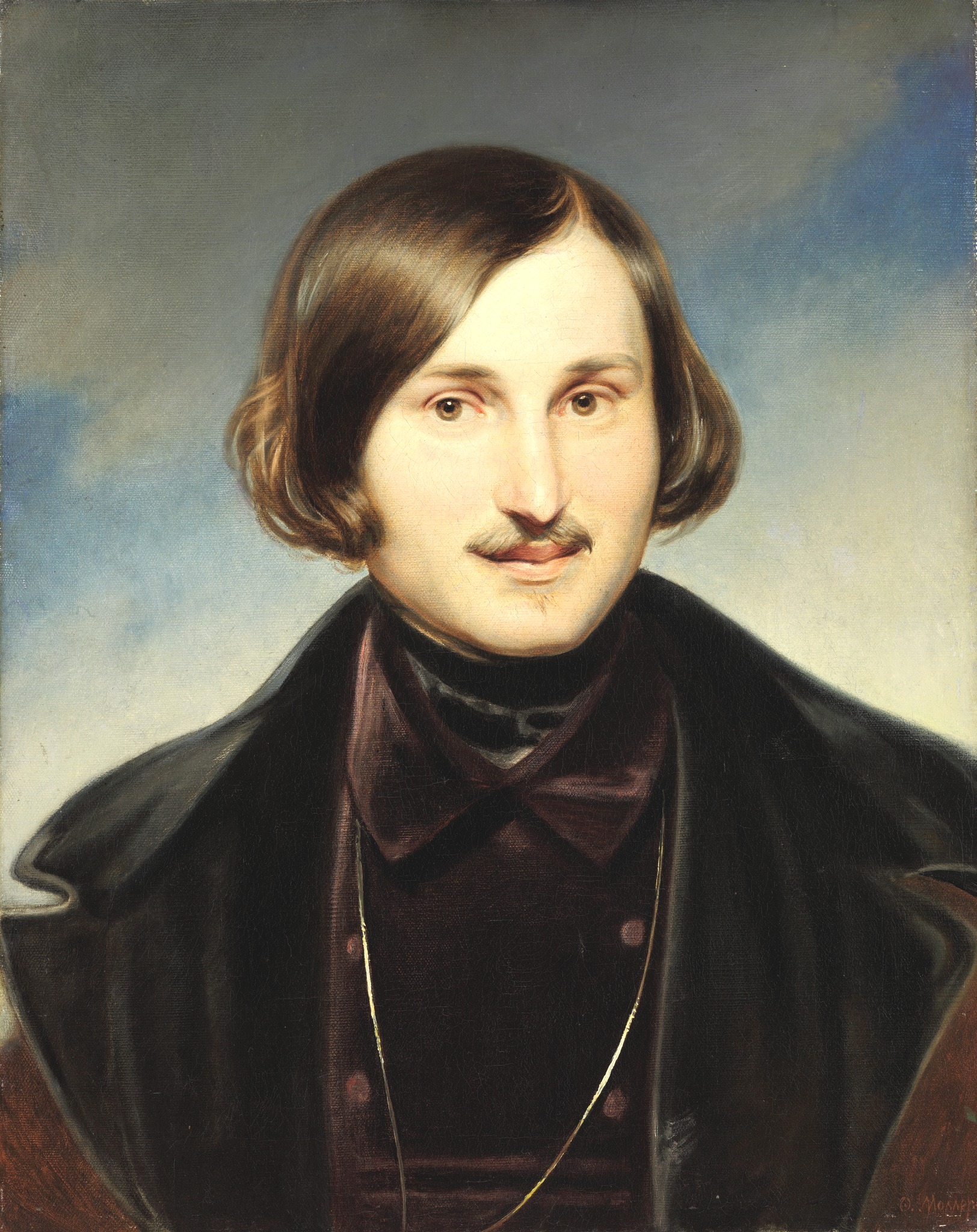
Nikolai Gogol · Claud Field
A nose leaves its owner and moves through St Petersburg with a rank of its own.
Read →Nikolai Gogol · Claud Field
A clerk’s dated entries turn status, desire and humiliation into an increasingly fractured reality.
Read →Nikolai Gogol · Claud Field
A copying clerk’s new coat becomes a fragile promise of dignity in an indifferent city.
Read →Fyodor Dostoevsky · 1821–1881
Born in Moscow, Dostoevsky spent four years in a Siberian convict prison, followed by compulsory military service. His later novels include Crime and Punishment, The Idiot and The Brothers Karamazov. Notes from the Underground, published in 1864, gives a solitary, contradictory speaker the space to challenge the reader. Freedom, humiliation and responsibility become arguments taking place within a voice.
The Underground Man resists the idea that people can be explained by their own best interests. His contradictions are part of the encounter.
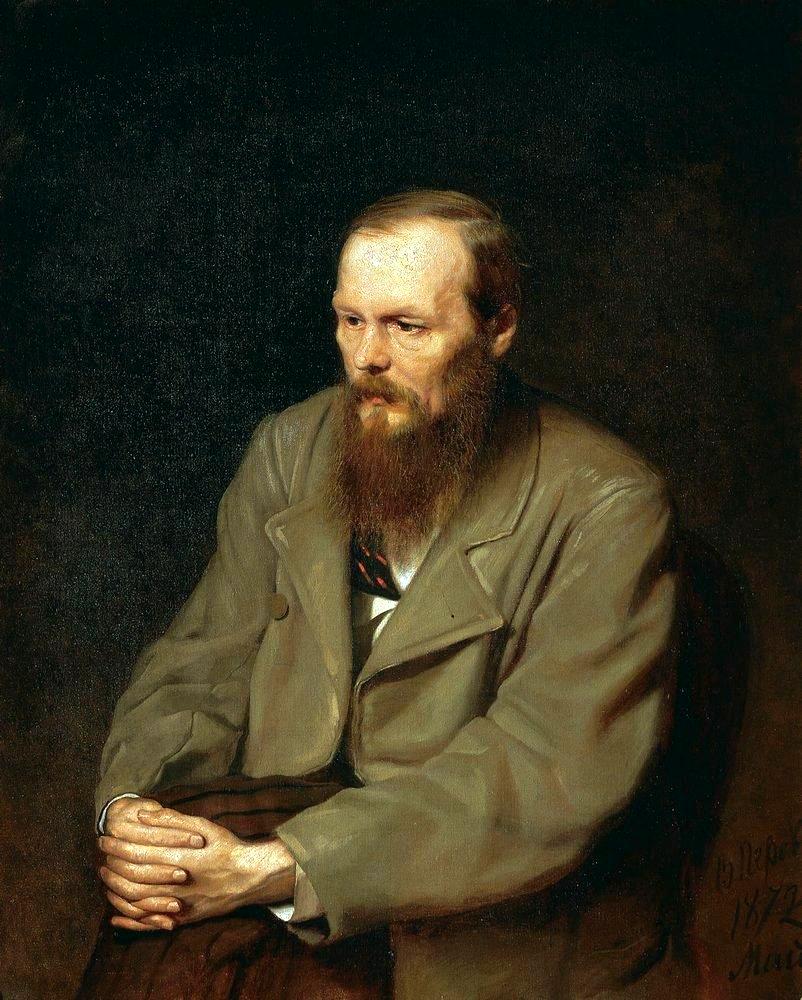
Fyodor Dostoevsky · Constance Garnett
A voice arguing with its reader, with rational self-interest, and with itself.
Read →Anton Chekhov · 1860–1904
Born in Taganrog, Chekhov trained and practised as a doctor while writing stories and plays. His work ranges from brief comic sketches to The Seagull, Uncle Vanya, Three Sisters and The Cherry Orchard. The Moscow Art Theatre helped establish his mature drama. Read him for the distance between what people say and what they want: the absurdity often emerges through ordinary behaviour, pauses and changes of status.
Watch what changes when one person learns another’s rank. Listen to what is answered, what is avoided, and how ordinary speech can carry a disproportionate weight. The comedy leaves room for discomfort.
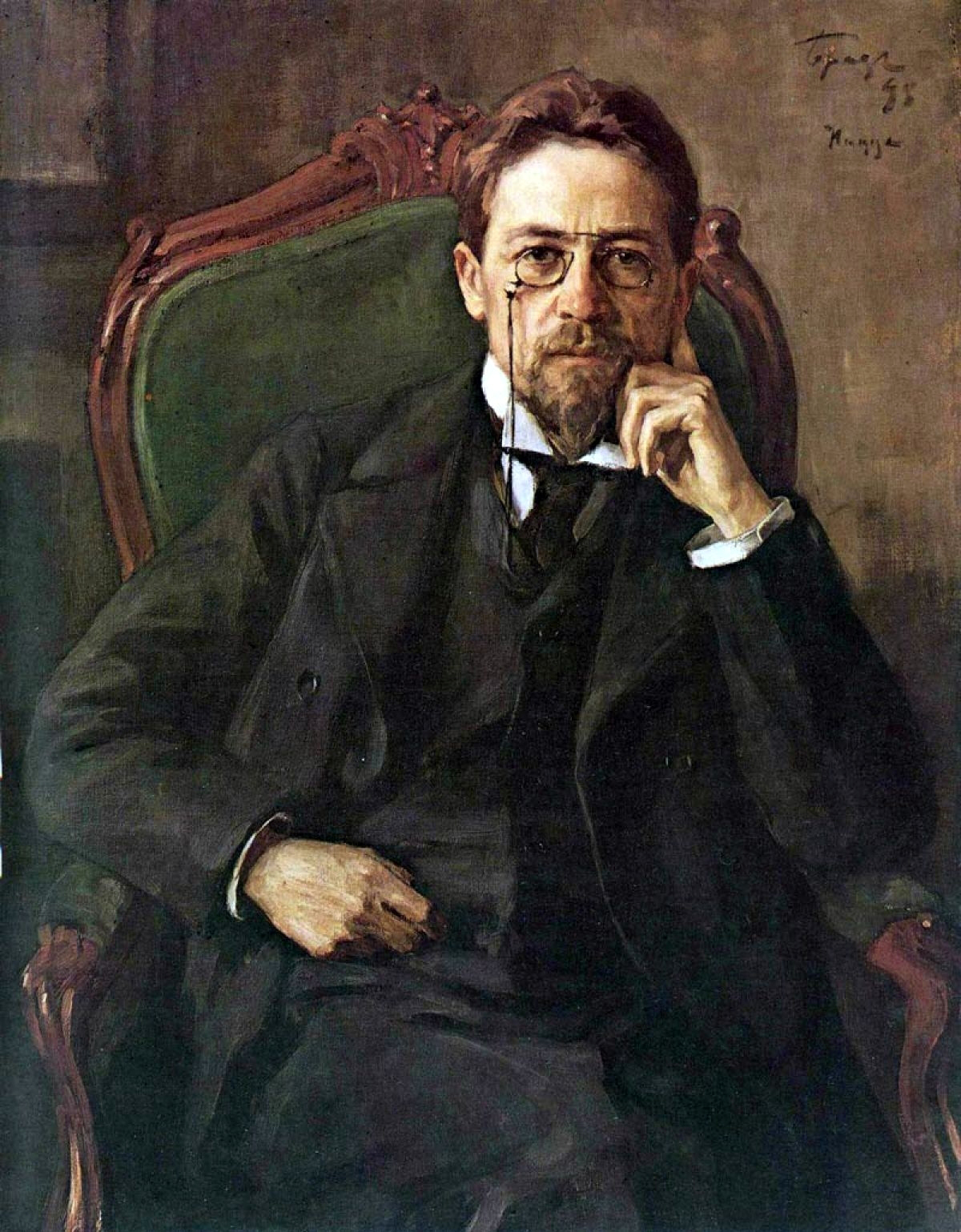
Anton Chekhov · Constance Garnett
A sneeze and its aftermath: watch how a minor incident becomes a crisis of rank.
Read →Anton Chekhov · Constance Garnett
An encounter between old friends changes when their official ranks become known.
Read →Read the action as well as the dialogue: the objections, interruptions and changing intentions give the comedy its movement.
Anton Chekhov · Julius West translation
A marriage proposal gives way to arguments over land, dogs and family pride. A one-act play for three characters.
Read the play →Daniil Kharms · 1905–1942
Daniil Kharms, born Daniil Yuvachev in St Petersburg, wrote poems, miniature stories and plays, and helped found the experimental group OBERIU. He earned much of his living through children’s writing while his adult work remained largely unpublished.
Soviet authorities arrested him in 1931; imprisonment was followed by exile in Kursk. Arrested again in 1941, he was confined in a prison psychiatric hospital in Leningrad. He died there on 2 February 1942, during the siege, most likely of starvation. Friends preserved his manuscripts, allowing a later readership to discover the work.
His reversals and interrupted explanations can be very funny. His biography also asks us to attend to the violence and vulnerability in the writing, without reducing every absurd event to a political code.
The Horatio Chronicles brings NOMOTO MEDIA’s own satirical dialogue into this reading journey.
Enter the existing Horatio collection →Gogol is translated by Claud Field; Dostoevsky and the Chekhov stories by Constance Garnett; The Proposal by Julius West. Each reader links to its source catalog, translation credit and source license. All imported editions are listed as public domain in the USA. The grouping is editorial: these authors are not treated as members of one uniform literary movement.
Complete reading editions are available above. The Proposal also includes a short, three-voice AI audition; it is an excerpt, not a complete recording.

