NOMOTO MEDIA Read, listen and watch Articles, podcasts, films, stories, books, music and research.
CHAPTER 00 / THE WET SEAT
One passenger is missing.
The seat is wet. It has not rained. Someone says the passenger was carrying an empty birdcage.
Browse all content Explore the subway
READ ARTICLES
EXPLORE RESEARCH
SEARCH ALL WORK
BULLSHIT CENTRIFUGE
A dreamlike journey through the human condition: moral philosophy from Thales to Arendt and Camus, psychology, science, film, and AI as a new test of old human questions. There is no required route.
Nomoto Media system map
Power, Thought, Art, and Memory cross at shared stations. Each interchange connects films, voices, and texts through a common question.
AI: An Uncertain Future AI articles Psychology Philosophy Scientific Giants Research Short Stories Books Films Filmmaking Giants Theatre Classical Music Music Addiction & Recovery Articles All Content The Mapmaker American Presidency How Empires Rise and Fall CLOSED LINE / NEW YORK CLOSED LINE / PARIS CLOSED LINE / MOSCOW
DEPARTURE / THE SYSTEM IS WAKING ENTER TRANSIT THE MAP WILL OPEN WHEN READY
POWER LINE THE WATCHING ROOM BETWEEN STATIONS
← Back to map
LOCAL YEAR 2026 SHIFT YEAR ↻ N STATION TOUCH SIGN
NOMOTO MEDIA
Title
Description
← PREVIOUS STORY 01 / 05 NEXT → RANDOM STORY ↻ ALL STORIES
THE POSTER IS MOVING
×
A PASSENGER SAYS
READ IN THE CARRIAGE →
LISTEN IN THE CARRIAGE →
SHIFT YEAR AGAIN ↻
FOLLOW THE TRANSFER →
CONTINUE THE JOURNEY →
WORDS BESIDE THE FILM / DRAG TO MOVE
READ THIS PASSAGE →
GIVE ME ANOTHER QUOTE ↻
LOOK AGAIN THE QUESTION FOUND OBJECT
×
EVIDENCE / UNFILED
A detail refuses to disappear.
KEEP THIS CLUE
01 FILM ARCHIVE
FILM / RELATED WORK FOLLOW THE SIGNAL READ IN THE CARRIAGE → LISTEN IN THE CARRIAGE → THINK WITH THIS → ALL PODCAST EPISODES → TAKE THE NEXT TRAIN → ASK THE CONDUCTOR →
PLAY FILM DOWNLOAD SHORT NEXT FILM → HIDE QUOTE FILM CONTROLS ← Back to journey
ORIGINAL NOMOTO SECTION ARTICLES 220 works · original categories and publication pages ORIGINAL NOMOTO SECTION COLLECTIONS Connected bodies of work ORIGINAL NOMOTO SECTION BOOKS Long-form work and complete manuscripts ORIGINAL NOMOTO SECTION SHORT STORIES Fiction · memory · absurdity · human consequence ORIGINAL NOMOTO SECTION VIDEO Films and moving-image work ORIGINAL NOMOTO SECTION MUSIC Original sound and audiovisual work ORIGINAL NOMOTO SECTION RESEARCH Evidence · prediction · power · consequence ORIGINAL NOMOTO SECTION ABOUT NOMOTO The work, author, and contact route 02 / PHILOSOPHY THE COMPASSIONATE STOIC Enter the inner chamber 03 / HUMAN CONDITION FACES REMEMBER All witness fragments · one film 04 / UNBUILT THE CITY BORROWS OUR BODY Travel forward 09 / NOMOTO MEDIA LONELY ROBOT NOMOTO MEDIA archive · music/video experiment 12 / NATURAL HISTORY GREEN RIVER FOSSIL COMPANY Quarry · preparation · geological design 13 / PHILOSOPHY MARCUS AURELIUS / THE INNER CITADEL Film → thinker → text → narration 15 / LABOR THE ASCENT AFTER THE SHIFT Film → essay → local narration 17 / MEMORY THE MEASURE THAT OUTLIVED THE MAKER Film → Little Book 18 / FUTURE THE LAST TRAIN LEAVES EARTH Film → Newton dramatic script 19 / AI ROBOT LOVE / RUNNING Film → friendship and attachment 20 / CARE THE REACH Film → A Little Book of No Consequence 05 / FICTION / SHORT STORY THE WATCHER READ IN THE CARRIAGE 06 / FICTION / SHORT STORY THE LAST MANUAL GENERATION “THE INVITATION ARRIVED ON PAPER.” PHILOSOPHY 01 WHO WAS HERACLITUS? Original script · existing audio PHILOSOPHY 02 WHO WAS SOCRATES? Original script · existing audio PHILOSOPHY 03 WHO WAS PLATO? Original script · existing audio PHILOSOPHY / THEATRE Seneca — Stoic tragedy and rhetoric Original script · existing audio PHILOSOPHY 05 WHO WAS RENÉ DESCARTES? Original script · existing audio PHILOSOPHY 06 WHO WAS JOHN LOCKE? Original script · existing audio PHILOSOPHY 07 WHO WAS DAVID HUME? Original script · existing audio PHILOSOPHY 08 WHO WAS IMMANUEL KANT? Original script · existing audio PHILOSOPHY 09 WHO WAS JOHN STUART MILL? Original script · existing audio PHILOSOPHY 10 WHO WAS KARL MARX? Original script · existing audio PHILOSOPHY 11 WHO WAS FRIEDRICH NIETZSCHE? Original script · existing audio PHILOSOPHY 12 WHO WAS MARTIN HEIDEGGER? Original script · existing audio PHILOSOPHY 13 WHO WAS JEAN-PAUL SARTRE? Original script · existing audio PHILOSOPHY 14 WHO WAS HANNAH ARENDT? Original script · existing audio PHILOSOPHY 15 WHO WAS SIMONE DE BEAUVOIR? Original script · existing audio PHILOSOPHY 16 WHO WAS ALBERT CAMUS? Original script · existing audio PHILOSOPHY 17 WHO WAS JOHN RAWLS? Original script · existing audio PHILOSOPHY 18 WHO WAS MICHEL FOUCAULT? Original script · existing audio 08 / PSYCHOLOGY WHO WAS JUNG? Read · listen · enter the shadow 09 / SCIENCE WHO WAS NEWTON? The complete original episode 09A / ORIGINAL DRAMA / STAGE OR TELEVISION NEWTON — FOUR EPISODES Complete 152-page script · read or download 10 / SCIENCE WHO WAS DARWIN? Variation · time · consequence 11 / SCIENCE BREAD FROM AIR / POISON FROM SCIENCE Follow discovery into consequence 12 / PSYCHOLOGY WHO WAS KAREN HORNEY? Against Freud · toward culture 13 / PSYCHOLOGY THE LISTENING REVOLUTION What changes when someone is heard? 15 / POWER THE WATCHING ROOM Read in the carriage 16 / COMPLETE PUBLICATION ALL 464 PUBLISHED WORKS Original sections · categories · canonical links 01 / FICTION / NARRATED SOME KIND OF LOVE LISTEN · READ · CONTINUE 02 / FICTION / NARRATED THE MIRROR LISTEN · READ · CONTINUE 03 / FICTION / NARRATED THE WATCHER LISTEN · READ · CONTINUE 04 / FICTION / NARRATED THE LAST MANUAL GENERATION LISTEN · READ · CONTINUE 05 / FICTION / COMPLETE TEXT THE ASTEROID THE ASTEROID WAS SUPPOSED TO KILL US ON THURSDAY. 20 / A LITTLE BOOK OF NO CONSEQUENCE THE BOULDER HAS EXCELLENT ATTENDANCE Read · listen · return to the hill 20B / COMPLETE BOOK LINE A LITTLE BOOK OF NO CONSEQUENCE PROLOGUE · SEVEN PARTS · COMPLETE MANUSCRIPT DOWNLOAD 23 / MEMORY LINE / 2020–2025 THIRTY OLDER WORKS RETURN TO SERVICE Democracy · economy · AI · care · war · philosophy COMPLETE ARTICLE ARCHIVE 464 ORIGINAL WORKS Ordered by original publication date 2026 / FRONT PAGE TETRIS Original text OPEN BOOKS PHILOSOPHY & HISTORICAL PSYCHOLOGY Six verified public-domain editions · read or download 17 PUBLISHED EPISODES PSYCHOLOGY All published episodes · cover art · audio 30 PUBLISHED EPISODES CLASSICAL MUSIC All published episodes · cover art · audio 39 PUBLISHED EPISODES SCIENTIFIC GIANTS All published episodes · cover art · audio 19 PUBLISHED EPISODES AI & SOCIETY All published episodes · cover art · audio 31 PUBLISHED EPISODES FILMMAKING GIANTS All published episodes · cover art · audio 34 PUBLISHED EPISODES THEATRE All published episodes · cover art · audio 62 PUBLISHED EPISODES AMERICAN PRESIDENCY All published episodes · cover art · audio 18 PUBLISHED EPISODES ADDICTION & RECOVERY All published episodes · cover art · audio 29 PUBLISHED EPISODES CIVILISATIONS RISE AND FALL War: How Empires Rise and Fall · cover art · audio 31 / FILMMAKING GIANTS OLIVER STONE The provocateur of American politics · 11 min 32 / FILMMAKING GIANTS LUIS BUÑUEL The surrealist provocateur · 19 min 33 / FILMMAKING GIANTS QUENTIN TARANTINO The pop-culture alchemist · 23 min 34 / FILMMAKING GIANTS ANDREI TARKOVSKY The sculptor of time · 18 min 35 / FILMMAKING GIANTS AKIRA KUROSAWA The bridge between East and West · 17 min 36 / SCIENTIFIC GIANTS ANTOINE LAVOISIER Matter · measure · revolution · 27 min 37 / SCIENTIFIC GIANTS MICHAEL FARADAY A new language for nature · 23 min 38 / SCIENTIFIC GIANTS GREGOR MENDEL The monk who discovered heredity · 22 min
THE SHELVES CONTINUE BEYOND THE WALL · NEW CARDS APPEAR AS THE JOURNEY GROWS
ONE PASSENGER IS MISSING / NO WRONG ANSWER
SOUND ON
Centrifuge
Read, listen and watch
07 CONTINUE MY JOURNEY Return to the marked place
Return to opening page Read this passage → Another quote ↻
← Back to map
NOMOTO MEDIA
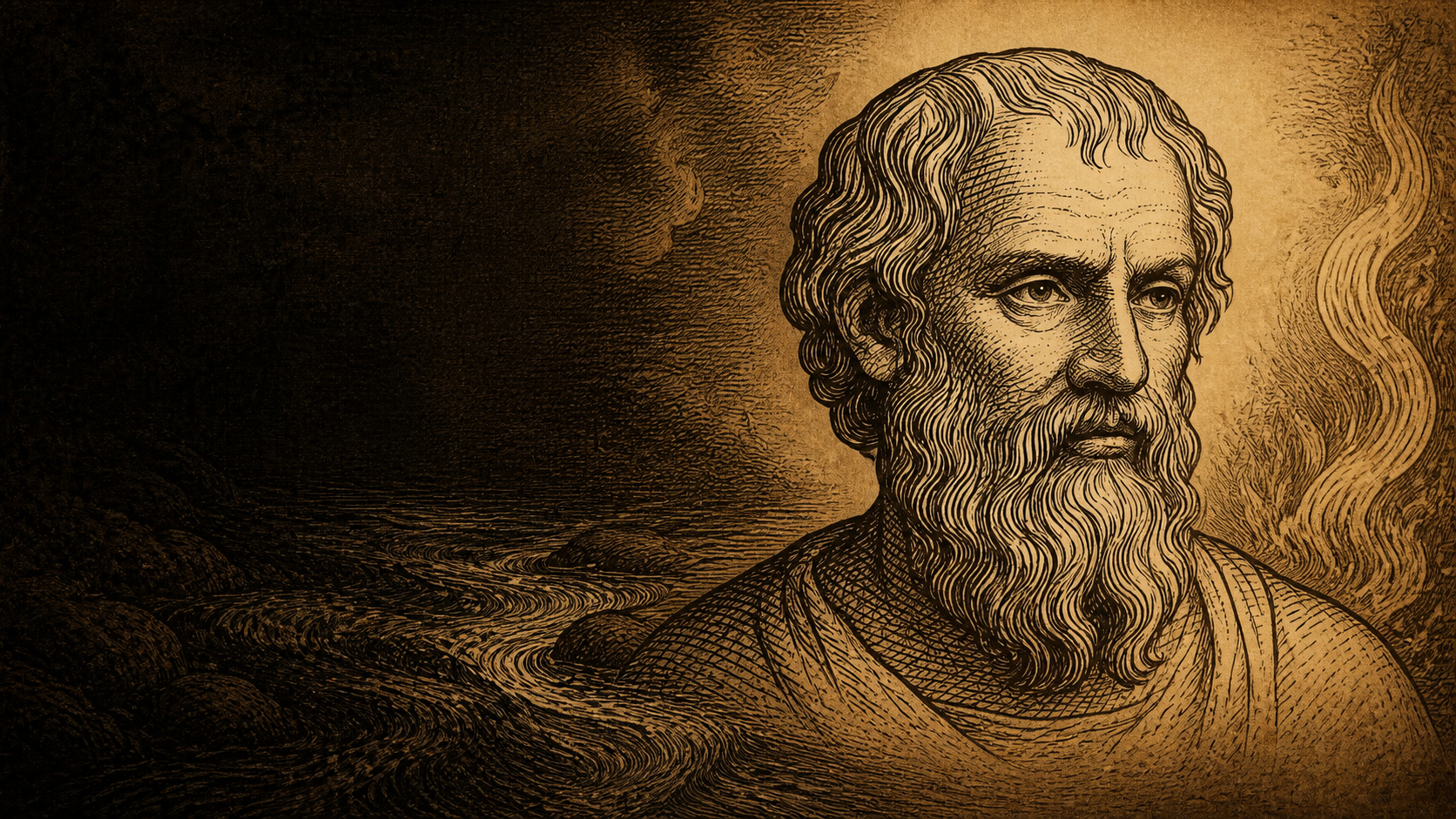
Who was Heraclitus?
LOCAL ARCHIVE VOICE / PLAYING
PAUSE / RESUME EPISODE ALL PODCASTS → READ FULL TEXT → DOWNLOAD TEXT DOWNLOAD AUDIO SAVE MY PLACE COPY LINK READ RELATED WORK → READ A PRIMARY SOURCE → THINK WITH THIS → CONTINUE THIS IDEA →
THE NEXT MOVE BELONGS TO YOU
How do you want to continue?
I WANT TO READ Open the complete text in the carriage.
I WANT TO LISTEN Resume—or begin the narration again.
CONTINUE THE JOURNEY Carry this idea to another station.
RETURN TO THE PORTRAIT ×
RETURN TO THE PLATFORM ×
NOMOTO Transit is an interactive audiovisual journey and requires JavaScript. You can still read the articles , explore the research , or browse every work .
Akira Kurosawa – The Bridge Between East and West Akira Kurosawa
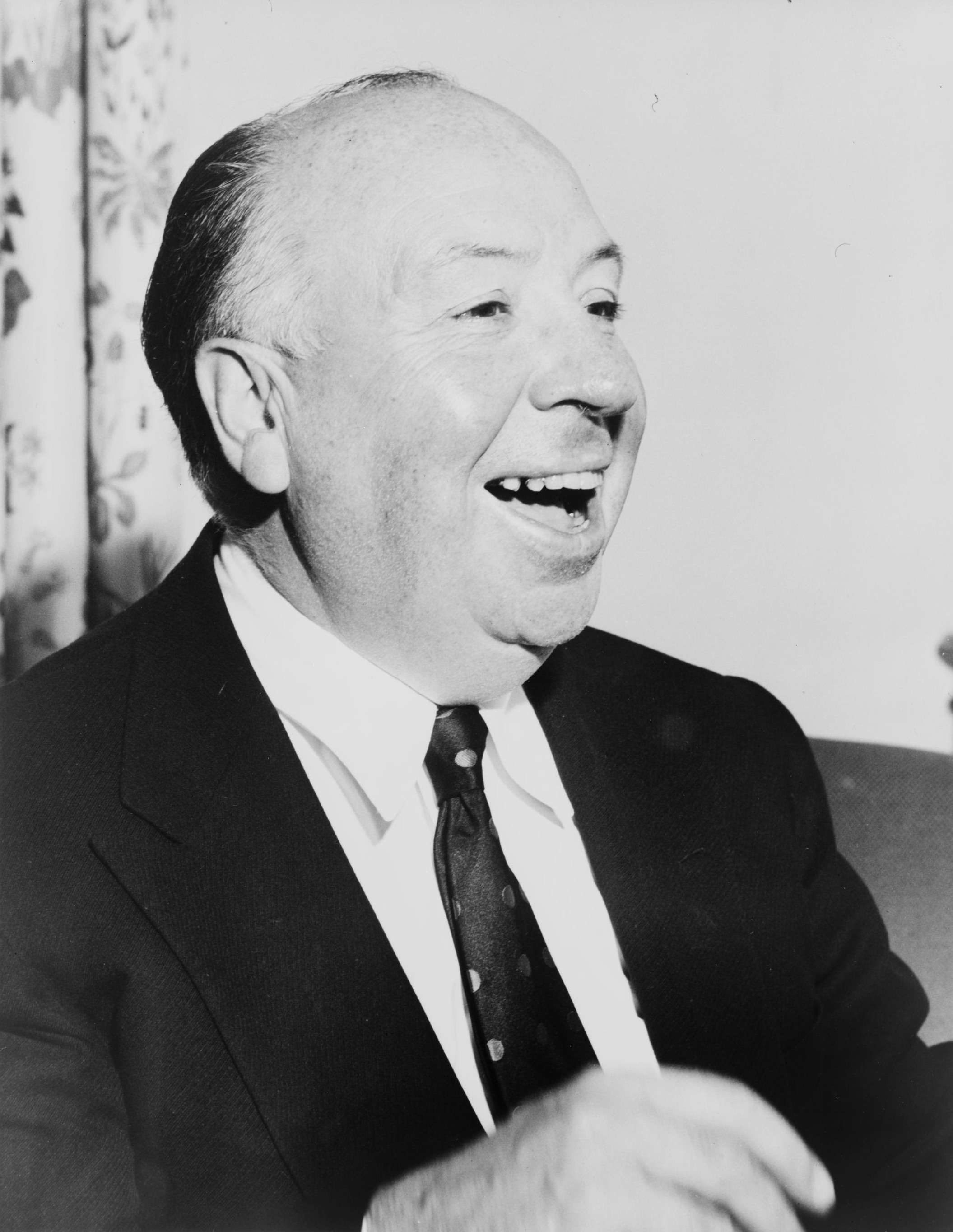
Hello and welcome back to Film making giants who changed how we see the world. If Hitchcock perfected the art of arranging our fear, Akira Kurosawa perfected the art of arranging motion—wind through grass, rain across armor, the sudden turn of a head that becomes a cut, the march of a group that becomes a moral. He was a painter who turned movement into brushstrokes, an editor who wrote with rhythm, a director who layered action like weather systems, and a humanist who believed that clarity of composition could help rescue clarity of conscience. He made images that never stop moving even when nothing seems to happen: banners breathing in a field, fog editing a mountain, a face discovering truth and dragging the camera forward by invisible rope.
He was born in Tokyo in 1910 into a house where the father loved uniforms and discipline and the mother loved stories and softness. An older brother, Heigo, made a living as a benshi, the theatrical narrator who stood beside silent films and gave them voice. Young Akira followed him to screenings, learned that pictures need music and words and, more than either, timing. He trained as a painter; the brush taught him patience and silhouette; he learned to love the line that makes a body legible at a distance. The 1923 earthquake took a city apart like a set; he walked ruins with his brother and learned the habit he kept all his life: when disaster arrives, look—do not turn away—and then make a record so that the future will have something clean to hold.
He entered the film world as an assistant director at PCL, then Toho, where labor and experiment mixed. He learned on sets where weather was an inconvenience you worked with rather than against. The painter’s eye remained while the editor’s hand formed: he cut practice reels at night; he discovered transitions he would later baptize in public—wipes that carry the eye decisively from plane to plane, axial cuts that jump closer along the camera axis rather than dollies that betray the apparatus, cuts on motion so the splice is swallowed by the body. He directed Sanshirō Sugata during the war and fought censors on both sides of defeat; he made No Regrets for Our Youth as a man who believed that moral courage mattered more than slogans; he met an actor named Toshirō Mifune whose face could throw a room off balance and whose walk could establish a village’s weather.
When people say Kurosawa invented a new way of seeing, they often point, rightly, to Rashōmon. A crime in a grove; a dead man who tells his version; a bandit who tells his; a wife who tells hers; a woodcutter whose story keeps changing as his shame ripens into honesty. The temple gate in ruins; the rain heavy enough to carve the air; the forest canopy flickering sunlight like a nervous thought; a camera that looks up into the leaves and makes the viewer squint with the character. The film was not a manifesto about relativism; it was a drama about responsibility. He choreographs testimony the way he choreographs swordplay: with pauses that weigh more than speech and with angles that refuse to settle into a lie’s geometry. The world learned a name for the phenomenon—“the Rashomon effect”—but the label should not obscure the craft. He carved each account in a distinct rhythm: the bandit’s tale with swagger and slashes, the wife’s with tremor and stillness, the husband’s from beyond the veil with a theatrical gravity that edges on Noh, the woodcutter’s haltingly, the cuts tightening as conscience corners him. Rain at the gate gives the audience time to breathe; the final act gives the audience a task—a baby abandoned, a choice to take responsibility even when the story refused to make you comfortable.
If motion is his script, weather is his pen. He uses rain not only to dramatize but to draw. The kamisori rain in Seven Samurai turns battle into mud where heroism has to learn to be helpful instead of glamorous. The wind in Throne of Blood is not background; it is Macbeth’s witches translated into meteorology. Snow in Dersu Uzala writes across tundra like a line that may be your last. He refuses ideal conditions because ideal conditions lie. When the world pushes back, characters show their shape. He keeps returning to this lesson with a stubbornness that looks like love: choreography should not flatter bodies; it should test them.
Drunken Angel and Stray Dog are postwar noir that prove he can stage a city like a wound. A tubercular gangster (Mifune) is a broken animal and also, still, a person; a doctor (Takashi Shimura) is a scold and also, still, a man who drinks too much and chooses to care anyway. Tokyo’s sump becomes a mirror and a palette; music plays struggle rather than cool. In Stray Dog, the search for a stolen gun is really the search for self‑knowledge in a heat wave. Kurosawa builds suspense with footsteps and with the geometry of streets; he edits so that the viewer recalculates angles at every turn and feels, in their thighs, the exhaustion of pursuit. He keeps cutting on action so that the city and body remain continuous. Watching him, editors learn what dance already knew: begin a move in one shot and end it in the next and the mind performs the join.
When he wants to look at authority, he builds it into topography. High and Low starts in a hilltop modernist house owned by a shoe magnate and descends, both literally and morally, into an industrial slum with windows that sweat and a river that carries dye like a subtle alarm. The kidnapping plot is a machine; the camera studies what the machine runs on: class, envy, the fantasy of control. The first half is a chamber play at the top of the world where a man learns that the price of conscience may be his fortune; the second half is a long walk among those who cannot afford philosophy. Kurosawa puts smoke in the air so that wealth and poverty have their own climates. He invents, under austerity, a shot where the air turns pink as a chemical marker lifts off the kidnapped boy’s clothing and into the city; information becomes color and color becomes accusation.
He is called an action director because he cuts with nerve. The phrase is half blind. The deeper truth: he designs movement across the frame so that the cut merely releases energy that the composition has already stored. In Seven Samurai, he covers action with multiple cameras—often three—on long lenses that compress space and make the downpour into a curtain the bodies slice. He can then move between angles in the edit without losing directionality; because the lens compressed, the eye reads cuts as intensifications rather than as dislocations. He layers axes of motion: riders left to right, foot soldiers right to left, rain vertical, banners diagonal. Your eye cannot be confused because it always has a line to hold. The battle is chaos human beings try to humanize. The final frames refuse triumph; graves grow like teeth. Relief is earned and then corrected by grief.
Ikiru sits on the other end of his spectrum—the quiet end where purpose becomes a swing in a park on a winter night. A bureaucrat (Shimura) learns he is dying and decides to make a park. The film divides itself in two: a life discovered and then a wake where colleagues reinterpret the life with their own flattery and fear. He edits the first half as a pilgrimage—nightclubs, family disappointments, a writer’s companionship, the smallness of a desk—until a choice blooms without rhetoric. He edits the second half as a trial—men speaking, women grieving, memory rectifying reputation. The swing scene teaches the cinema humility. A song sung softly; snow falling; a frame that refuses to move; meaning that arrives because the director left room for it. You go back to films with explosions and find them suddenly adolescent.
Throne of Blood translates Macbeth into fog and drums and the formality of Noh. The actor’s faces are masks and then, slowly, become faces again; the forest moves because the camera allows it to; the prophecy is made of wind and path. He stages the end with real arrows—archers off camera aiming near Mifune’s body, arrows thunking into the wood a hand’s width from human flesh—because the risk must exist for the image to carry weight. We call him fearless; that flatters him and excuses ourselves. He is careful with danger; he respects it; he calculates; then he believes the audience can love truth if truth costs sweat.
Yojimbo and Sanjūrō make comedy out of competence. A ronin wanders into a town divided by fools; he plays them against each other not because he enjoys harm but because he knows that sloppiness with power kills more surely than blades do. The composition is a manual for clarity: foreground action for motive, midground for consequence, background for the weather that punishes both. He uses the wipe like a brush—right to left when the story moves that way, along the axis of a character’s body when their desire pulls them. Wipes are not a flourish; they are a decision to announce movement rather than hide it. He is teaching editors to be proud of transitions again.
Color arrives and he refuses to let it be a coat. Dersu Uzala discovers that the taiga contains a code of conduct older than states: attention to small signs, humility about large forces, gratitude that can fit in a cup. Kagemusha dresses armies in banners and arranges the banners so that the wind becomes a chorus and a decoy can be a king because the country wants a silhouette more than a soul. Ran sets three armies in three colors on three hills and watches filial piety fall apart in ash. Toru Takemitsu’s score arrives like grief with discipline. The blood is shocking, and then the film rolls past shock into structure. The blind man at the cliff’s edge at the end is not a parable; he is a person whose world has been taught to him without mercy. The camera steps back not to aestheticize but to admit that some fates need space to be understood.
Kurosawa edits himself because he writes with cuts; the editing room is his second brush. He speaks sometimes in interviews as if the shooting were the chore and the cutting the real work. This is not self‑flattery; it is a report from a craftsperson who understands where a film’s music is made. He cuts on the gestures the audience can finish for themselves. He trusts viewers to hear the beat. He returns to actions—a door slamming, a head turning, a cup set down—and uses them as caesuras. He is wary of dissolves because life rarely provides them; when he uses one, he places it like a rest in a measure. He loves the wipe because time in his films is purposeful; it moves sideways as often as forward.
He also paints his storyboards. The paintings are bold, blocks of color and stroke, more poster than sketch, because he is testing whether a shot will read at a glance. You can learn two things from this habit without ever touching a camera. First: design your scene so that meaning is visible even without subtleties. Second: allow your subtleties to exist anyway, so that the scene will reward a second look. He paints a field red not to shock but to ask whether the emotion will carry when the orchestra is quiet. Later, in Dreams, he allows color to be a subject—Van Gogh’s sunflowers as a storm a man can walk into—and you feel the painter saying thank you to the kid he once was.
His collaborators matter. Fumio Hayasaka’s music in the 1950s gives the films a nervous system; Masaru Satō takes the baton and adds swagger and blues; Takemitsu brings austerity and ache. As for performers, there is the empire of Mifune—wolf and clown and leader—and the steadfast light of Takashi Shimura—functionary and saint, blank and tender. Kurosawa often writes relationships in pairs: master and apprentice; doctor and patient; judge and liar; lord and double; samurai and farmer. He draws their geometry on the floor—triangles of advantage, lines of approach—and the camera learns the diagram before you do. Even when he crosses the 180‑degree line, he tells you he is doing it with a wipe or a banner; confusion rises and is calmed because the hand at the tiller is steady.
It is tempting to paint the life as victory upon victory. That would be a betrayal. The years after Red Beard were stony. A co‑production collapsed; he was fired from Tora! Tora! Tora!; the industry he helped train turned away; despair arrived like weather he could not redirect; he made a terrible attempt on his own life. The painter’s habit saved him. He returned to small work and then, slowly, to films funded partly by admirers overseas. Dersu Uzala rescued his belief in the possibility of attention; Kagemusha and Ran restored his armies and his sorrow. He became, in old age, a man whose mistakes had not untaught him his craft. The films carry that humility; they are luxurious in color and severe in meaning. When Kurosawa smiles late in interviews, you see a man who has learned how to accept thanks without pretending it erases pain.
What can you carry into your day? Begin with layers of motion. Do not fill the frame; compose it. Let foreground, midground, and background each perform a different rhythm: a hand pouring tea, a child crossing a doorway, laundry moving in wind. Then cut on the hand, not on the noun. Your editing will feel like walking rather than teleportation. Consider weather as a collaborator. If you cannot summon rain, summon time—an afternoon that changes light, a fan that makes papers breathe, a street whose leaves tell you what season it is. Weather is, finally, the name for context, and context is the name for compassion. Use wipes with intention. The wipe is a signature when you sign the page; it tells the audience that you are not pretending time is natural. It is honest, and honesty makes style durable.
Practice ensemble clarity. In a meeting, arrange chairs like Kurosawa arranges bodies in a courtyard—hierarchies visible but not unchallengeable. When a decision approaches, let the person with least status cross the frame, not by speech but by presence. Watch how that changes the conversation. Practice moral choreography. If your story contains violence, stage it with the weight his arrows have: real risk felt by a body, not balletic consequence for decoration. If your story contains grief, stage it with the restraint of his swing: let the audience do some of the work so that what they create in their chest belongs to them and will last longer than applause.
He is called “the Emperor,” sometimes with love, sometimes with unease. The title misses the point. The films stand because they grant dignity to small courage. A bureaucrat builds a park; a woodcutter tells the truth at last; a band of farmers learn to value the dead while they plant; a lost soldier becomes a guide; a blind man walks toward a cliff and, for an instant, we wonder whether we, off camera, will call out in time. He believed that composition could remind us who we are when speed tempts us to forget. See how often he holds a shot a breath longer than you expect; the extra breath is where conscience returns. The lesson is as usable at a kitchen table as on a film set: arrange the room so that the best in people has space to appear, then do not cut away when it arrives.
Thank you for listening to this episode of Film making giants.Return to Transit