Wilhelm Wundt – The Laboratory of Consciousness
Leipzig, 1879. A small room heavy with the smell of oil and varnish, a table crowded with brass and wood, a chronoscope waiting like a stopwatch that has learned to be proud. A metronome ticks. A student watches a thread of black ink travel across a paper drum while a narrow slot flashes a letter for the briefest instant. The letter vanishes. A finger moves. A key clicks. Numbers are written down. From outside, the city goes about its day—the clatter of cart wheels on stone, the sibilant hush of German syllables in the corridor—but inside this room time itself is being portioned into human thought. Not philosophy, not a sermon about the soul, not a doctor’s chart of nerves and lesions. What is being measured, with embarrassing simplicity, is the speed of a mind noticing, deciding, responding. If there is a birthplace of psychology as a science, it is here, between the tick of a metronome and the click of a telegraph key, under the watch of a man who believed that consciousness could be studied the way one studies light or sound: with discipline, with instruments, with patience. Wilhelm Wundt stands not at a pulpits edge but at a bench, sleeves slightly chalked, eyes fixed on the careful choreography of a trial. The mind is about to become an object in the world.
He did not arrive in this room by accident. Born in 1832, trained in medicine and physiology, Wundt learned to love precision from men who bent sight and sound into equations. He served as an assistant to the great Helmholtz, who had measured the speed of the nerve impulse and in doing so defied the old belief that thought was instantaneous. From Helmholtz, Wundt learned the audacity of measurement. From the physiologists he learned humility before apparatus. But from the philosophers he inherited an older question: what is the nature of experience? His genius was not to abandon that question but to change the posture with which it was asked. He would keep the mystery of consciousness intact and still insist that it could be courted in a laboratory.
The book that announced this posture to the world, a thick volume with a cool title—Principles of Physiological Psychology—argued for a marriage without subservience. Psychology, he said, would be a science in its own right, concerned with the immediate facts of experience as they are lived. Physiology would provide the context: it would teach psychology how to build an experiment, how to time a response, how to control a stimulus. But it would not swallow psychology. To confuse the organ with the experience was to mistake the instrument for the music. He wanted a science that could look at color not as a wavelength only, but as something that glows in a subject’s sight, haunted by memory and contrast, sharpened by attention. He wanted, in other words, a method that honored the fact that when you speak of a tone or a taste you are speaking of something that appears to someone, and the appearing is not secondary; it is the very thing you wish to know.
So he built a room where that appearing could be evoked, disciplined, and described. The tasks seem almost childlike if you list them: press a key when you hear a sound; say whether two lights are the same or different; decide, as quickly as you can, which of two buttons to press when a letter appears. But inside these small chores are questions as old as philosophy. How long does it take to attend to a thing? What is the difference, in time, between merely sensing a tremor of sound and recognizing it as a signal? If a stimulus is present for only a blink, what parts of it remain available to the mind’s hand? These are questions about the architecture of consciousness posed in the language of milliseconds. It is easy to laugh at a brass chronoscope until you realize that the instrument is a wager: if the durations of experience can be measured, perhaps the structures of experience can be articulated, and if they can be articulated, perhaps the age‑old debate about the mind can be moved from the parlor to the bench.
Wundt called his strategy experimental self‑observation. He did not mean the casual introspection of the armchair. He wanted observers who were trained the way a musician is trained, tuned to notice the onset of a tone and the decay of a chord, the sensation versus the judgment perched upon it. He controlled the setting, repeated the trials until habit steadied the hand, and then asked for reports that were as spare and precise as possible. What was given to consciousness immediately was permitted; what was an afterthought, a theory about the experience, was not. It is fashionable to say that introspection failed, and in some hands it did. But in Wundt’s laboratory, introspection was not idle reverie. It was a disciplined report from the only witness to a mental event: the subject having it.
The experiments took on a rhythm. There was the simple reaction time, where a participant pressed a key when any light appeared. There was the choice reaction, where a particular light required one response and another light demanded a different one. Subtract one time from the other and you get the duration of a decision, the irreducible cost of choosing. There were studies of thresholds—how bright must a light be to be seen at all, how much heavier must a weight be before it feels heavier—and in these studies the old psychophysics of Weber and Fechner found a home inside a psychology that wanted both number and nuance. There were tachistoscopes that flashed letters too briefly to read and yet left traces that could be pried at with questions. There were illusions that taught humility: the senses do not always tell the truth, or rather, they tell the truth of the system that has evolved to make fast guesses about a world it can only sample.
The room was not isolated from the wider intellectual weather. Students crossed borders to sit at Wundt’s tables. Americans arrived and returned home with a new conviction: that universities across the Atlantic would need laboratories of their own if they wished to study the mind without begging philosophy for permission. A young visitor named Hall would later establish a laboratory in the United States. Another, Cattell, would become a champion of mental measurement. A gifted Englishman, Titchener, sat at Wundt’s lectures and then rerouted some of the master’s ideas into an American program that would be called structuralism, with its emphasis on the elements of consciousness and their combinations. A stern and brilliant younger colleague, Külpe, would carry the method into new territory and then defy it with a finding that would scandalize the orthodoxy: thought, he said, did not always come to consciousness dressed in images or sensations. Sometimes there was a direction, a knowing‑how, an intention without picture. If you tell a person to add, the adding is present without the sound of numerals in the mind’s ear. Wundt bristled. To him, such claims smelled of the old speculative metaphysics he had worked so hard to escape. The argument that followed—the so‑called imageless thought debate—was more than a quarrel about method. It was psychology discovering that its subject would not sit still inside any single technique.
What kept Wundt steady was not a naive faith in apparatus but a doctrine about the hierarchy of mental life. The elementary processes of sensation, perception, and attention could be studied with reaction times and thresholds. The higher processes—judgment, inference, the saturated complexity of language—were another matter. To insist that they be dragged into the laboratory by force would be to misdescribe them. So Wundt did something that seems paradoxical but was in fact coherent. He gave the laboratory to the study of the elementary and founded another project for the study of the higher: a sprawling inquiry into language, myth, custom, and culture. He called it a psychology of peoples. The same man who timed a finger’s twitch wrote volumes on how a community’s stories reveal the forms of its mind.
From our vantage, this looks like a split. In one hand, a stop‑watch; in the other, an epic about the origin of words. But to Wundt it was a single enterprise with two different lenses. The immediate experience of a tone can be measured in the lab; the meaning of a sentence or a law requires that you examine the products of a collective mind as they evolve across generations. He would refuse, to his last day, the suggestion that the latter was merely sociology or anthropology. It was psychology extended into its natural social habitat. In the same way that a single cell can be studied under a microscope and an entire organism must be studied in motion and in company, so too must the mind be approached at multiple levels.
A philosophy hidden in this practice is worth naming plainly. Wundt believed in mental causation, not in the sense that ghosts push atoms, but in the sense that mental states are not reducible, without loss, to their neural correlates or their physical consequents. His favorite example was the way purposes multiply. You set out to achieve one end and in the act you create new motives that did not exist before. You build a laboratory to test attention and in doing so you create a community of inquiry, a new set of ambitions, a new kind of student with a new loyalty. If you try to predict the arc of such changes from physics alone you will find yourself missing the plot. This is not superstition. It is the simple insistence that when you are speaking of an intention you are speaking in a vocabulary that belongs to the domain of persons. Psychology, as he practiced it, nurtured that vocabulary while tying it to the discipline of measurement.
The room in Leipzig made enemies. Those who preferred a sweeping synthesis of mind and world found the experiments trivial. Those who were entranced by the clinic’s drama thought the laboratory sterile. Those who loved the hard predictive power of mechanics thought the talk of apperception and will a retreat to romance. Wundt, who could be severe in debate and patient at the bench, kept returning to the humble facts. If you change the interval between a warning sound and a signal, the cost in reaction time shifts in a systematic way. If you present two lights in succession, the order in which they are perceived can be inverted by manipulating duration and brightness. Attention is not a vapor; it has a profile. Volition is not a word to flatter ourselves; it has a measurable cost and benefit. The mind is not outside the order of nature; it is an order within it that requires its own concepts to be seen clearly.
He wrote and wrote. The volumes of laboratory reports are boring to anyone who does not love method, but they are boring in the way a ledger of a new nation’s budget is boring: they make an institution possible. He also wrote the long cultural work, a chronicle of language and law and myth that has aged unevenly, as all encyclopedic projects do, but that was motivated by a sane idea: that what we are as minds is partly revealed in what we make and preserve together. Between the bench and the library, he brought into being not a doctrine only but a social fact: a discipline with its own journals, its own apprenticeships, its own quarrels and genealogies. Before him, to study the mind seriously was to be a philosopher or perhaps a physician with a taste for the speculative. After him, it could mean being a psychologist with a room, a set of instruments, a timetable, and a question that could be answered by data.
If you want to understand the audacity of 1879, imagine what counted as knowledge about the mind in the decades just before. There were brilliant treatises on ideas and their origin. There were medical reports of the effects of lesions and intoxications. There were laws of sensation that tied just noticeable differences to the magnitude of stimuli. There were neurologists who could localize a function to a fold of cortex with a surgeon’s finger. But there was very little that treated consciousness itself as something that could be experimentally varied and recorded in the living subject, repeatedly, by design. The image of a young person pressing a key at the appearance of a dot looks humble, even silly, until you grasp it as a declaration: mind is not a vapor that evaporates under scrutiny; it is a form that leaves a trace you can count.
Because of this declaration, the story moves. Across Europe and America, rooms like Wundt’s appeared. Some carried his method exactly, others mutated it for new ambitions. In the United States, a loud and confident voice would soon claim that the inner life should be thrown out of science entirely. Behavior would be all. To a later generation trained in that creed, Wundt would look like an ancestor with a quaint habit: asking people how things seemed to them. But this caricature shortchanges what he built. Even the behaviorists counted responses and times and errors in the manner he had concretized. Even those who banished the word consciousness inherited the schedule of trials and the ethic of control from his bench. And when the pendulum swung back toward mind and meaning, and then toward brain and computation, the idea that subjective experience could be investigated without dissolving into mere memoir was waiting on the shelf he built.
It is easy to tell this story as if a single room remade the world. The truth is messier and more useful. Wundt was a hinge. Behind him, philosophy in the grand style; beside him, physiology in its heroic age; ahead of him, a science that would, at its best, learn to move between the subtlety of subjective report and the blunt honesty of equipment. He stands there with his stopwatch not because he wants to make life small but because he wants to make certain kinds of claims possible. If you can say, with evidence, that adding a choice costs a measurable span of time, you have learned something about the structure of attention that an oration cannot supply. If you can show that a person’s threshold for a tone changes with fatigue, you have written into the record a fact about mind’s dependence on state that moralists once mocked and poets once only intuited.
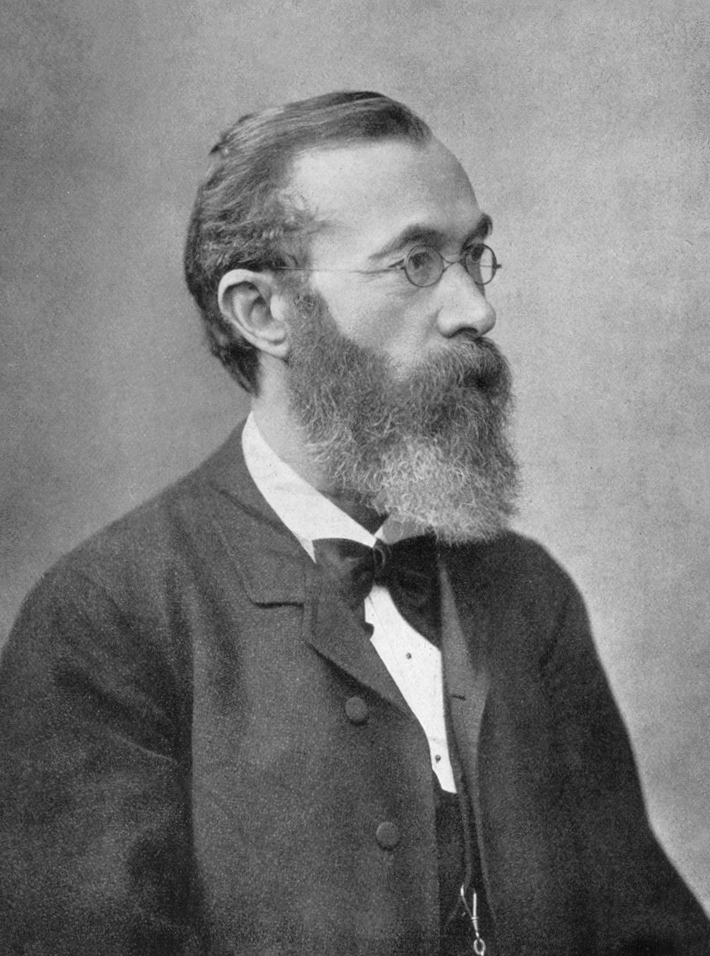
The portraits of him show a face that looks more like a schoolmaster than a revolutionary. But in a sense he led a quiet revolt. He insisted that the mind belongs to nature and that it ought to be studied as such. He insisted, too, that nature includes the human point of view. He did not wander away into the claim that the mind was only brain or only spirit. He kept a middle road, and the road became a corridor with doors. Behind one door, subjects sit with their chins in rests, eyes fixed on a cross, waiting for a letter to appear. Behind another door, scholars argue about the roots of a grammar and how ritual modifies feeling. Behind another, a group trades notes about how attention can be trained. The corridor is the discipline we now take for granted.
There is a small scene I like to imagine even if it never happened in exactly this way. A student has arrived in Leipzig, nervous, excited, with a letter of introduction in hand. He has read philosophy until the pages blurred and loved it, but he wants more than eloquence. He is ushered into the laboratory and shown the instruments. He has never seen a device that can mark a tenth of a second so cleanly. He is asked to sit and take part in a trial. He does, and afterwards he watches as his response is recorded alongside those of others, and averages are taken, and a little table of numbers is considered, and then an inference is made. He leaves the room feeling that something has occurred that is not merely a new fact but a new kind of fact. He writes home and says, in effect: you can study the mind with your hands.
What Wundt called apperception deserves a moment in the light. He used the term to name the act by which the mind gathers and shapes what is given. Perception, in the narrow sense, is the registration of a stimulus. Apperception is the active organization of that input into an event for a subject. It is where attention lives. It is where will shows its face. He did not mean that we invent the world. He meant that our experience is stitched by a power that is not passive. The laboratory’s small tasks were designed to let apperception reveal itself in timing and error and threshold. If it takes longer to respond when a choice must be made, that cost is the footprint of apperception. If a series of flashes appears to fuse into a continuous line at a certain speed, that speed marks the span of the mind’s sewing.
He spoke also of creative synthesis, the idea that elements combined in the mind can yield a result that is more than a mere sum. A chord is not three tones simply added; it is a new thing with a mood. A sentence is not five words in a row; it is a meaning with a force that none of the words carry alone. The laboratory’s modest manipulations—change the interval, change the order, change the intensity—were ways to watch synthesis at work. This was not metaphor. It was an attempt to tie our richest experiences to parameters that could be varied.
Critics, then and now, say that human life leaks out of such measurements. Where in the blink and the beep is love, grief, imagination? Wundt had an answer, though it is rarely credited to him. Love does not disappear under measurement, he would say; it refuses to be measured in the ways a tone is measured. That is not a failure of science; it is a category reminder. For love, go to the cultural side of psychology and watch how a community talks about it and what it does for their laws and songs. For grief, listen to the ritual. For imagination, read the myths. And then, if you wish to return to the bench, study the fatigue that follows a night of weeping, the narrowing of attention in sorrow, the dulling of thresholds after vigils. The point is not to flatten life. The point is to build a set of approaches that respect what each level reveals.
As the nineteenth century gave way to the twentieth, the winds stiffened. Laboratories multiplied. Clinics flourished. Theories went to war. Some of Wundt’s views were brushed aside, some revived under new names, some misrepresented by admirers who preferred his rigor without his philosophy. But when you draw a line from those early rooms to ours, from the chronoscope to the devices that measure a response now to the thousandth of a second, from the tachistoscope to the displays that flicker on a screen in an imaging machine, you see continuity. When a modern researcher speaks of attentional load and response conflict, they are not far from the old subtraction of simple from choice. When a modern theorist speaks of the mind organizing input actively, they are nodding to apperception even if the word has gone out of fashion. When a modern developmental scientist argues that some phenomena resist laboratory capture and must be studied in the wild, they are walking the trail Wundt cut when he moved from bench to cultural analysis.
The scene with which we began returns. The metronome ticks. The key clicks. A sequence of trials fills an afternoon. Outside, a university grows used to the idea that there is a new kind of room within its walls. In the evening, the professor writes notes in a firm hand. Tomorrow there will be more observers, another procedure, another small question that, if answered cleanly, will make it possible to ask a better one. The revolution here does not make noise. It makes schedules. It makes habits. It makes apprentices who will travel far and plant similar rooms in other towns. It makes the kind of patience without which a science dies young.
It would be fair to say that Wundt lived between two temptations. One was the temptation to reduce mind to mechanism in the most simplistic way: every thought is a reflex with a trace. The other was the temptation to inflate mind to mystery and surrender it to the poets only. He refused both. He built a way to speak across that divide. He is not a hero because every one of his ideas lasted; many did not. He is a hero because he made it possible for others to test theirs. He insisted on a community that could persuade by data rather than by charisma. The vanity of theory alone is that it can always be right. The virtue of a lab is that it forces your view to survive contact with a stubborn world.
There is a final image that belongs here, not because it is dramatic but because it is precise. A sheet of paper covered with numbers, each number the residue of a moment when a person’s attention flicked toward a light and a finger moved. Taken one by one, the numbers are nothing. Taken together, they draw a curve. The curve has a shape you can recognize. From that shape, you can predict what will happen if you change the delay or the brightness. From that prediction, you can build a theory, not about light alone but about the human capacity to be ready or not ready, to be caught unawares or to anticipate. The sheet of paper is a modest thing. The curve is a modest thing. Together they are a claim: mind leaves lawful traces. That claim is where psychology begins to separate itself from its parents. It bows to philosophy for its questions and to physiology for its tools, then takes the questions and the tools into a room and says, let us see.
When Wundt died in 1920, the world he had helped midwife was already arguing over what counted as real science in the study of the mind. New schools would arise and declare the inner life off‑limits. Others would bring it back by way of memory and computation. Throughout these swings, the image of the Leipzig room remains instructive. It tells us that good faith with experience is compatible with rigor. It tells us that a subject as intimate as attention can be addressed without either violating its privacy or drowning in subjectivity. It tells us that a measured second, placed in the right context, can be a map.
So we return to that first metronome as if to a heartbeat. A signal, a response. The space between them is the mind’s share of time. Wundt’s laboratory took that space seriously. It is a small act of respect that has widened into a discipline. There are now countless rooms with screens instead of brass, code instead of gears, but the work is the same: invite a person to meet a carefully arranged world, watch what happens, and let the happening instruct you. The mind, which for centuries was entrusted to speculation and sermon, can be studied with a craftsperson’s humility. That is the quiet revolution that began in Leipzig and spread outward, not on the back of a theory only, but on the strength of a room in which a person could be both subject and witness to their own attention. That room is the seed from which the modern study of mind grew, and Wundt was the gardener who planted it, watered it, and trained its branches until others could take the shears.
If you listen closely, you can still hear the rhythm of that place in any modern lab: the careful instructions, the repeated trial, the patient recording, the modest inference, the refusal to inflate a finding beyond its scope. The fact that a key takes longer to press when there is a choice to be made is not a slogan. It is a constraint. It is a friend to anyone who wants to connect the word attention to a measurable cost, and from there to build a theory of how we hold a world in mind. In that sense, the first psychology laboratory was less a museum of odd devices than a declaration of intellectual temperament. We will ask for what experience is like, but we will ask in a way that allows disagreement to be settled by something other than force of personality. We will admit that some things yield to the bench and some do not, and we will build approaches for both. We will accept that the subject of our study is us, and that this makes the work harder and more necessary.
The bell that rang in Leipzig was not a call to worship and not a factory horn. It was the impartial signal of a trial beginning. The person in the chair waited. The flash came. The finger moved. The ink marked the paper. And from that little ritual grew a discipline willing to say that human experience can be honored and examined at once. That is what Wundt gave us: a way of working that lets the mind become public without being betrayed.
Return to Transit