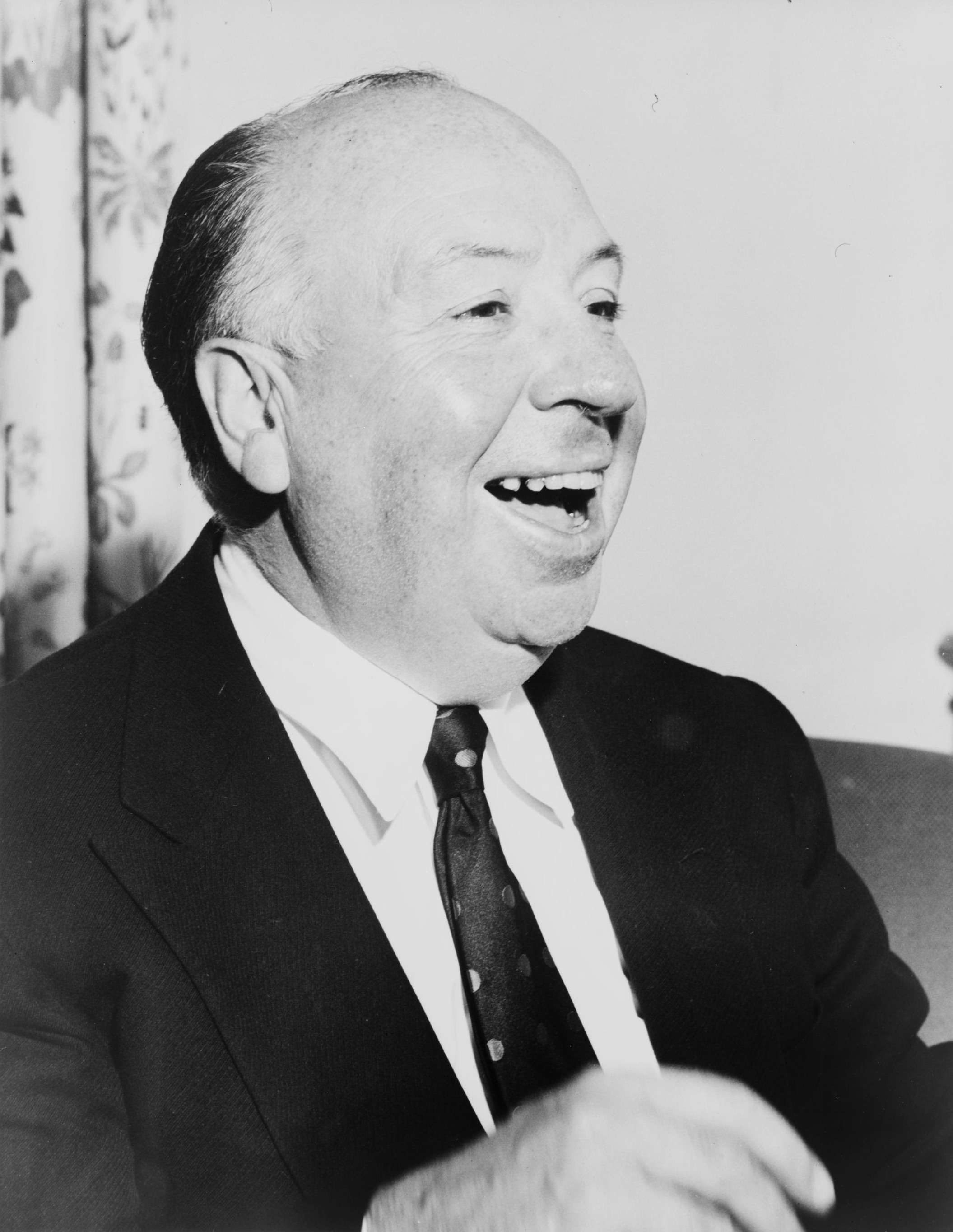
Alfonso Cuarón — The fluid camera
You’re listening to Filmmaking Giants. Today’s episode is about a director who changed what camera movement means. Plenty of filmmakers move the camera. Some move it to show off. Some move it because the budget allows it. Some move it because movement is exciting and cinema, after all, is motion. But Alfonso Cuarón’s camera doesn’t move simply to impress. It moves to place you inside a human situation—physically, emotionally, morally. It moves like attention moves. It moves like fear moves. It moves like memory moves. And by doing that, Cuarón became one of the defining filmmakers of modern cinema: a director whose technical mastery is never separate from his empathy.
Cuarón is often described as “the fluid camera” director, and the label is accurate, but it only becomes meaningful when you understand why he wants that fluidity. For Cuarón, cutting is not the default language of cinema. Cutting can be brilliant, and he uses it when he needs it, but he is fascinated by what happens when you refuse to cut. When you hold time. When you let cause and effect unfold in a continuous breath. When you force the viewer to remain present instead of escaping into montage. His long takes aren’t just virtuoso stunts; they are ethical choices. They create a feeling of responsibility. If you can’t cut away, you can’t distance yourself. You have to stay with the moment.
He was born in Mexico City in 1961, and like several of the most prominent Mexican filmmakers of his generation, he emerged from a culture shaped by political complexity, social stratification, and a constant proximity between ordinary life and systemic forces. But Cuarón isn’t a filmmaker who stays at the level of argument. He is not mainly interested in “statements.” He is interested in the lived texture of a world—how a society feels in your body. He is a director of environments. Streets, homes, schools, city noise, weather, crowds, domestic rituals. In his films, environments don’t sit behind the characters. They press against them. They shape them. They sometimes swallow them.
If you want to understand Cuarón’s humanism, start with the fact that he’s never just filming a protagonist. He’s filming a world that produces the protagonist. That’s what makes his work feel socially intelligent without turning into a lecture.
His early career includes work that already shows his gift for directing actors and shaping tone, but his international breakthrough began to sharpen the world’s sense of what he could do. Even when he makes a film that looks like a genre picture, he treats it like an opportunity to explore moral space. Cuarón’s best films are thrilling in the way life is thrilling: because life contains beauty and danger at once.
This becomes unmistakable in Children of Men, one of the most consequential films of the 21st century. On paper, it’s dystopian science fiction: humanity has become infertile, society is collapsing, authoritarian governments tighten their grip, refugees are dehumanized, and the world is losing hope. But the film’s power is not in the concept alone. Many dystopias have bleak concepts. The power is in how Cuarón makes the dystopia feel like it’s already here.
He does that by grounding the film in detail. The future is not shiny or abstract. It’s full of grime, posters, bureaucratic signage, crowded buses, cages, police raids—things we recognize. He builds a world that feels like the next step of the present, not a fantasy. And he gives you a protagonist who is not a hero by nature—Theo, a man who has lost conviction, who survives by inertia, who drinks too much, who looks away. Cuarón understands that in a collapsing world, most people are not heroic. They are exhausted. The question becomes: what could make an exhausted person choose courage?
In Children of Men, camera movement becomes the engine of that question. Cuarón and his collaborators stage sequences in long, seemingly unbroken takes that force you to remain inside chaos. There’s a famous car ambush scene where the camera floats within the car, moving between passengers as danger erupts, and the entire event unfolds with a sense of claustrophobia and inevitability. It doesn’t feel like an action scene choreographed for pleasure. It feels like a nightmare you can’t wake up from. The long take refuses the relief of cutting. It forces you into the panic with the characters.
And later, the extended battle sequence in the refugee camp does something even more radical. It turns war into lived space. Instead of watching violence from a safe editorial distance, you move through it. Bullets crack. People scream. Buildings collapse. A child appears. A mother sobs. The camera follows Theo as if it is attached to his nervous system. The long take becomes not spectacle but immersion, and the immersion becomes empathy.
That’s the key with Cuarón: his technical brilliance is always tied to a moral intention. He is not using long takes to say “look what I can do.” He is using them to say “you can’t look away.”
Yet Children of Men is not only about terror. It is also about grace—the sudden appearance of something sacred in a brutal world. The film’s central miracle, a pregnant woman, is not treated as sentimental fantasy. It’s treated as fragile fact. The miracle doesn’t erase the violence; it moves through it. And because the film is so physically grounded, that miracle lands with an emotional force that is almost shocking. It feels like hope arriving not as a speech but as a body.
Cuarón’s work often does this: it hides humanism inside apparent spectacle. The spectacle draws you in, but the humanism is what stays.
Then there’s Gravity, which at first glance looks like pure technological cinema—a survival thriller in space, a showcase of visual effects, a film built to overwhelm you. And it does overwhelm you. But again, the question is: why?
In Gravity, Cuarón uses motion and long takes to create not just tension but existential intimacy. The protagonist, isolated in the void, isn’t simply trying to survive physics. She’s trying to survive grief. The film is built around the idea that the universe is indifferent, and survival requires both technical competence and emotional will. The space environment becomes a metaphor, but it remains physically real. You feel the speed, the weightlessness, the claustrophobia of a suit, the terror of spinning out into blackness with no up or down.
Cuarón’s camera in Gravity glides and rotates in ways that blur the boundary between the character and the viewer. At times the camera seems to slip into the helmet, into her point of view, into her breath. This is not just technical showmanship. It’s psychological. It makes you inhabit panic as bodily experience. It makes you sense how thin the boundary is between life and nothing.
But Gravity also contains something quietly Cuarón-like: it turns an epic setting into a story about ordinary human persistence. It’s not about conquering space. It’s about choosing to live. It’s about the stubborn decision, in a universe that doesn’t care, to keep moving anyway.
Cuarón’s humanism becomes even clearer when you place these large-scale films beside Roma, which is in many ways the opposite of spectacle. Roma is a film of domestic space, memory, daily labor, class hierarchy, and the intimacy of caregiving. And yet it is also, in its own way, enormous. Because it treats an ordinary life with the seriousness usually reserved for kings and warriors.
Roma is an act of cinematic attention. It takes the life of a domestic worker—Cleo—and refuses to treat her as background. It makes her central without making her a symbol. It lets her exist in her complexity, her quietness, her endurance. It shows her moving through a household shaped by class and gender, and it reveals how love and exploitation can coexist. The family depends on her. The family loves her, in its way. But the family also belongs to a system that makes her labor invisible. Cuarón does not simplify this into easy condemnation or easy sentiment. He shows it.
And the way he shows it is through space and rhythm. Long shots that observe domestic routines. The sound of the city. The small gestures of work. The repetition of cleaning, washing, caring. In Roma, repetition becomes a form of truth. The film asks you to recognize that history is made not only in political events but in daily labor, in the care that holds families together, in the work that is never properly credited.
Yet Roma also contains political violence—riots, repression, social upheaval—and Cuarón connects the domestic to the historical without turning the characters into pawns. The world intrudes. It always intrudes. But the film insists that even as history roars, people still have to cook, clean, cry, hold each other, survive pregnancies, endure abandonment. Cuarón’s camera often holds distance, observing with a kind of calm precision, but that calm is deceptive. It is the calm of memory trying to be honest.
Cuarón’s craft is inseparable from collaboration. He works with extraordinary cinematography, sound design, production design, and choreography. But what defines him is how he uses these tools to shape emotional experience. His films are often intensely designed, but they don’t feel artificial because the design is in service of presence. He wants you to feel like you are there.
And this leads to one of his most important contributions to cinema: the idea that “immersion” is not only a technological goal. It is a moral one. To immerse someone in a scene is to ask them to feel responsibility for what happens inside it. To deny them easy escape. To keep them present.
That’s why the long take matters beyond technique. In a cut-heavy action film, you can be thrilled while remaining detached. In a Cuarón long take, detachment is harder. The viewer becomes a witness. And witnessing changes the emotional stakes.
At the same time, Cuarón is not a director who worships suffering. His films are full of beauty. Light on water. Children playing. The sound of a city at night. A floating moment of calm amid chaos. He understands that beauty is not the opposite of pain; it is what makes pain worth surviving. His humanism is not naive optimism. It is the recognition that life contains both brutality and tenderness, and that the tenderness is real—not a reward at the end, but something that exists inside the struggle.
So when we call Cuarón “the fluid camera,” we’re naming his technique, but we’re also naming his worldview. His camera moves because life moves. Because crises unfold in continuous time. Because memory is fluid. Because empathy requires proximity. His films ask you to inhabit a world long enough to feel it.
You’ve been listening to Filmmaking Giants. Today we explored Alfonso Cuarón—the fluid camera, long takes as moral immersion, and humanism disguised as spectacle. Next, we’ll turn to Alejandro González Iñárritu—emotional brutality, fractured time, and the mythic violence inside modern identity.
Return to Transit