Alfred Hitchcock: Suspense
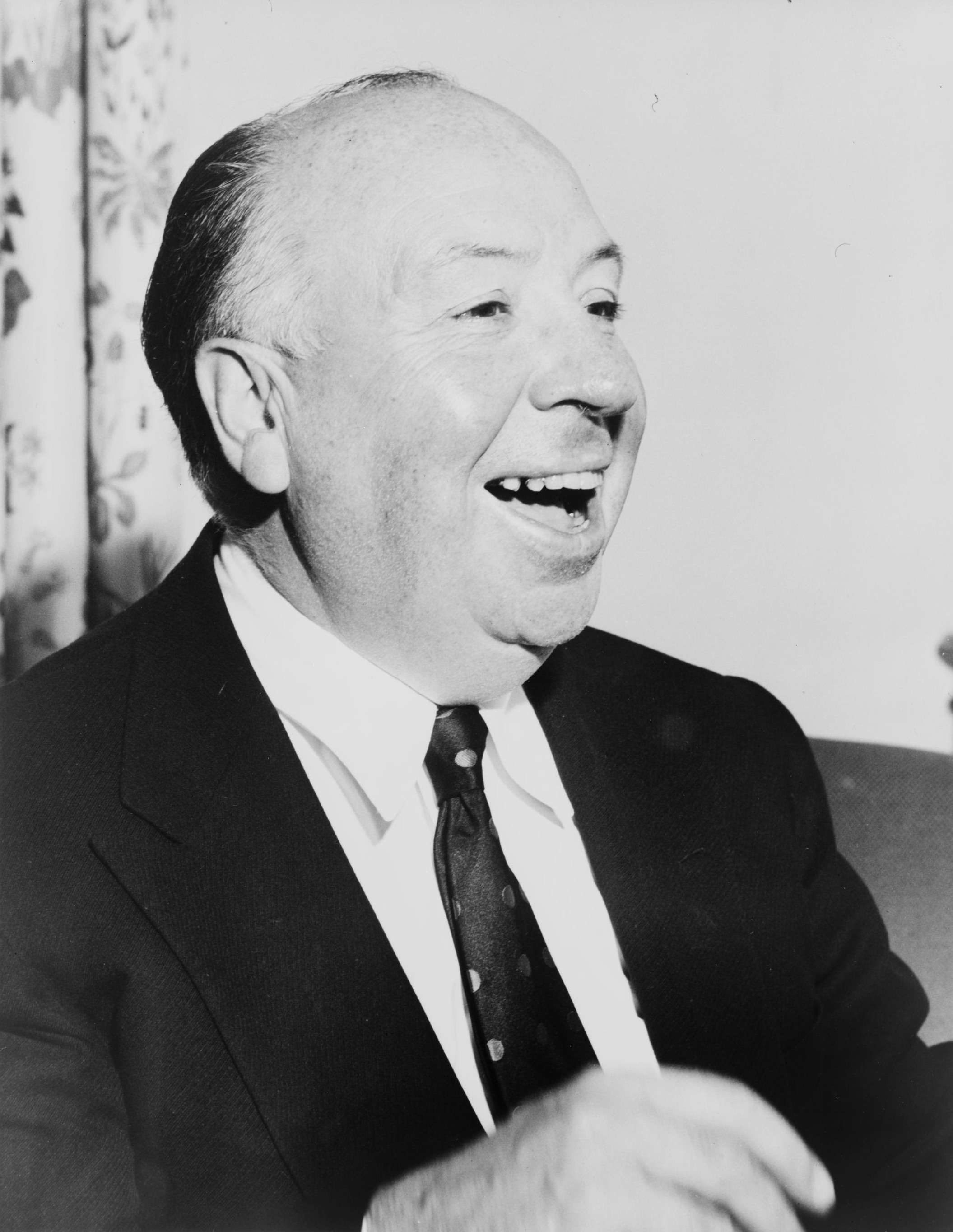
Alfred Hitchcock
Hello and welcome back to Film making giants who changed how we see the world. If Jean Renoir taught the camera to listen and Orson Welles taught it to fold time, Alfred Hitchcock taught it to look where fear looks. He made suspense a grammar, not a genre—an arrangement of information and attention that planted a metronome inside the viewer’s chest and then conducted it without raising his voice. He was a painstaking planner and a prankster, a master of subjectivity who could turn a hallway into a thought and a teacup into an accusation. To watch him work, in London studios with painted flats or on American soundstages where ceilings finally existed and microphones learned to behave, is to watch an artist persuade a massive new audience that cinema could carry the kinds of worry people confess only to their pillows.
The boy came from a house where rules were furniture. He liked to tell a story—perhaps embroidered, perhaps remembered exactly—about a childhood lesson: sent by his father with a note to the local police, placed for a few minutes in a cell “to show you what happens to naughty boys.” Whether the event occurred precisely as told is less important than the fable it became for him. Authority could be arbitrary; punishment could be theatrical; the mere idea of confinement could govern behavior long after the door opened. Those themes run like an underground river through his films: the innocent accused; guilt born of watching; spaces that discipline you even when you are alone. He studied engineering drafts and art; he learned to draw plans, not only pictures. At Islington, working his way up through intertitles and set sketches, he found the pleasure of building a story from the floor. A stint observing German sets—their shadows and angles, their respect for what a lens could do without help from dialogue—gave him a toolkit he never put down: expressionist color and shape used, not as exoticism, but as clarity.
Silent‑era Hitchcock arrives fully formed in The Lodger, a tale of a killer in London fog that stages suspicion in the transparent floor of a boarding house: footsteps above, a family below, light and glass conspire to show how fear travels through a building faster than feet do. The frames are already tidy; the camera already knows where to stand; the story already finds poetry in direction—up the stairs, down to the sink, across a street where the police cannot quite outrun a rumor. When sound comes, he refuses to let it turn pictures into radio with faces. Blackmail, shot both silent and with dialogue, contains a scene that feels like a joke and a revelation at once: a gossipy voice says “knife” over and over and over at breakfast the morning after a stabbing; every other word blurs into noise. The new medium, in his hands, becomes a way to underline consciousness, not just to label things. He hears anxiety and finds a way to make us hear it too.
The British thrillers are an education in architecture: The Man Who Knew Too Much plays intelligence as a relay across borders; The 39 Steps cuts the romance between an innocent man and a country that keeps mistaking him for someone else; The Lady Vanishes hides its plot in politeness and reveals that a train compartment is a courtroom where no one wants to hear testimony. He uses props like clauses—handcuffs that connect strangers into partners, a tune that encodes a secret, a glass of milk carried up a staircase glowing like an omen from within. His frames invite you to be a conspirator in looking. A man reads a paper; we read his face; the room reads us. Suspense, for him, is not surprise; it is knowledge distributed unequally. If a bomb is under a café table, and the audience knows it while the characters chat, the scene is alive; if the bomb simply explodes, the scene is only a jolt. He becomes the great apportioner: who knows what, when, and how will they misread it?
Hollywood asks for prestige and box office; he brings both. Rebecca starts with a sentence that is a camera move—“Last night I dreamt I went to Manderley again”—and then commits to the dream by making the house a memory machine. The heroine remains nameless because the house has more identity than she does; Joan Fontaine’s nervous shoulders teach the lens how to breathe; shadows learn to give orders. He smuggles himself in plain sight—cameos that turn into a ritual of recognition for audiences—and smuggles formal audacity into studio respectability. With Shadow of a Doubt he brings dread to an American living room and lets a beloved uncle carry death in a ring; with Notorious he turns a key in a hand into the center of a film and flies the camera from a ballroom’s ceiling to the key’s head with the calm of a bird that knows where it is going and why; with Spellbound he makes Freud a set decorator and lets dream logic cut paper and eyes alike, then pulls back to insist that the real mystery is not symbols but trust.
He is often remembered for set‑pieces as if they were arias detached from story. They are not detachable. They are arguments realized physically. Think of Strangers on a Train: the crisscross intention promised in the title teaches you how to read the tennis match, where one head in the crowd stays still while all others wag, and fear simplifies itself into a point where two lines will meet. Think of Rear Window: the camera refuses to leave an apartment because the hero cannot; the lens learns to be a good neighbor before it learns to be a witness; the view becomes a responsibility. Nothing “happens” for long stretches but watching. Hitchcock turns watching into plot. He makes us accomplices—good ones when we catch the murderer, bad ones when we enjoy the women framed without permission. The film knows what it is doing to us. It lets the joy of looking rhyme with the danger of looking. That self‑knowledge is one reason it still feels contemporary: in the age of cameras in our pockets, we are all James Stewart with better zoom.
Think too of Vertigo, the most interior of his thrillers. A man’s desire—to be in control of stairs and women and mortality—finds an instrument in a lens, and the lens is not always his. The famous illusion, the dolly zoom, stretches the stairwell while the camera moves toward or away, making space wobble like a mind. The illusion isn’t a parlor trick; it is an x‑ray of obsession. Color carries more meaning than dialogue: green like the underwater glow of memory, red like a stop you ignore at your peril. Spiral motifs recur until the room itself seems to hypnotize. He creates a world in which the staging of a woman’s entrance is a theology; then he indicts the theology by showing what it costs. The ending refuses comfort not because he dislikes us but because he respects the power of the patterns he has made. When you arrange a soul into a system, the soul will eventually fall to the floor.
North by Northwest turns running into sentence construction. A man misnamed becomes a man remade; a crop‑duster attacks him in an open field that should be safety and becomes an arena because no walls exist to hide behind; the Mount Rushmore finale turns faces carved of stone into a ladder for escape and a taunt about national myths. Hitchcock composes geography into irony. He is already a composer in another key—sound. Bernard Herrmann, his equal in rigor, writes scores that think. In Psycho, strings stab where the knife cannot be seen; the sound becomes the cut. The shower scene is famous because montage gives violence to the viewer’s expectation rather than to the body on screen; not one shot is obscene, yet the mind generates its own obscenity in the space between images. Hitchcock wants us to notice that our minds complete crimes faster than cameras can. Marketing becomes part of the film’s method; theaters keep latecomers out; the director asks patrons not to reveal the twist; he is educating an audience in how to be a partner to a film rather than a consumer of it.
He removes non‑diegetic music almost entirely for The Birds and replaces it with a world that sings without voices: electronic tones, wing noise, beaks against wood, children’s cries. The gimmick turns into a worldview. Nature becomes an orchestra whose conductor cannot be trusted. He hides behind wit because clarity can frighten the timid: the world does not owe you explanations; it owes you what it gives and then takes. In Marnie, colors flash like emergency lights in a brain; technique stands up and introduces itself as psychology. Late in his career, when some argued that he had already said all he could say, he made Frenzy, where a long tracking shot backs out of a stairwell after a woman has been admitted into an apartment; we are spared the murder, yet the tracking shot itself makes us complicit in the world’s decision not to intervene. He knows how to weaponize absence. He has been doing it all along.
People often summarize his method with the word MacGuffin, the thing everybody in a story wants that we will not bother to explain because the wanting is the real event. The uranium bottles in Notorious, the microfilm in North by Northwest, the secret in The 39 Steps—these are excuses for motion, pretexts for character to reveal pattern. The joke contains a serious discipline: if you arrange attention properly, the engine of a film is motion through moral space, not trivia. He uses pre‑visualization like a moral, too. Storyboards are his catechism; he arrives on set with the film already shot in his head, which is both a strength—he wastes little—and a weakness—spontaneity must fight to be admitted. Alma Reville, his wife and collaborator from the beginning, is the quiet co‑author of this method; she edits his work before the editor gets it; she strips fat, tightens screws, suggests alternatives that save sequences. The myth of the singular auteur sits awkwardly here: the films bear his imprint, yet they are built by a company—Herrmann’s scores, Saul Bass’s designs, Edith Head’s costuming, Robert Burks’s images, the producers who both constrained and enabled the trick.
There is also a record we must not tidy away: actresses who worked with him have left accounts of a man who used his power ungenerously, sometimes cruelly. Tippi Hedren has described harassment and punishment when she refused it; crew members have supplied corroborations and disputes; the archive is messy because lives are. The craft does not excuse any of it, and the craft itself teaches why excuses are seductive: images can soothe conscience until it stops reporting. If these films have trained us to notice what we are doing with our eyes and attention, they can help us keep score of power, too. The better we understand the apparatus that charms us, the harder it is for us to become its victims.
What should a contemporary maker steal from him? Start with the frank management of point of view. Choose what your viewer knows and when. Give them more than your characters for suspense; give them less for shock; align them tightly with one person to deepen empathy; float them above the room to indict the room. Hitchcock turns point of view into a dial, not a switch. The dial has values. It is a covenant about what the audience is asked to carry. Next, steal the habit of restricting space. A lifeboat, an apartment, a concert hall, a phone booth—his confinement is not a gimmick; it is a forge. When space limits action, character becomes legible. Restriction also clarifies design: you can orchestrate sound, light, and movement so that meaning is inevitable rather than announced.
Steal the discipline of set‑piece design. A set‑piece is not a spectacle that interrupts plot; it is a paragraph of logic expressed in bodies. In the Albert Hall climax of The Man Who Knew Too Much, the music gives the assassin timing; the cymbal crash sets the deadline; the cutaway to a drumstick raised prepares the cut to a hand lowered; the mother’s face, learning what she must do, contains a tragedy larger than its period setting. The lesson is not to find symphonies; it is to find clocks your scene already carries. A lunch rush, a storm cell, a shift change, a calendar cutover—design around the pressure a moment contains.
Steal, too, the maturity about sound. He uses silence as punctuation and chatter as camouflage. Let ambient noise carry dread; let a too‑steady tick make nerves fray; let a phone ringing become a moral test. In your work, resist music as anesthetic; deploy it as argument. Herrmann’s strings don’t soften; they insist. When you cannot afford an orchestra, you can still afford a room with honesty—the buzz of a light, the flap of a banner, the far siren that implies a city.
Steal the willingness to misdirect ethically. He lies so that truth can be felt when it arrives: the wrong man on the statue, the right man in the wrong place, a harmless staircase that remembers what lives at its top. We live in a time where misdirection is constant and exhausting; the integrity of a Hitchcockian misdirection lies in the reveal. He restores the balance with precision. Learning when to admit the truth—early to create dread, late to create remorse—turns information into mercy.
And then, after theft, take a step that is not in his films but is implied by the best of them. When you decide where the camera goes, you are deciding how to regard people. Regard them firmly but fairly. When you design a twist, ask what habit you are teaching the audience. Suspense, arranged lazily, can train a crowd to enjoy humiliation; arranged with discipline, it can train a crowd to notice danger earlier and to take responsibility for what it watches. Hitchcock made a public out of spectators; the next task is to make citizens out of that public, people who know how they are being persuaded and who choose what to do with that knowledge.
He had a late‑career habit of introducing his television anthology in silhouette, wry and round, a man who turned himself into a logo. It was a joke and a promise. He would not waste your time; he would complicate it. He would show you that a corridor is a sermon and that a glass of milk glows for a reason, and then—when the joke had carried you far enough—he would let you feel the weight of what you had suspected all along. The craft holds up because it keeps its oath to attention. The films whisper: pay attention to what you look at and to what you are asked not to look at. If you keep that oath in your work and in your rooms, you will already have learned the best thing Alfred Hitchcock had to teach.
Thank you for listening to this episode of Film making giants who changed how we see the world.
Produced by NOMOTO MEDIA – Music by NOMOTO MEDIA.
Return to Transit