Greed Builds the Machine
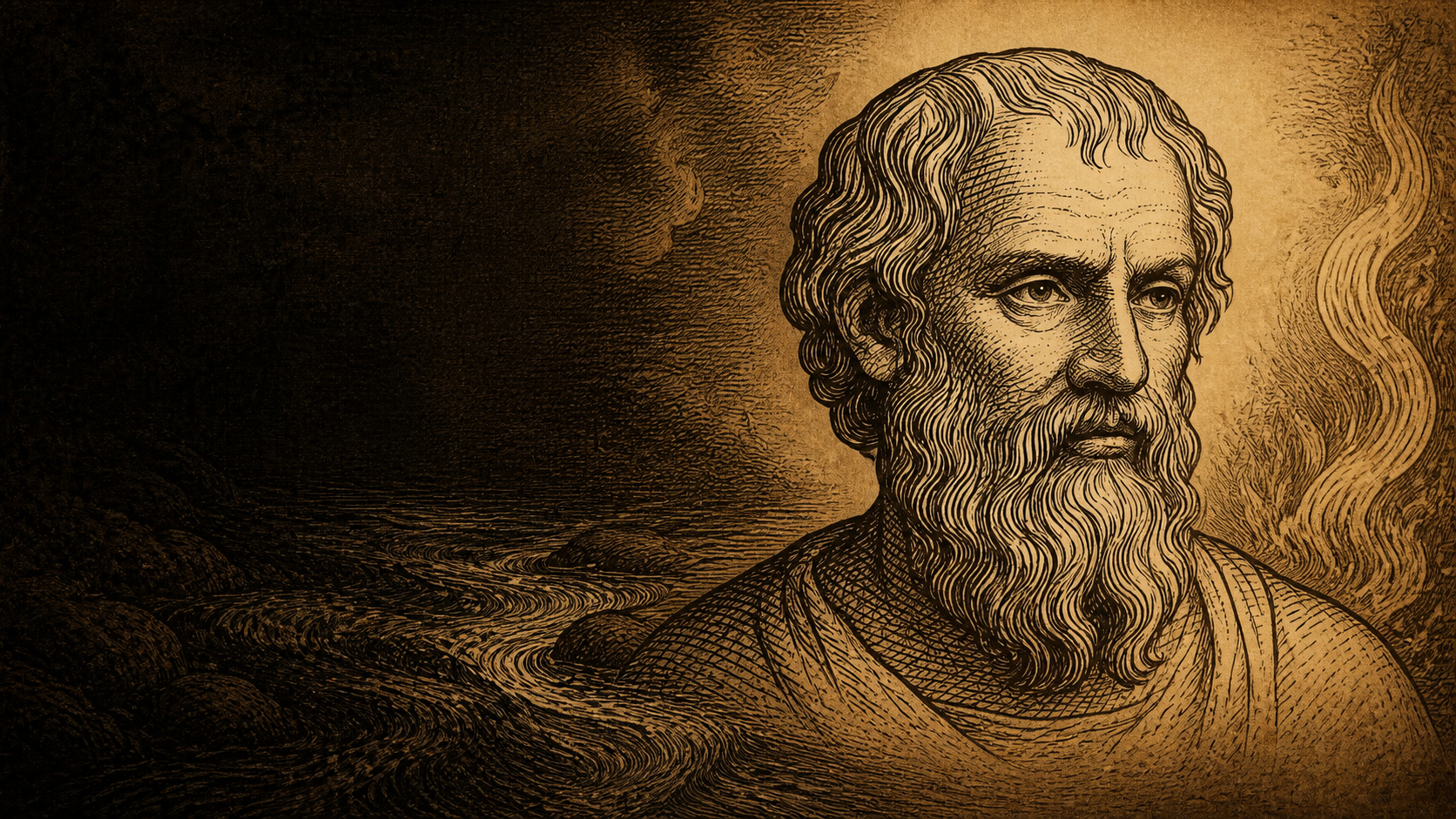
Dante placed the greedy in the Fourth Circle of Hell—pushing great weights against one another, forever colliding, forever repeating the same pointless motion. Their punishment was not fire. It was futility. Endless effort without meaning.
He understood something simple and uncomfortable:
Greed is not just excess desire.
It is misdirected energy—scaled without purpose.
That insight feels less like literature now and more like diagnosis.
Because we are building systems that scale exactly that.
Artificial intelligence is often described as the great equalizer.
A tool that will democratize knowledge, expand access, and raise the baseline for everyone. A technology that, unlike those before it, will flatten the world rather than divide it.
It’s an appealing idea.
It is also unlikely.
Not because AI lacks potential—but because it does not exist outside the system we built. And that system is not neutral. It is driven by incentives. By competition. By accumulation.
By greed.
AI is not becoming human.
It is becoming something functionally different—and more scalable.
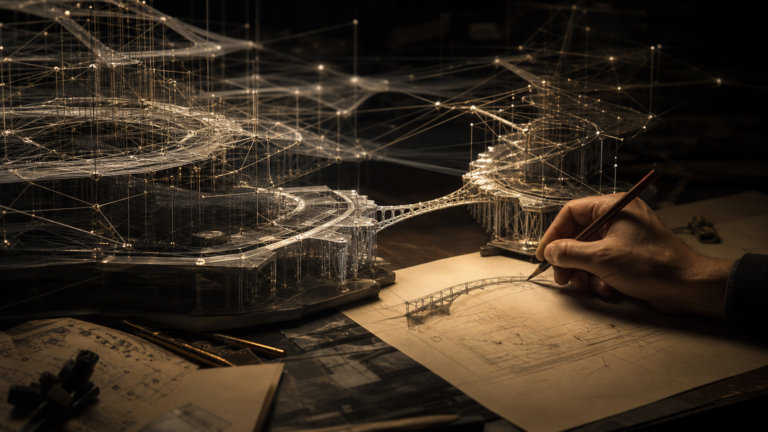
That scalability is its defining feature. It can extend cognition across systems, compress time, multiply output, and operate continuously. It can make decisions faster, process more information, and act across domains that no individual could manage alone.
But scalability does not determine direction.
It amplifies what already exists.
And what already exists is uneven.
There is a persistent belief that technology naturally distributes value.
That once a tool becomes powerful enough, it spreads. That access expands. That the benefits reach everyone eventually.
History does not support that belief.
Every major technological shift has followed the same pattern:
Concentration first.
Diffusion later—if at all.
The industrial revolution did not begin by lifting all workers equally. Electricity did not immediately reach every home. The internet did not erase inequality—it reorganized it.
AI is following the same path.
The difference is that AI does not just automate labor.
It scales intelligence itself.
And intelligence—applied at scale—is leverage.
This is where the divide emerges.
Not between those who have AI and those who do not. That line will blur quickly. AI will be embedded in devices, applications, and systems. Most people will interact with it daily, often without realizing it.
The real divide is more subtle.
It is between those who:
- rely on AI
- direct AI
- control AI
Most will rely on it.
A smaller group will direct it—building workflows, shaping outputs, using it intentionally to multiply their effectiveness.
An even smaller group will control the systems themselves—defining access, setting constraints, determining what is possible.
That is where power accumulates.
Greed does not need to be explicit to operate.
It is embedded in the structure.
AI systems require enormous resources to build and run. Training, deployment, maintenance—all of it depends on compute, infrastructure, and capital. These are not evenly distributed.
So the system organizes itself accordingly.
More powerful models cost more.
More capable systems are restricted.
More autonomy is gated.
Not because it is malicious.
Because it is expensive.
The result is stratification.
Everyone has some form of AI.
Not everyone has the same AI.
Capabilities differ.
Speed differs.
Depth differs.
And over time, those differences compound.
This extends beyond software.
Robotics brings AI into the physical world.
At first, these systems are expensive—industrial machines, specialized platforms, high-cost deployments. They operate in controlled environments, owned by organizations that can afford them.
Then they improve.
Costs decrease. Capabilities increase. Commercial versions emerge.
But the pattern remains.
Higher-end systems remain more capable.
Lower-end systems remain limited.
Money dictates quality.
Money dictates proficiency.
So the divide is no longer just cognitive.
It becomes physical.
Who has systems that can act in the world?
Who can deploy intelligence beyond the screen?
That is a different level of leverage entirely.
There is a tendency to imagine this future in dramatic terms.
A sudden transformation. A clear break. A moment where everything changes.
That is not how it will happen.
The future of AI is not dramatic.
It is ambient.
It will be integrated into operating systems, into software, into everyday processes. It will guide decisions, filter information, execute tasks. It will feel natural. Normal. Unremarkable.
And in that normality, the structure will solidify.
This is where Dante’s image becomes relevant again.
Not as metaphor, but as warning.
The greedy in his vision were not simply punished for wanting more.
They were trapped in a system of endless accumulation—motion without progress.
We are building something similar.
A system that can generate more output, more content, more decisions, more automation—at scale. A system that increases capacity without necessarily increasing meaning.
If the underlying incentive remains accumulation, then AI does not correct it.
It accelerates it.
This leads to a final misunderstanding.
That AI will make the world more rational. More objective. More fair.
But AI does not remove human structures.
It inherits them.
And then it scales them.
So the question is not whether AI will change our lives.
It already is.
The question is what it will amplify.
If the system remains driven by accumulation, competition, and control, then the result is not equality.
It is amplification of difference.
This does not mean collapse.
It does not mean catastrophe.
It means structure.
Hierarchy.
Layers of access and capability that become normalized over time.
And that normalization is the most important part.
Because once something feels normal, it is no longer questioned.
Dante imagined hell as repetition.
We might build something more efficient.
A system that scales the same patterns—faster, cleaner, and with far greater reach.
AI will not create greed.
But it will give it tools.
And tools, at scale, tend to reveal what was already there.
Return to Transit