Jean Sibelius – The Architect of Northern Light
The hall is dark enough that you can hear the architecture. It is winter outside, that kind of northern winter that does not so much snow as restrain, and inside the orchestra waits with the stillness of a lake under ice. A single note sounds—quiet, unassuming, more a contour than a statement—and then another answers from a different register, and then something like a current begins to move under the surface. Jean Sibelius is not a painter of big tunes arriving on horseback; he is a cartographer of pressure systems, of weather that only becomes obvious when you feel it over time. In his world the smallest cell of melody can grow rings like a tree, the way a pine turns light and drought into structure. You think nothing is happening until you realize everything has changed.
He was born in 1865 in Hämeenlinna, a garrison town of the Grand Duchy of Finland when Finland was not yet independent but a province under Russian rule. His family spoke Swedish at home, as many educated Finns did; he learned Finnish at school, a decision that would matter because language and music are not separate countries for him. He studied the violin with the seriousness of a young man who means to become a soloist, a dream that stayed with him long enough to shape how he would write for the instrument for the rest of his life. At the Helsinki Music Institute (later named for him) he fell into a circle of artists who were inventing modern Finland—painters, poets, nationalist agitators, the Jarnefelt family whose daughter Aino he would marry and whose elders believed art and independence could share a table. He went to Berlin, then to Vienna, learning the orchestral craft so thoroughly that his later austerities are not naïveté but choice. He was a shy man in crowds, a ferocious listener in rehearsal, a citizen who understood that symphonies could be both instruments and arguments.
Before the symphonies he wrote stories out of the country’s own myth-stock, the Kalevala, whose heroes do not behave like imperial demigods so much as like village magicians who have learned the world’s passwords by repetition. The early tone poem Kullervo is huge and raw, as if a young composer had cut a slit in an epic and poured an orchestra inside. The Lemminkäinen legends—especially the movement that would become The Swan of Tuonela—sharpen the focus. An English horn turns into a ferryman’s voice; a dark string carpet becomes a river in the underworld; the slow line bends like a reed in the current. En saga learned to narrate without libretto. The Karelia music found a public voice, something like civic pride sung in a language without words. And then there is Finlandia, which has suffered the fate of all public anthems: overuse. It is easy to forget how dangerous it sounded when it was new—a press-celebration pageant in 1899 smuggling a protest under the noses of censors. It was a mask of pageantry over a face of defiance, and audiences heard it that way.
He wrote the Violin Concerto as if writing a letter to his younger self. The composer who had given up the dream of being a virtuoso wrote something that only a virtuoso can play and yet feels inward, solitary, private even at full throttle. The opening is fog and breath; the violin appears not as a hero but as a witness; the orchestra steps forward in blocks that finally cohere into a field where the soloist can run hard without leaving home. There is bravura, but the bravura is never decoration; it is a method of getting from an obstinate idea to the next necessary place. The slow movement knows how to warm a room by holding a single ember rather than throwing logs. The finale has been called a “polonaise for polar bears,” and you can smile at the phrase while acknowledging its truth: the dance is heavy because the ground is real. The bow digs deep; the rhythm feels like a stride learned on snow. It is one of the few concertos where the cadenza does not show off independence so much as tighten the knot of the argument.
Sibelius’s symphonies are the spine of his legacy. You can hear his temperament—reserved, stubborn, morally allergic to waste—turn into a new way of imagining large form. In the First Symphony he begins in a language that remembers Tchaikovsky: a clarinet monologue over a drumroll hush, a romantic swell that feels like night air on stone. But even here the materials behave like seeds, not gestures; themes return altered by weather rather than by simple repetition. The Second Symphony looks, at a distance, like one of those 19th-century affirmations that turn disquiet into festival. It is a public piece in the sense that it can stand in front of a country and be heard as resolve. But if you pay attention, the triumph is not painted; it is grown. A small turn of notes—just an interval and its reply—learns to be many things: a question, a call, a stair. By the last movement the climaxes arrive not as fireworks but as architecture finally bearing the weight it was built for.
The Third is leaner, more classical, as if he had taken a plane to the surface and shaved off the fat. There is no grand slow movement to lie down in; there is forward motion that keeps finding the right speed. You can sense the composer’s dislike of fluff turning into craft. It is a hard thing to write the right number of bars. The Fourth is the first real shock for audiences who wanted the Second forever: spare, inward, granite. It does not invite; it asks. It speaks the language of intervals, of a particular distance between notes becoming a kind of fate. If it has a temperature, it is the temperature of a cold spring—pure, bracing, a little metallic. It is not cruel; it is honest. He wrote it after surgery for a throat tumor, when death had brushed his sleeve, and while it is cheap psychology to equate biography with style, there is, in the way the piece avoids sweet answers, something of a patient who has learned to distrust opiates. The middle registers speak like an old friend leaning in. The bass keeps its counsel. The end does not solve anything that life cannot solve.
The Fifth belongs to the handful of symphonies that have learned how to turn a horizon into a cadence. He revised it several times between 1915 and 1919; the piece is a record of a man clarifying his own idea in public. Where other composers might begin with an overture-like splash, Sibelius begins with a blur that refuses to be background. It is like walking into a clearing to see clouds moving with inexplicable order. Later, horns step forward with a theme people like to associate with swans he watched wheeling over Ainola, his home. Whether or not that is literally true, the music behaves like a flock in air: one shape reorganizing into another, a collective intelligence making curves that no single voice can propose. The end is as famous as an ending can be: hammer-blow chords with long silences between them, each silence the size of a thought. When the last hit falls, the room does not applaud right away because the silence has become a thing. He changed the way resolution could sound—less exclamation point, more period written with the calm of someone willing to stop.
The Sixth is the opposite of grand. He called it “cold spring water,” and the image is accurate: it is modest in scale, modal in flavor, lyrical without perfume. Half the time the music seems to be murmuring to itself, remembering something it refuses to turn into rhetoric. A Dorian brightness washes the edges, and the textures are so clear that when the bass moves it feels like bedrock shifting. It is a piece for people who are not in a hurry; it refuses to convince by volume. The Seventh is the experiment that worked so well it looks inevitable: a single movement that behaves like a whole symphony compressed to its true essentials. There are not four panels; there is a continuum that keeps finding its own joints. The trombone emerges with a theme that sounds older than the orchestra around it, like a carved column left standing in a rebuilt room. The piece climbs a long slope without panting. It ends before you are ready, the way some truths end—because they are finished, not because anyone wished them to be.
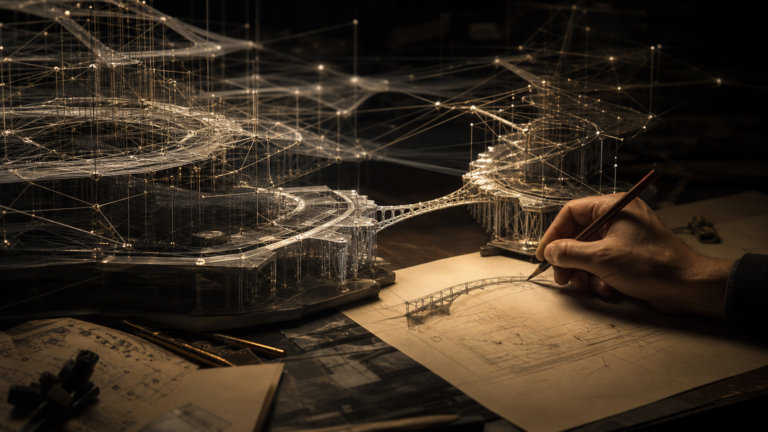
He wrote other landmarks away from the numbered spine. The Oceanides is his most outwardly impressionistic score: you can hear Debussy in the play of spray and drift and cloud, and yet the logic is pure Sibelius, motivic germination under the shimmer. Pohjola’s Daughter stages a myth on a trestle of grim patience; a craftsman builds a bridge impossible to finish, and the orchestra shows you why. Tapiola, from 1926, is the forest as a living will. It is not the idyllic forest of postcards but a self with a thousand eyes and a slow, mossy intelligence. Here you can hear something like fear without panic—an awareness that the human is small and the world does not owe us explanation. The music is monochrome in the best sense, like a charcoal drawing so well shaded that you forget you are not seeing color. He wrote The Tempest late, more than incidental music, a last show of his uncanny ability to make Shakespearean weather audible without obvious quotation.
If you try to describe his technique, you keep returning to the same words: economy, organicism, rotation, pedal. He begins with a cell—a two-note hinge, a curve of three or four notes—that seems innocent until it reappears everywhere, disguised not by costume but by function. Where Beethoven hammers a motive into destiny by insistence, Sibelius grows it by placing it in new soils: a shift of register and it becomes a horizon; a change of rhythm and it becomes gait; set against a long pedal point and it becomes memory. He loves drones, not because he lacks harmonic imagination but because a steady ground lets you hear how fragile, how brave a small change can be. The famous “Sibelian accelerando” is not a simple getting faster; it is a long tightening of spans, a shortening of phrases so that the ear experiences inevitability as the redefinition of time. He often writes not melody plus accompaniment but a single texture in which everyone’s job matters. You can take one clarinet out and the ceiling leaks.
He is a master of register. The basses know things the violins do not. The violas are never a cushion; they are a tendon. The winds are characters, not perfume: the oboe can be a neighbor with necessary gossip; the flute can be frost on wire; the clarinet can be a lake at evening that keeps its reflections straight. The brass are not a fortissimo button; they are parliament and prophecy. He writes perfectly for horns because he lived with them; he writes perfectly for timpani because he understands what happens to a human body when a room pulses underfoot. He favors unisons at crucial moments, a risky move unless you know exactly where the pitch is; in his hands a unison can be moral—everybody agreeing because reality insists.
The relationship between his music and national identity is complicated in the right way. He composed at a time when the idea of Finland was an argument fought in newspapers, in painting studios, in cafés, in churches, on theater stages, and finally in the streets. His music could be used as a banner, and sometimes he raised the banner himself; Finlandia was written to be understood by people who needed courage. But he also resisted the reduction of art to emblem. When people asked for more patriotic songs, more ages-of-gold in D major, he did not oblige. The symphonies turn private, sometimes stern, as if he were saying: a nation cannot stay a nation by singing only its best self back to itself. It must be willing to listen to complexity and to live without constant applause. His own politics were not those of any party; they were the politics of a person who believed in the dignity of his place and in the duty of telling the truth in the language he had sworn to honor.
The life outside the scores was restless and ordinary and dramatic. He drank, sometimes disastrously; he swore off drink and relapsed and swore off again. He loved city evenings and restaurant noise and then fled back to Ainola, the wooden house Aino kept like a sanctuary for his work. He spent money he did not have, paid debts with conducting fees, traveled like a man who understood that Europe is both a market and a classroom. He met Mahler in 1907 when Mahler conducted in Helsinki. The two men talked about the nature of the symphony: whether it should be like the world or like a world stripped to its structure. It is tempting to make them opposites for the sake of an argument; it is truer to hear them as colleagues who each pointed to a truth. He underwent that throat operation and oddly enough his music’s voice grew clearer, less willing to please by swelling far; it chose inward heat over rhetoric. His success arrived early and then became the hard work of consolidating. He was famous and lonely, in demand and skeptical, polite and stubborn. He burned, it is widely reported, portions of an Eighth Symphony in the 1940s, an act that critics have turned into a morality tale—pride, doubt, perfectionism, fear. The simpler truth may be unsatisfactory: he did not believe the pages matched his standard, and he would not let them outlive him to be debated without him. The silence of his last decades has been romanticized into a frost; it might be closer to a long, cold discipline that refused to mail out routine.
You can map his influence forward without turning him into an ancestor everyone must acknowledge. The Nordic generation that followed—Nielsen in Denmark, later Pettersson in Sweden—learned different lessons from him. Outside Scandinavia, his sense of large form that grows from cells rather than blueprints quietly infected the 20th century. Film composers borrowed not his themes but his sense that harmony can hang long on pedal while the surface moves with human speed. Minimalists respect the way he controls time without making time a gimmick. Post-Romantics who could not quite trust late-Romantic surplus found in his restraint an ethic. Even conductors who disagree about everything else agree that Sibelius requires rehearsal hours not because the notes are unfamiliar but because the margins are tight; a single rubato indulged can unbalance a movement that behaves like a long bridge.
If you want to walk through the symphonies by ear rather than by history, you might pay attention to how each one solves a particular problem. In the First, the problem is how to write yourself free of your heroes without pretending you never had any. He uses Tchaikovsky’s warmth but refuses to let Tchaikovsky’s paragraphs dictate his own. In the Second, the problem is how to write a public statement that is not propaganda. He gives the audience the thrill of arrival but earns it by accumulation, not by slogan. In the Third, the problem is how to be brief without being small. He uses neoclassical clarity like a spine under a coat people forget to admire because it fits so well. In the Fourth, the problem is how to speak when you have nothing to sell. He trusts silence and contour and makes a symphony out of a few steps. In the Fifth, the problem is how to turn the perception of grandeur into a finale that does not lie. He writes hammer-blow chords with gaps so the truth can breathe. In the Sixth, the problem is how to be pure without being pious. He brings in modes and spring water and refuses to decorate. In the Seventh, the problem is how to build an unbroken argument that never sounds like an experiment. He writes a single movement where everything feels earned and nothing feels forced. In Tapiola, the problem is how to write fear that is not theater. He writes the forest as a will, not as a backdrop.
The clichés about Sibelius are worth addressing because they distort how listeners approach him. One cliché says he is a “nature composer,” as if he spent all day looking at trees and turning bark into basslines. It is true that landscape happens in his sound; it is false that landscape is his subject. He is a composer of moral weather, of how a person stands up inside a pressure system and decides to move or to wait. Another cliché says he is provincial, a man who wrote great music in a small country and therefore did not partake of the century’s high modernism. The reality is that he invented a modernism of his own: no manifestos, no scandal as a career, but a radical rethinking of how large form creates meaning. He turned away from spectacle toward growth, from extroversion toward density. That, too, is modern. A third cliché says he went silent because he failed. It would be a kinder world if we allowed artists the dignity of silence. Not every page a person writes is a page a person owes us.
What does Sibelius feel like in the body when the music is played well? It feels like a posture. Shoulders down, attention forward, breath easy but ready. The pulse is rarely flashy; it is prepared. The climaxes are peak-lines, not explosions; they have backstory. The strings are asked for grit as often as for shine; the winds must speak like thoughtful neighbors; the brass have to project authority without swagger. When conductors get him wrong, they impose generalized warmth or generalized gloom. When they get him right, the details make the heat. You begin to hear how a viola line is not filler but argument; how a second bassoon is not an “extra” but a conscience; how a timpani roll maps the size of a space so that everything else can be scaled. Orchestras come to love him because he rewards ensemble intelligence. A section that listens wins.
He died in 1957 at Ainola, after a very long life in which Europe burned twice and rebuilt itself twice and then began to forget its lessons again. In his last years he did not talk much about the Eighth or about his own place in the pantheon. He walked. He listened to birds. He enjoyed a cigar. He read. He kept the everyday. People brought him praise, and he accepted it with the unease of a man who knows how much of his best work comes from refusing to accept easy praise. Aino outlived him and kept the house as a museum of work and restraint. Visitors come, stand by the piano, look through windows at pines and water, and try to imagine how a person turned such quiet into such pressure. The answer is simpler and more demanding than romance allows: he showed up, and he used only what the piece needed.
If you’re meeting him for the first time, you could do worse than to start with the slow movement of the Fifth: listen to how the sense of horizon is built from almost nothing—an ostinato that is not mechanical, a horn that does not grandstand, strings that rise like breath on a cold morning, the exact number of bars needed for the body to accept the thought. Then try The Swan of Tuonela in a room where nobody needs you for ten minutes. Then walk the Seventh in one sitting and allow the trombone to be your proof that dignity still has a sound. If you already know him, ask a harder question: where in these scores does he ask for your patience, and what does he give you for it? Patience is not a moral achievement in art; it is a trade. He gives you structure you can trust.
There is an argument in music about whether large forms should be like speeches or like landscapes. Sibelius refuses the choice. He makes forms that are speeches grown like landscapes. They have arguments and also weather. They have turns and also seasons. He is not sentimental about nature, and he is not sentimental about people. He accepts that longing exists, that pride exists, that grief returns, that joy can be quiet, that solitude is not always a punishment, that public hope needs private discipline to survive. He is not a moralist; he is a builder of rooms where those facts can be felt without apology. The northernness of his music is not a matter of snow and pine; it is a matter of light at certain angles and the long lengths of afternoon when winter teaches you to take care of your fire.
Imagine once more that winter hall. The audience’s coats are still damp at the cuffs. The conductor’s hand rises with the economy of a person who does not believe in waste. A line begins—just a few notes—and then returns in a new shape and then becomes a new floor. Time tightens the way a glove tightens on a hand in cold. A harmony turns and does not show off. A horn calls, and it is not heroism; it is information: now. A string choir finds a single bow-length that all agree to share. Near the end you realize your breathing has matched something you did not choose. The final cadence does not congratulate you; it releases you. Out in the street the air is clean and a little brutal, and your steps feel like part of a longer walk that began before you and will continue after. Sibelius does not shout. He does not plead. He asks you to be as serious as he is, not grim, not grand, just exact. And then he proves that exactness can be a form of love.
Thank you for listening to this episode of Classical Music Giants. In our next stage, we cross from northern granite to Russian velvet and iron—Sergei Rachmaninoff—where memory sings with the hands and nostalgia learns to look the 20th century in the eye.
Produced by NOMOTO MEDIA and NOMOTO MEDIA.
Return to Transit