Joseph Haydn – Father of the Symphony
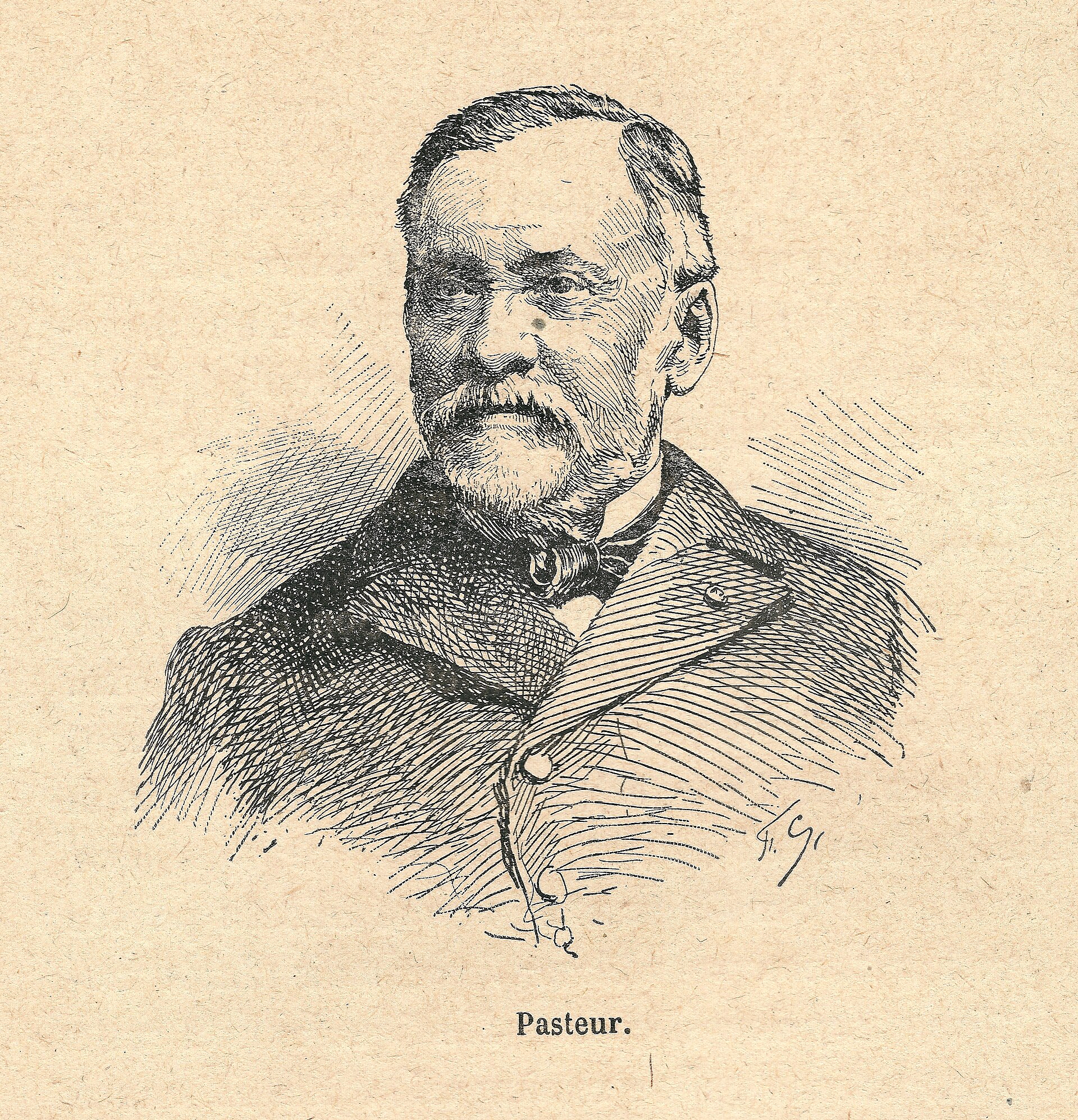
The candle gutters once, then steadies in the small room, and the young man bends closer to the page so his shadow does not swallow the notes he is scratching by lamplight. His pen squeaks on coarse paper. Outside, Vienna sleeps, but he cannot. He is twenty, maybe twenty-one, with an empty stomach and an overfull head, and music will not let him rest. The thin coat on the chair is his only winter luxury. The room smells of ink and cheap bread; the cracked window admits a draft with every gust off the Danube. In the morning he will stand outside a noble’s door and wait to see if any student needs lessons, if any salon needs a violinist, if anyone will advance him a coin or two. For now he writes because writing convinces him the future is real. The young man signs the page carefully: Joseph Haydn.
He was born in 1732 in the village of Rohrau, nearly on the border with Hungary, the son of a wheelwright who loved to sing. The house was small and the world smaller, but a high clear voice carried him far. A relative who heard him sing urged his parents to send the boy to school in Hainburg, and then to Vienna itself, where the choir of St. Stephen’s Cathedral was hungry for bright, precise treble voices. For nearly a decade he lived within those Gothic walls, his days braided with prayer, Latin, counterpoint, the discipline of a liturgical life. One day the voice broke and the chapter turned abruptly. No angelic tones, no dormitory bed, no school. Haydn stepped out into the city with nothing but a head full of music, a second-hand violin, and the stubborn cheer that would keep showing up when circumstances did not.
Years followed that would have broken a softer spirit: cheap rooms, too little to eat, too much cold, and an endless hustle for work. He played street serenades under windows that did not open, copied parts till dawn, coached any pupil who could pay. He sang as a freelancer in whatever chapel wanted him, and he studied any score he could lay hands on. The test of a poor composer is not the first idea but the hundredth correction, the patience to smooth what nobody pays you to polish. Haydn had that patience. He also had a gift for friendship that brought help when technique alone could not. The aging maestro Nicola Porpora took notice and gave the young man menial work—tuning, copying, accompanying lessons—in exchange for hard truths about composition that no polite teacher bothered to say. Porpora’s scolding sharpened him. The poverty years gave him a resilience and a sense of mischief he never lost.
Then came the life-changing summons. A small aristocratic orchestra needed a leader, and Haydn proved he could write quickly, rehearse firmly, and keep the music flowing even when a horn went missing or the bassoonist fell ill. Word of his reliability climbed the ladder of nobility. Before long, he entered the orbit of the Esterházy family, among the wealthiest magnates in the Habsburg lands. At first he was assistant Kapellmeister, and then, after the old Kapellmeister died, the post was his. With that post came an empire of sound: singers, players, instrument makers, an opera house on the princely estate, and, most importantly, time. For nearly three decades he lived in service—Eisenstadt in summer, the glittering and isolated palace of Eszterháza in winter—turning out symphonies, string quartets, divertimenti, masses, operas, music for the prince’s weird mechanical contraptions and for every conceivable court ceremony. If it needed music, Haydn wrote it. He would later say he was “cut off from the world,” and exactly because of that, “no one near to confuse me,” he had to become original.
In that laboratory of isolation and routine he helped invent the string quartet as we know it: four people in a room conversing as equals, first violin bright and witty, second violin sly and supportive, viola murmuring with charm, cello grounding the talk and occasionally dropping a joke so good everyone stops to laugh. He took the budding form of the symphony and gave it bones and muscle—clear first movements that set up and then surprise, singing slow movements that feel like secret prayers, minuets with peasant boots under the silk, finales that run downhill and never look back. The music balances craftsmanship with personality. The more you listen, the more you hear the personality: a raised eyebrow, a wink, a sudden softening when you thought the next thing would be loud. He was a master of expectation. He loved to mislead you kindly and then reward your attention.
Stories cemented his reputation as “Papa Haydn,” the good-humored father of the orchestra. The one everybody tells concerns a season at Eszterháza that ran too long. Musicians had families back in Eisenstadt and wanted to go home. The prince, immersed in his amusements, didn’t notice the tired eyes of his players. Haydn noticed. That night on stage, during the final Adagio of a new symphony, one musician rose, blew out his candle, and walked off. Then another. And another. At last only two violinists remained, playing a threadbare farewell that whispered what no courtier dared to say. The prince got the message; the company packed the next morning. Audiences still call that piece the “Farewell” Symphony. A different punchline lives in the “Surprise” Symphony: the slow movement tiptoes along in lullaby sweetness and then—bang!—a fortissimo chord that makes late-arriving aristocrats drop their fans. Haydn laughed as much at himself as at anyone else; the gesture says, “I know where your mind wandered, and I’ll catch you up if you slip.”
In the 1780s he grew famous beyond the court. His quartets circulated in print; the best players in Europe wanted to test themselves against their wit and elegance. He befriended a younger colleague who happened to be a miracle—Mozart—and the two men traded scores, lessons, and admiration that was anything but ceremonial. Haydn told Mozart’s father something most fathers long to hear about their sons: “I tell you before God, and as an honest man, your son is the greatest composer known to me in person or by name.” Mozart, in turn, dedicated a set of six quartets to Haydn, calling him friend and teacher. Their music sounds like a conversation that never quite ended; it is moving to hear the older man open doors the younger man ran through, and to hear the older man learn from the younger man even as he taught him.
Then, in 1790, Prince Nikolaus Esterházy died, the orchestra was largely dismissed, and Haydn found himself, for the first time in decades, free. He was nearly sixty, an age when most men in his world settled into memory, but bold England beckoned. The impresario Johann Peter Salomon arrived in Vienna and said the magic words: “I am Salomon of London, and I have come to fetch you.” In London, Haydn discovered the thunder of public concerts, audiences who bought tickets with their own money and came to be surprised and delighted by a living master. He wrote a dozen “London” symphonies that sound like city lights reflected on the Thames—more brilliance, more bottom, a larger orchestra and more confident jokes. One is called the “Clock” because a ticking rhythm animates the slow movement; another the “Drumroll” for the theatrically ominous timpani at the start. He loved writing for listeners he could watch as he toyed with them. The ovations were not polite. The English loved him; he loved their love, and he took it home as energy for his last great chapter.
Back in Vienna, wealthier and famous in a way that made his old poverty feel like an old story told about somebody else, he turned to grand sacred projects. In “The Creation,” an oratorio that sets the universe being born, his music stages dawn itself. After an opening chaos of drifting harmonies, the chorus whispers “and there was light”—and then there is light, a C major that makes you sit up, laugh, and cry because the composer has written the feeling of a curtain pulled on a bright morning. In “The Seasons,” he gives you drunken peasants and a foggy autumn and a sunrise that feels like warm bread. He wrote masses with nicknames that do what nicknames do—point and simplify—while the music does what Haydn always did: more than you expect, friendlier than it needs to be, with craftsmanship so good it makes modesty sound like a virtue.
Two small melodies he wrote have strange afterlives. During the French Revolution, Haydn watched from abroad as a monarchy with which he had worked all his life collapsed. When the Habsburg emperor needed an anthem, Haydn wrote a tune for “Gott erhalte Franz den Kaiser” that later, oddly and controversially, became the melody for the German national anthem. He also wrote a string quartet slow movement based on that hymn, each instrument weaving a protective shawl around the tune, setting it once and again in different keys and colors. The other melody is just a grace of his old age: an Andante that steps carefully, as if holding a grandchild’s hand, and tells you with a few notes that the person who wrote it has learned what matters.
He mentored Beethoven briefly. That myth has been told too many ways—Beethoven as grateful pupil, as impatient radical, as respectful competitor. The truth likely contains all the stories: the old master offered what he could; the young volcano took what suited him and then erupted anyway. Haydn was not jealous. He had seen enough to know another age was beginning. He had helped begin it.
In 1809 Napoleon’s army entered Vienna. Cannon sued for quiet but got none. Haydn, now seventy-seven and frail, was carried from room to room as explosions shook the city. When frightened neighbors gathered in his house, he sat at the piano and played his hymn of “Gott erhalte” to steady their hearts. He died during the siege, and the news traveled fast. A strange coda followed. Admirers stole his skull for phrenological study—mad science of its day—and for years the body lay without its proper head, a grotesque irony for a man who had put so much good order into the world. Eventually the skull was restored and reburied in Eisenstadt, where a handsome tomb now stands. The theft is an ugly footnote, yet it has a bitter-sweet unintended moral: even foolishness bows, at last, to a life of such grace.
What does Haydn’s music do to a room when it begins? It straightens the shoulders without scolding. It smiles without smirking. It can make a Thursday feel like a holiday. Listen to a quartet and hear friendship made audible, each line leaning in, teasing, consoling, arguing with affection. Listen to a symphony and hear a craftsman greet an audience of strangers as if they were already dear to him. Listen to “The Creation” and hear a childlike astonishment that has learned the cost of innocence and loves the world anyway. Haydn built forms that others lived in after him, and yet when you hear them you do not think “architecture.” You think of a person at the edge of a table with ink on his fingers, grinning at a new idea he cannot wait to try because he knows how you will react and he cannot wait to see your face.
He is sometimes called the father of the symphony and the string quartet, and fathers can be taken for granted. Do not make that mistake. The giggle you hear in Mozart, the storm you hear in Beethoven, the cozy warmth in Brahms’s best pages—they all owe something to the man who learned to be original by being alone and then taught the world how to enjoy being together in sound. Papa Haydn was not a patriarch wagging his finger. He was a genial host whose house of music has too many rooms to count and more light than you think possible. He shows you where he hid the surprise and then lets you laugh at how well he hid it. He sends you home a little better than you arrived, which is as much as any artist can promise.
Produced by NOMOTO MEDIA — Music by NOMOTO MEDIA.
Return to Transit