Michelangelo Antonioni – The Poet of Alienation
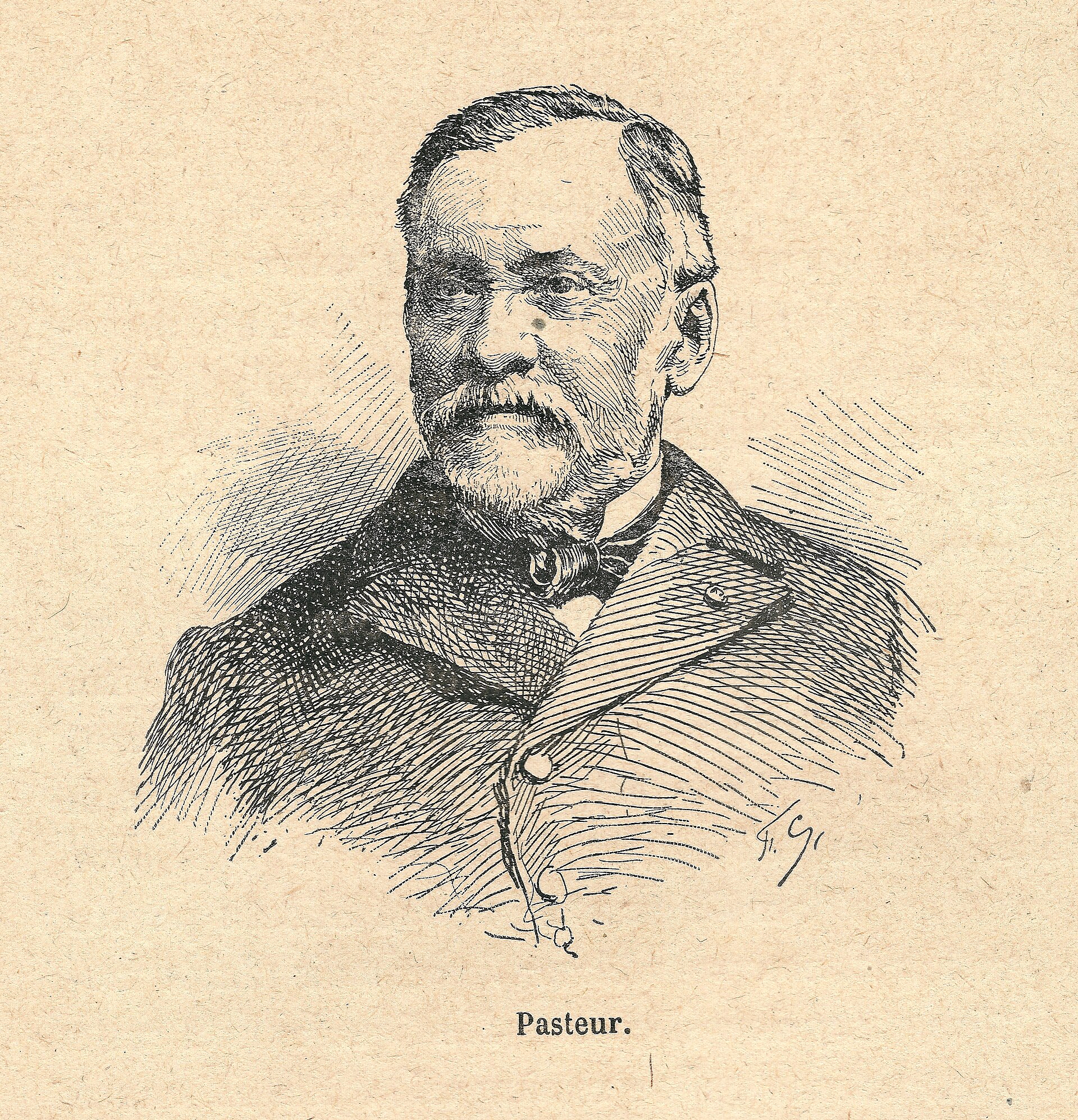
Michelangelo Antonioni
Hello and welcome back to Film making giants who changed how we see the world. We have walked through parades and dreams and the disciplined absurd; today we come to the cinema of after. After the affair and after the party, after the phone rings and no one answers, after the landscape has been built and the people in it discover that the air itself has changed. Michelangelo Antonioni is the director who turned absence into a subject without making it a void. He taught the frame to acknowledge what is missing; he taught time to idle without apologizing; he taught color to carry a mind’s weather. If you have ever stood on a newly paved road that made a familiar neighborhood feel foreign, if you have ever looked at someone you love and realized that the light between you has a new temperature, you already live in Antonioni’s country. He changed how we see the world by training us to see what modern life subtracts and to listen for the small signals a subtraction leaves behind.
He was born in 1912 in Ferrara, a flat city in the Po Valley where fog learns to move like a neighbor and industrial sheds take their geometry from patience. He studied economics because that is what sensible boys did and wrote about film because sense is a thin comfort. Photography taught him that surfaces can tell the truth without confession; the Documentary Centro Sperimentale taught him economy of means and suspicion of sermons. His early short Gente del Pofollows barge workers along the river not as statistics but as rhythms—cloth and ropes and water, the way a hull leans into a current. He learned to like images that do not perform. When he made his first features—Cronaca di un amore, Le amiche, Il grido—he already distrusted plot as a tyrant. Stories would still happen; they would happen inside rooms built of weather.
The landmark arrives with L’Avventura in 1960, a film that was booed at Cannes before it was awarded, as if audiences needed to expel what bothered them before they could accept it as medicine. A group of wealthy friends take a yachting trip among volcanic islands; a young woman, Anna, goes ashore and disappears; her lover and her friend, Sandro and Claudia, search, for a while; searching becomes traveling; traveling becomes drifting; love declares itself by touching and then retreats; the missing woman never returns. The premise sounds like a thriller with a broken second act; the film is a patient of another clinic. Antonioni composes bodies against rock and architecture so that the question “where is Anna?” mutates into “where are we?” The frame holds its breath while a face decides whether it can afford to mean what it has just said. The wind in Claudia’s hair remembers an argument; a corridor refuses to reveal the end you expect; a wall learns to carry the loneliness the characters will not admit. The camera does not accuse; it lingers. When Sandro betrays his own sadness with a lazy infidelity, the film does not punish him with melodrama; it sets him down on a terrace under a cold sky and lets a hand on a shoulder be the only honest act left.
He kept counting the distances people travel without moving. La Notte pens a famous writer and his wife inside a day and night of parties, hospitals, hotel corridors, and a snow of confetti that feels like the dust of a crumbling contract. Rome’s older stones and Milan’s new glass carry different time signatures; he lets both play. Jeanne Moreau’s walk through the city—alone, unhurried, neither lost nor found—may be the most faithful record in cinema of what an hour is when a marriage is not yet decided. L’Eclisse takes the stock exchange, literally, as a drum: men howl bids in a pit where the movement of cash sounds like weather; a young woman and a young broker orbit one another with a politeness that refuses to save them; the last sequence is a montage of places where they might have met and did not. The courage of that ending—an epilogue of absence—remains one of the craft’s cleanest lessons in how to close a story by refusing to pretend it has closed.
Then he lets color speak. Il deserto rosso—Red Desert follows Giuliana, a woman whose mind and body have been injured by an accident and whose world does not yet know how to accommodate the damage. Antonioni painted grass gray and washed walls in blues and acids so that the environment could be read the way you read a face. Tanks and pipes curve like sentences that a city has begun to recite to itself. Fog gives the camera permission to hesitate. Monica Vitti makes fear and desire share one breath. A room’s palette shifts while a conversation tries to remember its point. The factory’s siren is not plot; it is thought, externalized. He is not sneering at industry; he is letting industry announce that it is now the stage on which romance must happen. He wants us to see what we usually file under “background” because the background has started to rearrange us.
He leaves Italy, then, and takes the method abroad without losing the home it came from. Blow‑Up pretends to be a thriller and is actually a clinic on how images behave. A fashion photographer wanders swinging London—studios, parks, clubs with bands who play like electricity discovering it can dance—and photographs what may be a murder. He enlarges, and enlarges again, and the grain blooms until meaning becomes a guess disguised as certainty. The film’s most quoted scene is silent: a mime troupe plays tennis without a ball; the photographer watches; the sound of the invisible ball arrives; he accepts the game and returns it. The lesson is not a trick about disbelief; it is a confession that perception is social, that seeing is a kind of treaty you sign with other eyes, and that evidence can become noise if you love it too much. The final image leaves him small on a lawn, the camera climbing until the figure becomes paper against grass. The enlargement has reversed; the man who believed that making things bigger would make them legible has become habitat for emptiness.
Zabriskie Point crosses an American desert because America, in 1970, was itself a desert of ideals and possessions quarreling in the sun. Student revolt and corporate appetite look at each other through glass; a plane writes desire in the sky and then decides desire may prefer powder; a house full of consumer goods explodes in slow motion to a music you cannot hum without also feeling the concussion in your chest. People still argue about the film’s politics; the craft is not in dispute. Few directors have filmed loneliness at noon with such patience. He refuses to condemn his characters to slogans. He lets rooms be culpable. That refusal—to flatter us into comfortable righteousness—is one of his signatures.
The Passenger returns to quiet at a different scale. A journalist, restless, in North Africa, exchanges identity with a dead man in a hotel because he is bored with the burden of his name. The exchange works until it doesn’t; the man he becomes had made promises to the kinds of people who write promises in bullets. The film’s last shot—seven minutes that have become legend—begins in a hotel room whose bars are not prison bars but a pattern of iron; the camera moves, slowly, through the window and into the dusty courtyard; the world outside continues without noticing that a man’s life is ending across the room; a child kicks a ball; a car coughs; a woman runs; the camera returns to the window; a body lies where breath stopped. You can explain the shot with cranes and rigs; you can keep it safe by calling it virtuosity. It is, but it is also a vow: to honor a life by refusing to chop it into assurances.
Between and after these monuments are films that refine the vocabulary. Il grido, before the great quartet, rehearses the long walk of a man untethered by love. Chung Kuo—China looks at a country that had not invited him to lecture and records daily gestures without decoration: bicycles arranged like arguments, a market that sounds like conversation, officials measuring his lens with their eyes. Identificazione di una donna returns to the limits of desire with rooms that remember what earlier rooms have learned. Late, after a stroke robbed him of speech, he returned with help to Al di là delle nuvole—Beyond the Clouds and then to a short, The Dangerous Thread of Things, to claim the corner of cinema that still belonged to him: the crossroad where a glance decides the next season.
What is his method when you sweep away adjectives like “alienation” and “ennui” that are sometimes used to dismiss what they cannot imitate? He composes with distance and duration. The distance is not always physical; often it is social or moral. He leaves space between bodies and lets the light report on the honesty of their speech. He frames a person and a building in the same sentence and asks you to decide which one is doing the talking. He allows a moment to last past propriety so that a laugh can reveal itself as defense or a silence can stiffen into truth. He shoots corridors so that choice becomes a geometry. He uses ellipsis—omitting the scene you think you need—to force the audience to live with uncertainty instead of being rescued by explanation. He trusts surface; he refuses to treat it as an insult. His characters’ faces, clothes, cars, rooms, offices, and landscapes are not symbols in need of cracking; they are the visible record of choices, often unexamined, that have accumulated into habitat. He is accused of coldness because he does not decorate pain with speeches; but you only accuse him of coldness until you recognize the particular heat with which he lets a woman refuse to move her hand.
Sound, with him, is not persuasion; it is proof. Traffic murmurs through conversations like a third party in the relationship. Machines do not apologize. The stock exchange’s roar is not a villain’s cue; it is a weather report. The factory siren cuts a scene and the cut becomes, itself, the sentence. He uses music with caution. When it enters—Giovanni Fusco’s austerity in the Italian films, Giorgio Gaslini’s pulses, Herbie Hancock’s cool in Blow‑Up—it behaves like a structural element, not a perfume. Silence is rarely empty; you hear air; you hear the space between people. You begin to understand that the distance in his films is not misanthropy; it is a courtesy to the audience, a way of welcoming us into rooms without forcing us to the nearest chair.
Modern architecture finds in him its most eloquent photographer and its most exacting critic. Glass lets people see and not touch; steel gives horizons new duties; smoke stacks and pylons draw the eye line a mind must now follow to be considered productive. He does not treat older cities as saints; he films their tight alleys with the same analytic respect he gives to new roads. The question he returns to is simple: what are spaces teaching us to expect from one another? In Red Desert, color answers. In L’Eclisse, a lamppost and a puddle answer. In La Notte, a rooftop answers with memory. In The Passenger, an open square answers with indifference that feels like peace until you have to lie down.
What can you carry from him if you will never put a camera on a dolly? Start with negative space as information. In any plan—an itinerary, a product roadmap, a conversation—do not fill all the available time or features. Leave a margin that forces the truth of the thing to appear. When scheduling a meeting, leave an unassigned ten minutes; what fills it will tell you what your agenda was afraid of. When designing a page, let the white space argue with your copy; the words that survive deserve to be read. When planning a quarter, announce one decision you are refusing to make now; tell people you will walk the corridor first. He shows that absence is not laziness; it is a method for testing reality.
Next, compose with environment. If you lead a team, pay attention to the architecture of your rooms—the literal ones and the procedural ones. If the only rooms you have for truth are hallways where people confess between calendar blocks, your organization will behave like a character who cannot stop lying in public. Rearrange the furniture until honesty is comfortable; lower a light; widen an aisle; add a door that opens to air. If your culture is a glass office that pretends transparency and delivers paranoia, frost the panel that makes privacy possible; the work will improve when the faces inside it stop performing.
Then, practice the ellipsis you can defend. In narrative and in policy alike, we over‑explain. Omit the scene that flatters you. Omit the slide that promises certainty you cannot deliver. Announce what is not known and build the next action anyway. In L’Avventura, the missing woman organizes the film by not returning. In an organization, the missing certainty about a market or a partner can organize the quarter if you are honest about the missing. Ellipsis is not vagueness; it is discipline.
Learn to see surfaces without sneer. People are taught to distrust appearances. He teaches us to trust appearances so much that their dishonesty reveals itself. If a dashboard looks healthy and your stomach does not, print the dashboard and pin it next to a photograph of the room where the work happens; the juxtaposition will teach you which number is a fiction. If a product looks clean and your users’ support thread is a thicket, put a snippet of that thread in the onboarding; your engineers will begin to compose with reality again. In your own life, look at your clothes and rooms as if you are an Antonioni camera: what have your choices said, not about aspiration, but about attention?
Finally, slow one gesture until it tells the truth. Watch someone cross a threshold. Do not speak. Watch yourself decide whether to answer a message; count to five; see what your hand does. In The Passenger, that last shot grants the dying man seven minutes of belonging. In an office, a minute’s silence after “any concerns?” is the difference between nothing and news. Slowness is not luxury; it is labor on behalf of accuracy.
He was not a moralizer. He had too much respect for what he did not understand about other people. He made mistakes, some of them recorded on film as experiments that did not find their temperature. He could be harsh; he could be bored; he could be tender in a register too quiet to be noticed. He returned again and again to the way desire thins out in rooms that are too competent. He refused to give villains capes because the harm he wanted to describe is committed by well‑lit faces that mean no harm at all. He taught us to look again before we forgive and to look again before we condemn. He asked of images that they behave as honestly as we wish our memories would.
Biographers and critics later wrote that he made films about emptiness. That is the summary of people who have never been obliged to sit still long enough to hear a city’s hum. The films are full: of wind and signage and railings and puddles, of women whose intelligence refuses to be patronized, of men who realize too late that the room has been telling them the truth for hours. He does not despise anyone. He despises inertia. He is not cynical about love; he is stern about the conditions under which love has to live now. He does not believe that technology has ruined us; he believes that technology has become our mirror and that we should decide what we wish to see before we look again.
When he died in 2007, on the same day Bergman left—two lights going out at different ends of the field—obituaries tried to name his gift: the poet of modernity, the architect of ennui, the cartographer of alienation. Keep the first; throw away the second and third. He is not a poet of boredom; he is a craftsman of attention. He is not an architect of lack; he is a geographer of what remains when you stop pretending that answers arrive on time. The work he leaves behind does not age because the questions it asks are daily: what is this place doing to me? What am I doing to the people I say I love? How much of what I call truth is a habit I forgot to interrogate? What is missing here, and who taught me not to notice?
If you would try him at home, you do not need a camera. Take a walk and refuse to listen to a voice in your ear. Watch the street rearrange you. Sit at your desk and move one object so that your hand must travel a little farther to reach it; see what the new distance teaches you about what you thought you wanted. Let one conversation end without a promise you cannot keep; let the silence carry the dignity of what is not known. Buy one plant and paint the wall behind it in your mind; you will discover whether your eye craves peace or information. When doubt arrives, resist the craving to enlarge until meaning appears. Let the grain bloom until the image reminds you that facts are not the same as clarity.
He changed how we see the world by granting surfaces back their status as truth tellers, by trusting silence to be a sentence, by refusing to hustle the audience toward comfort, by inventing a cinema where architecture and weather and color tell the truth we keep trying to outsource to speeches. He did not answer the great questions of modern life. He staged them, and he made us responsible for how we walked away.
Thank you for listening to this episode of Film making giants who changed how we see the world.
Produced by NOMOTO MEDIA – Music by NOMOTO MEDIA.
Return to Transit