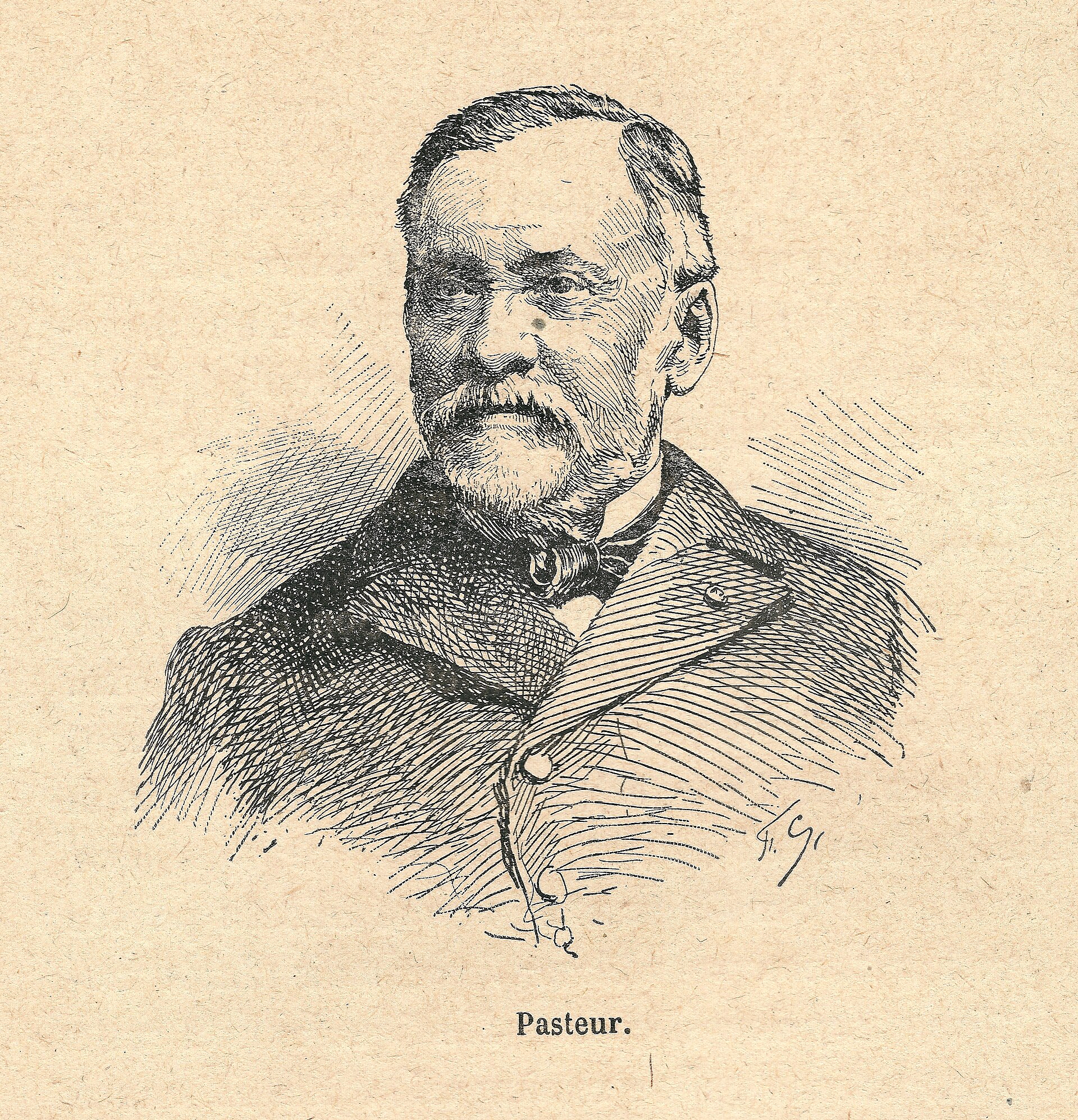
Muḥammad ibn Mūsā al-Khwarizmi
You’re listening to “Scientific Giants Who Changed Our Understanding of the World We Live In.” Each episode stands beside one mind and follows a thread of curiosity until it ties to the world we inhabit. Today we ride east with merchants and translators to a city on the Tigris whose libraries smelled of paper and oil lamps, where geometry was read by day and stars were measured by night, where officials argued about taxes with the same intensity that scholars argued about proofs. The city is Baghdad in the early ninth century, the Abbasid court’s restless mind made into streets and courtyards, and the scholar at the center of our hour is Muḥammad ibn Mūsā al‑Khwarizmi. If Aryabhata taught a civilization to sing its methods in verse, al‑Khwarizmi will teach another civilization to write its methods in prose so clear that clerks can carry them into courts and markets. Out of his pages will come two words so ordinary now we hardly notice their strangeness: algebra and algorithm.
Begin with an instrument that looks nothing like a laboratory. It is a desk with a wooden tablet, a tray of counters, and a thin brush dipped in black. Paper makes a soft sound in this room because the city learned, a few decades earlier, the trick of transforming rags and mulberry bark into sheets that hold ink better than parchment and cost less than a goat. That trick traveled west from Samarkand after a battle by the Talas River, when prisoners who knew how to float fibers in vats taught their captors to press the water out and leave a skin of cellulose behind. In a land of leather and reed, the arrival of paper is like the arrival of a second memory. You can now copy long tables without bankrupting a patron. You can practice arithmetic without running out of surface. You can leave a trail a stranger can follow years later. Without paper, a compendium is a rumor. With paper, a compendium becomes an economy.
The House of Wisdom is not a myth, though myth gathers around it. Imagine a cluster of courtyards and rooms where translators, mathematicians, physicians, astronomers, instrument‑makers, and secretaries move between projects. One table holds a Greek volume whose diagrams are being coaxed into Arabic by a scribe coached by a bilingual scholar; another holds an Indian siddhānta that murmurs periods of the planets in Sanskrit verse, now being rendered into prose and checked against the sky above Baghdad. A lamp burns before a sheet on which someone is drawing a gnomon and its shadow to calibrate an hour. In a corner, a secretary copies a letter to a provincial governor asking for city coordinates—latitude by shadow, longitude by caravan rumor—so that maps can be made less embarrassing when sailors complain. The caliph, al‑Maʾmūn, prefers numbers to flattery. He puts a stipend behind what he prefers.
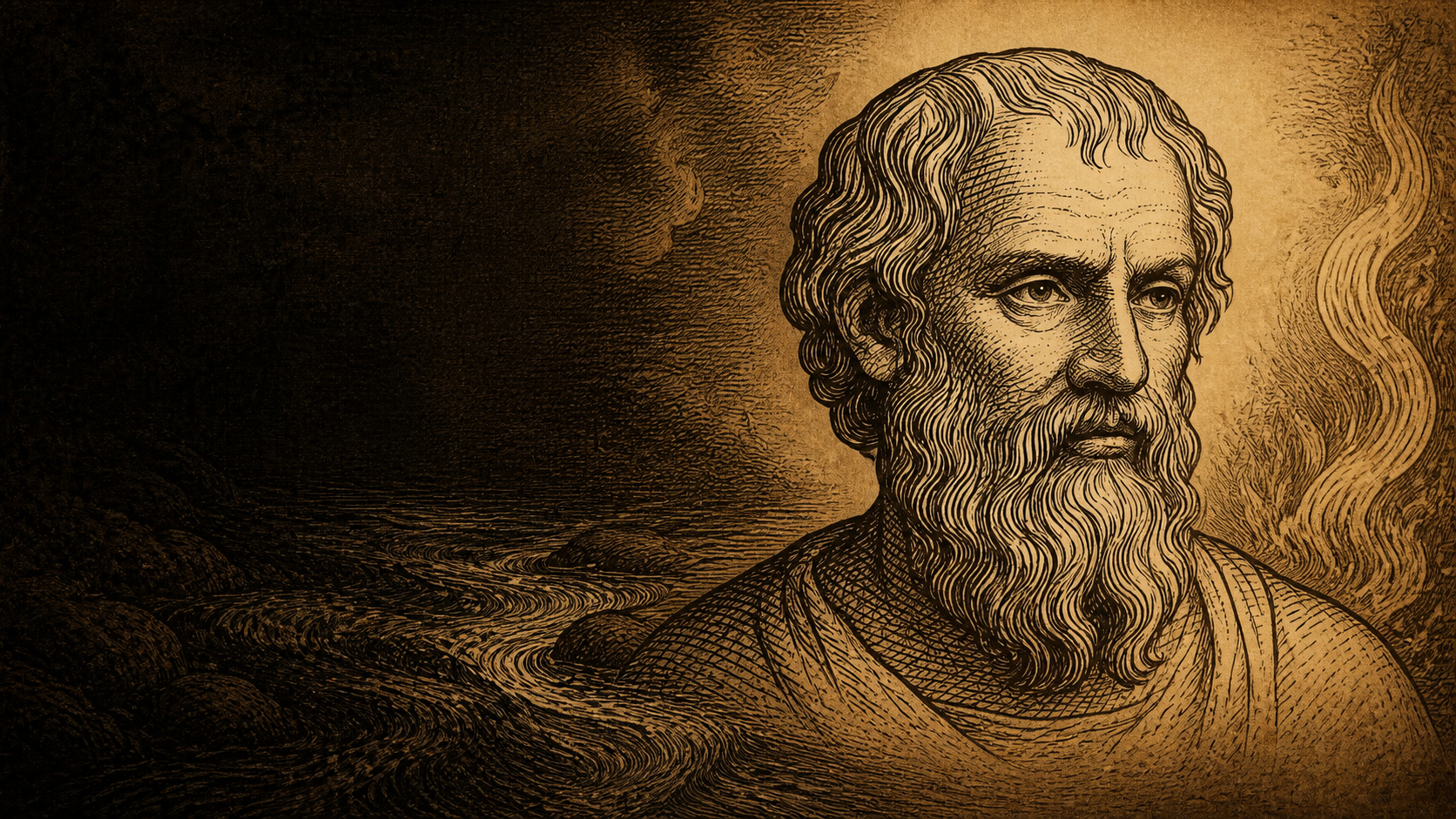
Into that place walks a man whose nisba—his “from”—names him after Khwarazm, the river country on the lower Oxus. His precise dates are spare and his biography thin, but his books are not. One is on algebra: al‑Kitāb al‑mukhtaṣar fī ḥisāb al‑jabr wa‑l‑muqābala, “The Compendious Book on Calculation by Completion and Balancing.” Another is on arithmetic with Hindu numerals: the Arabic original is lost, but Latin descendants—Algoritmi de numero Indorum and kin—tell us enough to see what it did. Another is a zīj, an astronomical handbook with tables, built to compute the rising and setting of bodies and the conversion between calendars. And there is geography: Kitāb ṣūrat al‑arḍ, “The Image of the Earth,” a tabular map that takes Ptolemy’s grid and corrects it where caravans and sailors prove it wrong. The list looks dry until you remember what a civilization can do with a book that turns a recipe into a civic habit.
Start with the algebra because the word itself carries his breath. In his title, al‑jabr means “restoration” or “rejoining,” the move by which you add the same quantity to both sides of an equation to repair a deficit. Al‑muqābala is “balancing,” the move by which you set like terms “in opposition,” transposing them so that unlike kinds—squares, roots, numbers—stand on the side where they belong. The book is written in the rhetoric of its time: there are no letters standing for unknowns, no signs for operations. He writes in sentences, and his sentences describe moves as if he were teaching you how to sew a torn seam or straighten a beam: restore, balance, halve, square, extract, subtract, and arrive. The effect is disarming. You do not need to be trained in symbols; you need a steady patience and a willingness to let language govern your hand.
The heart of his book is a classification that comes from a decision about what numbers are allowed at court. Because he will not subtract a larger quantity from a smaller and tolerate a negative remainder, he forbids some moves and therefore corrals all linear and quadratic equations into six standard types. Squares equal roots. Squares equal numbers. Roots equal numbers. Squares and roots equal numbers. Squares and numbers equal roots. Roots and numbers equal squares. Each type gets a method, and each method comes with geometric insight to prove it honest. Consider the sentence that sings across centuries: “a square and ten roots are equal to thirty‑nine.” In our algebraic shorthand we would write x² + 10x = 39, but he writes with breath. His method is a piece of carpentry rationale as much as it is computation. Take half the roots—five; square it—twenty‑five; add it to both sides—your square becomes complete, x² + 10x + 25, equal to sixty‑four; extract the square root—eight; subtract the half—the root is three. He will, as a rule, not admit a negative companion. If another schoolchild centuries later points out that the other root is −13, he would shrug: our problems are about lengths, shares, weights, and money; the arithmetic of absence is another discipline, not mine. But he is careful to show you why the procedure is lawful. He draws a square and adds rectangles to two sides, then completes the missing corner with a small square. The area you have made is a full square of a side you can measure. The proof is not a flourish; it is an ethical gesture. He is telling a culture that if we standardize our moves we must also standardize our reasons.
Why write such a book? Because he is surrounded by institutions that need numbers to behave. An estate must be divided among heirs under the rules of Islamic law, where fixed shares are set for daughters, sons, spouses, parents, and siblings. Handle the special cases naïvely and contradictions multiply; handle them systematically and a court looks honest. A merchant must adjust a bill for a delivery that was short or a shipment that spoiled by a fraction of a fraction across a year. A surveyor must reclaim the line of a canal whose bank slumped after a flood; his rope and pegs need instruction to become geometry. In all of these, al‑Khwarizmi’s algebra is a language that keeps like with like and invites a method to travel from one problem to its cousin without losing its soul. He prides himself on writing for “people of property and lawsuits,” for surveyors and tax clerks, not for philosophers who prefer the moon of speculation to the bread of calculation.
Turn the page to his arithmetic with Hindu numerals and you find a different kind of revolution. The “Hindu” in his title is an attribution, part respect and part route map: the numerals and the place‑value methods traveled from India into the Abbasid world, and he wants to teach them. Latin translators later fix his name in an odd pin, calling him Algoritmi, from which our word “algorithm” grows like a plant grafted onto a foreign stem. It is perfect. He is not only explaining a set of digits; he is standardizing procedures that tell hands what to do. Write numbers in lines so that units, tens, hundreds each sit under their kin; carry a ten into the next place as a small, disciplined betrayal of the place you are in; borrow a ten back when subtraction would otherwise run into a wall; treat the zero as a placeholder with the dignity of something that marks nothing; multiply by breaking a problem into neat rectangles you can add. The book does not merely introduce symbols; it teaches a culture to internalize base ten as a rhythm, to feel in the hand what the mind names as position. Once that rhythm takes hold, long division and compound interest, partnership accounts and exchange rates, all become stable moves, no longer a conjuror’s art but a clerk’s craft.
There is a difference between having symbols and having a civilization that knows what to do with them. Al‑Khwarizmi’s arithmetic turns symbols into behavior. When you line numbers up by their places and carry tens into hundreds with a flick of the pen, you accept that a mark’s meaning changes with position. When you write zeros to hold a gap, you accept the strange thought that nothing can be written and yet make another number stand in the right place. A culture that trusts such marks can keep ledgers that outlive memory. It can run a department with paper instead of shouting. It can reconcile accounts among cities with different coins and measures. It can inspect the work of its own clerks and root out fraud that hides in muddle. Place‑value digits and the algorithms that train them are not decorations; they are the skeleton of administration.
Look up from the desk at night and climb stairs to a roof where astronomers keep vigil with instruments. Al‑Khwarizmi’s zīj—an astronomical handbook with tables—is not a theoretical treatise in our modern sense; it is a practical book that tells users how to compute positions of planets and the sun and moon, how to convert between calendars, how to keep prayer times by the sun’s altitude and the stars’ risings, how to cast a horoscope if the court demands one. Its pedigree is mixed, proudly so: Indian siddhāntas whispered periods and mean motions; Greek geometry gave techniques for chords and arcs; Babylonian habit handed down sexagesimal divisions of hours and angles. From this composite, al‑Khwarizmi compiles tables for sine values and solar declinations, lunar latitudes and planetary positions, and explains, in careful prose, how to use them. He prefers sines to chords, the half‑chord Aryabhata had loved becoming a central actor. With sines, the geometry of the sphere sings more smoothly; with tables, a boy trained on a reed can compute an altitude without squinting too long at the sun.
Geography, in his hands, is the same impulse extended to the ground. Ptolemy’s map of the world, assembled in Alexandria centuries earlier, used longitudes and latitudes to give a coordinate to each place a traveler might name. It was brilliant and wrong in important ways: longitudes stretched too wide; the Mediterranean was flattered into a lake too long by half. Al‑Khwarizmi produced a corrected “image of the Earth” that shrank some distances, adjusted coasts, and placed cities with fresh numbers gathered from postmasters, merchants, and old astronomical notes. The book reads like a long list because a list is what cartography looks like before you draw. But the effect is large. When you fix a coordinate and print it, you invite correction. You make error public and therefore repairable. A coordinate system is a moral decision as much as a mathematical one: a promise that from now on, arguments about where things are will be settled by numbers anyone can inspect.
You can feel, in the way his books talk to one another, the pressure of a culture that needs predictability. Paper accelerates that pressure. Cheap, reliable sheets mean you can compile tables, copy them, correct them, and circulate them in numbers that parchment would have balked at. A mathematician whose work exists in one vellum codex is a rumor. A mathematician whose work can be copied for a hundred clerks is a fact. The smell of ink becomes as decisive for a civilization as the taste of bread. When a judge in Wasit and a surveyor near Basra tackle different problems with the same procedures, you have the beginnings of a science that can leave the room where it was born and take root elsewhere.
He was not alone, and he knew it. In Baghdad and in the cities braided to it by caravan and river, other minds were at work: al‑Kindī writing on cryptography and the philosophy of number; translators under Ḥunayn ibn Isḥāq turning Galen into Arabic with a precision that makes doctors useful and arguments testable; Thābit ibn Qurra correcting Euclid and teaching static balance in a way Archimedes would have recognized as kin; and later, in another century, Ibn al‑Haytham in Cairo, whose insistence on experiment we have already sat with. Al‑Khwarizmi’s contribution is not to have been the only one working; it is to have written in a way that travel favors. He compends. He standardizes. He writes as if a stranger is going to try this tomorrow after a bad night’s sleep and needs mercy from the page.
Watch his teaching take hold in a single apprentice. A young scribe sits with a merchant who keeps his accounts in a mixture of words and marks on a board he can wipe clean. The apprentice shows him how to write 304 so that the zero holds the tens place open. He shows him how to multiply 304 by 27 without losing track of what is tens and what is hundreds by aligning partial products and adding them place by place. He shows him how to “bring back”—to “restore”—what was subtracted by error by adding the same amount to both sides of a reckoning and re‑balancing the books. He shows him how to divide profit fairly when one partner’s money worked longer than another’s by treating time as a weight in the calculation. The merchant finds, to his surprise, that arithmetic is no longer theatre. It is a craft he can inspect.
Return to the algebra and hear its tone again. There is pride, but it is professional pride. He tells the reader that this is a book composed for necessity, for those who have property to divide and lawsuits to settle and canals to survey. He tells them that it is not a book for speculative philosophers. There is a hint of drama there, the old friction between those who admire contemplation for its own sake and those who take joy in a clean calculation that keeps a caravan from running out of water in the desert. He has no patience for vagueness when someone’s land, honor, or inheritance is in the balance. The completeness of the square becomes more than a trick; it becomes the emblem of what a city owes its citizens: finish the job; do not leave a corner unaccounted for.
What does the method feel like in a judge’s hand? Picture a case: an estate worth 120 dinars is to be divided among a widow, a son, and two daughters. The fixed shares—the faraʾiḍ—pull the numbers beyond unity. A naïve division would promise more than exists. The doctrine of ʿawl, increase, raises the denominator and proportionally diminishes each share so that the sum again equals the estate. Al‑Khwarizmi’s algebra supplies a calmer path. Set an unknown for the unit share. Write the sum of shares as a multiple of that unknown. Equate it to 120. Solve. Pay each heir from the solution. A legal puzzle that breeds drama when handled in words becomes a one‑line calculation when handled under the temper of restore and balance. The result is not cold; it is kind. Precision is how you avoid scandal.
Out in the bazaar, the same rhetoric becomes the rule of three, the heartbeat of proportion. If five ells of cloth cost twelve dirhams, what should seven and a half cost? Multiply and divide with the places aligned and you will neither be cheated nor cheat. In a partnership account, two men contribute capital for different lengths of time and share profit according to both amount and duration; with place‑value arithmetic and a habit of algebra you can calculate without losing your temper. These are not the rare ornaments of mathematics. They are the daily bread of a literate economy.
In the astronomy tables, a different rhythm governs. The day is divided sexagesimally, inherited from Babylonian habit, because base sixty breaks cleanly into many divisors and plays well with angles and circles. The scribe writes numbers with Arabic digits but sprinkles them with sexagesimal minutes and seconds. The user learns to keep two bases in his head at once and to move between them like a bilingual shopkeeper greeting a customer in one tongue and bargaining in another. Sine tables let you replace a triangle with two numbers pulled from a page, and then turn those numbers back into angles with a reverse lookup. You can line up the times of prayer with the sun’s height, you can estimate the qibla—the bearing of Mecca—with latitudes and longitude difference, you can promise an eclipse its hour and then go to the roof and check whether your table has betrayed you. If it has, you correct the table. You do not blame the sky.
Take the qibla. A mosque in Cordoba or Samarqand needs to face Mecca not by guess but by number. The zīj tells a muwaqqit—the mosque timekeeper—how to use latitude and the difference in longitude to compute a bearing. The work may be framed by piety, but the steps are secular: subtract, multiply, consult a table, draw a line. Faith becomes a discipline of angles and hours. The point is not to pretend that religion and science are the same. It is to notice that a society can teach itself to express devotion with mathematics and thereby to expect mathematics to behave in public life.
Move back to geography and spend a moment with the courage it takes to print a coordinate. When you fix the latitude and longitude of a city, you invite correction. You become falsifiable in the best sense. Ptolemy’s magnified Mediterranean had reigned in manuscripts for centuries because manuscripts are hard to compare and emend. With multiple copies of al‑Khwarizmi’s tables in multiple hands, discrepancies are spotted, arguments sharpen, caravans find faults and send them back up the chain in letters. Geography becomes collaborative rather than liturgical. This is not an insult to the ancients. It is an honest continuation of their project under new conditions.
On the edge of all this is a philosophical unease that the books do not shout but that a listener can hear. If you bring procedures to every corner of life, what becomes of judgment? The answer al‑Khwarizmi’s practice implies is that procedures do not abolish judgment; they discipline it. They take a class of cases and say: in this family, do not improvise until you have tried the standard move. Only after you have restored and balanced should you invent. This modesty about cleverness is one reason his work traveled well. A clerk far from Baghdad can learn the moves and bring honor to his work without ever having met their author.
Cross now to Europe, a few centuries later, and watch his methods acquire a second life. Translators in Spain and Sicily render the algebra and the Indian arithmetic into Latin. In Italian cities, abbacus schools sprout to teach sons of merchants how to compute with the new numerals. A rivalry breaks out between “algorists,” who use the written methods of Algoritmi, and “abacists,” who cling to counters and boards. In Florence, a statute in 1299 tries to suppress the strange figures—fear of fraud, fear of change—but the numerals hunger for paper and prevail where paper is cheap. A Pisan named Leonardo, whom we call Fibonacci, writes a book that teaches merchants to count with place‑value digits, and though his name gets the headline in our school lore, the methods he taught breathe al‑Khwarizmi’s air. Europe’s clerks learn to carry and borrow, to treat zero as a noble nothing, to multiply by decomposition rather than pretend that numbers are stones that can be shuffled by feel. A continent’s commerce changes its wrist.
Even the word zero travels with his caravan. In Sanskrit it is śūnya, the empty; in Arabic it becomes ṣifr, the void; in Latin it becomes zephirum and then zero. Al‑Khwarizmi’s arithmetic does not philosophize about nothingness; it treats the empty place as a mark that lets a nine sit in the hundreds while a three sits in the tens. That may sound meager, but it is a transformation. Once you trust a symbol for nothing, you can compress information into strings and move them around, which is all our machines now do at speeds that would make an Abbasid scribe laugh and then weep.
Return to completing the square, the gesture that anchors his algebra. Imagine you are laying out a small garden along a courtyard wall. You have rope and pegs. You mark out a square plot and find that it is too small by a number of paces that is itself proportional to the length of one side. The trick al‑Khwarizmi recommends is carpentry as much as mathematics. Add strips along two sides—half the number of extra paces each—then fill in the missing corner with a small square so that the whole becomes a larger, true square. Measure its side. Subtract the half you added. The remaining side is the length you needed from the beginning. The mind delights in the fit: an area argument turned into a linear fact, a picture made into a number without lies. The method is older than him and will outlive him. What is new is the insistence that this be how we do things now, not ad hoc cleverness, not a one‑off trick. This is the standard. This is the way.
Because the algebra is rhetorical, it is hospitable. A judge not trained in lettered equations can still follow instructions like “halve the roots” and “add the square of the half to both sides.” A surveyor who has never seen a sigma or a minus sign can still understand how to keep kinds separate—squares in one pile, roots in another, plain numbers in a third. Later, when symbols arrive, they will speed thought, but the bedrock procedure will be the same. Our notebooks are full of the ghosts of his words, reduced to signs that hide their ancestry but do not betray it.
There is a small sadness in the way history remembers him, as if a man’s work must be condensed into a single badge: father of algebra. The truth is more textured. He is a teacher across domains. He tries to make the heavens legible to prayer, the ground legible to travelers, the law legible to property, and numbers legible to hands. The unity of those attempts is not an abstract philosophy but a temperament: impatience with muddle, pleasure in a clean recipe, faith that a method used by many will reduce the number of ways we can hurt one another by confusion.
If you need a counter‑image to the tired claim that civilizations live in isolation, Baghdad under al‑Maʾmūn will do. Greek geometry, Babylonian sexagesimals, Indian sines, Persian administration, and Arabic prose live together without embarrassment. Al‑Khwarizmi writes not as a gatekeeper but as a host. He invites methods in, sets them at a table where they can be compared, and keeps what endures in practice. The door is open both ways; his books will go out along the same roads the paper came in.
One last roof scene before we close. The astronomers are trying to see the moment when a star crosses the meridian. On the floor below, a clerk is pacing out a rectangle to be walled tomorrow. On the street outside, a debate about law is gathering around a scribe who cannot add. These are not separate worlds. A city that trains itself to compute angles carefully will not long tolerate a magistrate who computes shares sloppily. A city that rewards clear tables of the heavens will develop an appetite for clear tables of grain. The hinge between astronomy and administration is not mystical; it is procedural. A good method anywhere makes people less patient with bad methods everywhere.
And after Baghdad? The road leads to Toledo and Palermo, to Paris and Pisa, to Prague and Oxford. The algebra will be taught with wooden boards and chalk until symbols simplify the prose. The arithmetic will slip from the hands of merchants into the hands of monks who copy Bibles and then back out into the hands of princes who want to know how cash really flows. The zījes will seed trigonometry that will let cannon be aimed and cathedral vaults be ribbed. The geography will be folded into portolan charts, which in turn will be folded into the ambitions of sailors who trust numbers more than legends and thus dare straighter lines across water than their grandfathers would have drawn. The names will change. The method will not.
We can, if we wish, be critical. His algebra is limited to quadratics; he has no general solution for cubics or quartics. He does not admit negative numbers, misses their strange utility, and prefers magnitudes that can be weighed and counted. His astronomy, like everyone’s before Kepler, keeps a circular heaven alive too long. But to hold those limitations against him is to forget what it means to establish a standard. You make a clean path in the ground where before there were goat tracks. Others will widen it; some will pave it; a few will build bridges where marshes used to lie. The first spadeful still matters.
The best tribute is use. We still complete the square when a quadratic’s coefficients make the formula look ugly; we still carry and borrow in the way place‑value arithmetic taught our fingers; we still publish tables that can be regenerated from recipes, whether those tables concern sines or insurance premiums. When a programmer names a function “normalize” or “balance,” the word al‑jabr is hiding in the comment. When an accountant “restates” a line, al‑muqābala’s temper is standing behind the chair. When a teacher writes a worked example that another teacher can correct without guessing what was meant, al‑Khwarizmi’s prose is the ancestor.
There is another layer to the story that flickers at the edge of the books: the infrastructure of knowledge he depended on and helped justify. Paper did not merely cheapen copying; it changed what could be imagined. You can bind thick tables because each page no longer costs a hide. You can keep private notebooks instead of making every calculation a public performance on the counting board. You can teach in a way that leaves trails—marginal corrections, alternative examples, a line where a scribe admits a mistake and moves on. When knowledge moves from voices and boards to books and scraps, method becomes less private. It can be inspected and emended by strangers. That is how you get a science rather than a memory palace.
If you want to watch algebra in its native habitat, sit in on a faraʾiḍ lesson, the science of obligatory shares in inheritance. The scripture fixes fractions for certain heirs. Real families complicate the text. A man dies leaving a wife, two parents, and two daughters. The scriptural fractions sum to more than one. The jurist teaches the doctrine of ʿawl, the increase, by which the base of the fractions is raised and every share diminished proportionally so that the estate is not imagined larger than it is. Al‑Khwarizmi’s algebra tells the same story without sermon. Set the base as an unknown, write the sum, equal it to the estate, and solve. The quiet miracle is not that the numbers add; it is that the number of quarrels shrinks. A society that teaches itself to compute fairly makes less room for violence disguised as piety.
Even the humble rule of three becomes a little republic when taught as method. “As five is to twelve, so seven and a half is to what?” The answer is a fraction of a fraction, and yet the hand, trained in place‑value and backed by a habit of lining up kinds, produces the number without drama. Partnerships stop unraveling. Markets stop dying at noon because a dispute has boiled over. We flatter philosophers when we call such things trivial. They are how cities stand.
I have spoken long and only touched the edges of his books. That is fitting. A compendium’s heart is not a single theorem but the decision to collect and prune so that citizens can act. In a world too fond of secrets, he printed method. In a world too forgiving of muddle, he tightened language until it served calculation. In a world where paper was new and precious, he used it not for prophecy but for procedures that humbled fancy. That is the sturdy glory we carry away from Baghdad tonight: an ethic of restoration and balance, of writing moves so cleanly that a stranger can do them, of letting tables be public so that errors can be caught. Out of that ethic came algebra and algorithm, the two workhorses that still pull our days.
You have been listening to “Scientific Giants Who Changed Our Understanding of the World We Live In.” Today we stood in Baghdad and learned how a scholar named Muḥammad ibn Mūsā al‑Khwarizmi turned procedures into public goods—how he taught clerks to balance and restore, taught merchants to multiply and divide with ranks of digits, taught astronomers to trust tables that could be rebuilt and corrected, taught map‑makers to publish coordinates with enough courage to be wrong. In our next episode we travel to Song‑dynasty China to sit with Shen Kuo, an official who thought with river mud and compass needles and mountains that remember their own rising, and we ask what it means to read Earth as an archive. Until then, thank you for your attention and your time. This episode was written as a continuous story for the ear; if it moved you, bring a friend along next time. Until our next hour together, keep an eye on the methods you lean on—they are closer than they look.
Return to Transit