Nicolaus Copernicus - Astronomer - The Sun, not the Earth, is at the center of the universe.
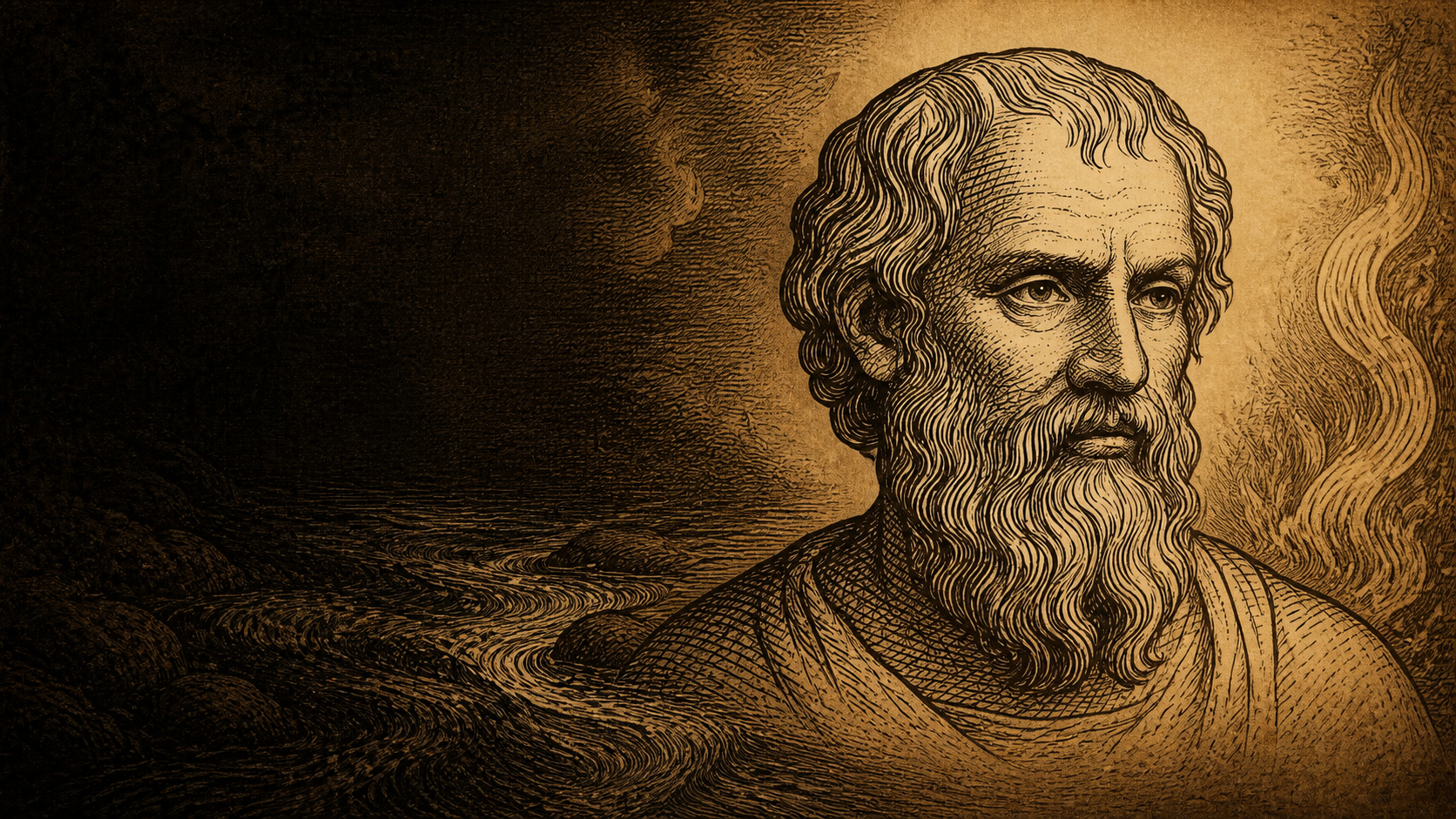
You’re listening to “Scientific Giants Who Changed the World.” Each episode stands beside one mind and follows a thread of curiosity until it ties to the world we inhabit. Today we climb a chilly tower stair in Royal Prussia, where sea wind presses against old brick and a bellrope hums in the draft. The town is Frombork—Frauenburg in the Latin letters of the time—perched on the Vistula Lagoon. Below us a canon’s garden is squared into beds; a copper astrolabe hangs near a window to warm just enough that fingers won’t sting when they touch it at dusk; a long wooden staff with sliding crosspieces leans beside a stool. In the narrow room, a man in a dark robe writes in a practiced hand with a patience that does not look like hesitation. He is not a court philosopher. He is not a cloistered mystic. He is a chapter functionary, a physician, an administrator, a careful observer. He is Nicolaus Copernicus, and in this brick quiet he will move the sun to the center of the planetary stage and set the earth in motion, and the consequences will run everywhere human certainty had laid its weight.
Begin with his path because the tower makes more sense if we know how he walked to it. He was born in 1473 in Toruń, a merchant town on the Vistula where German and Polish tongues argued and traded. His father died when he was a boy; his mother’s brother, Lucas Watzenrode, rose to become Bishop of Warmia, and with that promotion he became the guardian who would open doors. The young Nicolaus went south to Kraków and spent years among mathematicians who still read Ptolemy as if the Alexandrian’s system were a city map you could trust to find your way to market. He learned the then-new humanist habit of returning to sources, and he learned to keep a ledger of the heavens: angles, times, positions, all in tables that clerks copied each year to keep feast days honest. There he learned to draw circles with a compass until the wrist knew the pressure without the eye. He went to Bologna and read law while studying astronomy with Domenico Maria Novara, who did not fear to criticize Ptolemy out loud. He listened for hours to an older scholar who muttered that the equant—Ptolemy’s device for salvaging uniform circular motion by moving the point about which a planetary speed was uniform—was a cheat. In Padua he trained as a physician, one of those practical scholars who keep neighbors alive by knowledge of pulse and herb and wound. In Ferrara he completed a doctorate in canon law. He returned north a scholar of many languages, including the two that bookish Europe then required for long conversations with the dead: Greek and Latin. He was not a prodigy in any one domain; he was a sturdy toolmaker in several, and that breadth will matter when we watch him move a system.
Installed as a canon in Frombork, he lived a life that, viewed from the courtyard, would have looked like a long administrative sentence. He audited accounts. He rode in winter to inspect rents owed by farmers who had better arguments than purses. He advised his chapter on disputes and helped negotiate with cities that envied church privileges. He treated neighbors’ illnesses with a steadiness that has left a trail of gratitude in letters. In the late 1520s he wrote a short, sharp treatise on money—how debased coinage drives out good, how an authority’s hunger to mint away a deficit punishes the very commerce on which taxes depend. It was not yet called Gresham’s law, and Gresham had yet to be born. In that tract he wrote with the same temper he would bring to the sky: name the error; show how it propagates; propose a repair that can be taught. He also kept, like any good local scholar who wants a king to visit without embarrassment, a set of notes on calendar reform. Dates slip when the civil calendar and the heavens’ clock drift apart; someone must write down how to stitch them together. He did. That habit—of writing quietly to make public things behave—is the work of his life as surely as the famous book.
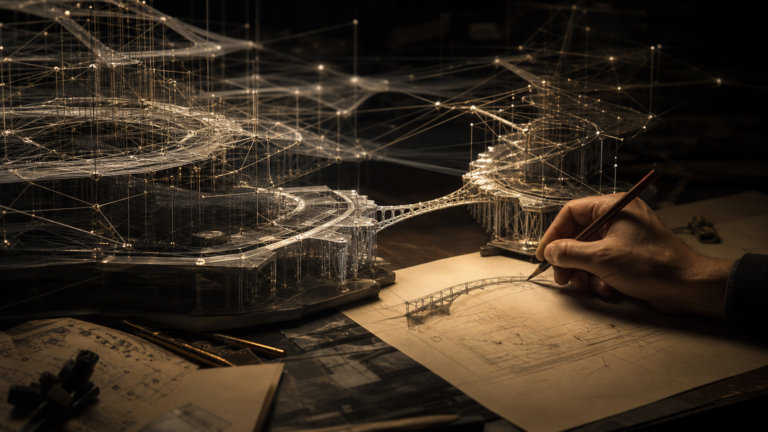
The instruments he used were old and honest. A triquetrum—a long staff with two sliding arms joined by pivots—let him sight a planet against the stars and read off an angle from divisions he had inked himself. A quadrant—a quarter of a circle braced like a musician’s harp—let him take altitudes by night when the air steadied and by day when the sun’s glare consented to be filtered. Armillary spheres with bronze circles stood for the invisible way the heavens hold themselves; a sighting tube read the polar region more faithfully than a naked eye that wants to upgrade a dim star to the pole because it prefers certainty. These are not the instruments of a wizard. They are the instruments of a surveyor of the sky, a patient one, with a tolerance for the small errors that timber and hand introduce. He was not of Tycho’s age, with masonry and brass big enough to deny the wind; he belonged to an age when a careful man could still teach the sky to confess a little with wood and sighting lines and numbers carried from summer to winter by notebooks tied with string. He walked out at night with a boy to hold a lamp or a second pair of eyes. He saw with the equipment he could earn, not the equipment he could dream.
Ptolemy’s system, inherited with admiration and unease, had two faces. With epicycles and deferents—small circles riding big ones—and with a trick called the equant, it produced good numbers. Planets could be predicted well enough to keep calendars decent and princes pleased. But the equant offended the taste of those raised on a certain ethic of motion. In that device, a planet ran around a circle at a speed uniform not about the center of the circle but about an offset point. The math worked; the picture felt like a confession that nature hated uniformity in the wrong place. Medieval astronomers lived within a philosophical discipline that preferred neat reasons to effective fudge factors. Uniform circular motion was not just an aesthetic preference; it was a doctrine of what the heavens owed to intelligibility. Copernicus did not cough politely and look away from the equant because he was shy. He could not accept it because he believed the world is better made than that.
Imagine the puzzle at ground level. Some planets never wander far from the sun; they elongate and then turn back, Venus glittering at dawn and dusk, Mercury a shy pale bead when the air is clean. Others range far, crawling against the stars and then, at odd intervals, backing up and tracing a loop before resuming their march. Their brightness swells and fades. The model that kept the earth fixed had long accommodated these facts with clever watches within watches. Copernicus asked a different question: if the earth moves—if the platform on which we stand is itself circling the sun—how much of the sky’s complexity evaporates? The answer, drawn in careful diagrams and trained on generations of numerical tables, was: a great deal. Retrograde motion ceases to be a planet’s whim and becomes a parallax effect of being overtaken or overtaking. A planet grows brighter near opposition because geometry promises that nearer things shine more than distant ones. The inner planets’ tether to the sun stops being a mystery and becomes a constraint of their orbits within ours. Put the sun near the center, give the earth a daily rotation and a yearly revolution, add to that the tilt of the earth’s axis that explains the seasons, and a noisy universe falls into a calmer grammar.
It is important to feel what he means by economy. A geocentric system with equant points and many circles can be made to fit observations. If the goal is only a set of predictions, you can be content. But human beings, even when they pretend modesty, long for a picture that feels like a reason. Copernicus’ picture gave reasons at once. Why do Mercury and Venus never roam far from the sun? Because their circles nest inside ours; geometry forbids them from reaching quadrature beyond a constraint. Why do Mars, Jupiter, and Saturn linger near opposition and race through other parts of their tracks? Because our motion and their slower or faster motions compose into apparent speeds that change. Why do seasons change? Because the earth’s axis leans, and that lean—constant relative to the distant stars—gives summer to one hemisphere while it gives winter to the other. Why does the sun appear to speed up and slow down against the zodiac across the year? Because the earth’s orbit is not exactly concentric with the sun; even in his circular universe he allowed eccentricity, and that eccentricity means that when we are closer we move a little faster. Make the earth a planet and you cash many mysteries in one exchange.
He did not publish quickly. The manuscript traveled quietly among friends and students. Years turned into decades. One reason was practical: the chapter needed him; Warmia was not a tranquil corner; administrators in unsettled places do not get to choose the pace at which they serve. Another reason was stylistic scruple. He had not overthrown Ptolemy with new instruments; he had rearranged the grammar of the sky and wanted to be sure the new grammar could conjugate all the old cases. He kept adding circles to repair small errors because he and his readers still demanded uniform circular motion; he chased residual discrepancies the way a mason keeps shaving a stone to make a joint tight. He was also cautious because he understood how institutions hold on to what they know. The Church of his day had room for mathematical arguments that did not leap from ephemerides to theology. Universities taught what their readers could learn, and readers did not like to see a familiar page erased and rewritten. He wrote a small summary—the Commentariolus—and sent it to a few. He waited.
Then a young man knocked on his door. Georg Joachim Rheticus came north in 1539 with the hunger of a student who suspects his teachers have not told him the whole story. He stayed for years, learned the system from the author’s mouth, and wrote a book about it—the Narratio Prima—that sang the new order to ears in Wittenberg and beyond. It is hard to overstate how much a bold student can do for a cautious master. Rheticus pleaded for publication; he carried the manuscript to the printer Johannes Petreius in Nuremberg; he coaxed colleagues to prepare tables that would make the book immediately useful. Somewhere between Frombork and Nuremberg, another voice appeared: Andreas Osiander, a Lutheran theologian with editorial nerve and a printer’s access, wrote an unsigned preface that tried to protect everyone by calling the heliocentric model a computational device rather than a true picture of the world. It was a political note that roused a quarrel centuries long: is a good model only good for numbers, or does explanation carry a claim about reality that no preface can disclaim?
De revolutionibus orbium coelestium appeared in 1543, the year Copernicus died. The story told—it may be true but is shaped too neatly to trust entirely—has him receiving a copy on his deathbed, eyes failing but fingers still wanting to touch the labor made into pages. The book is arranged with the stateliness of a cathedral nave. Book I sets out the principles: the earth moves; the sun sits at or near the center; the heavens are vast; the apparent motions are compositions of the earth’s motion with the planets’ own. Subsequent books work through the sun and moon, then the five known planets, with tables and constructions that show a reader how to compute positions as previous tables had, but with causes rearranged to obey a cleaner centrality. He removed the equant and restored uniform motion by distributing the labor to more circles; he rebuked Ptolemy gently by doing the same arithmetic without a device that had always looked like an apology. The tone is austere. There is no gloating. There is an air of a man who knows that he has shifted a beam that many rooms had leaned on.
Because he was still clothed in the assumptions of his age, he kept circles where ellipses would later live. He did not dream Kepler’s audacity, that a sun can sit at a focus and a planet’s speed vary so that equal areas are swept in equal times. He did not own Tycho’s brass and masonry that would later make observations hard enough to chafe the circular heaven until it broke. But he did something without which those later men would have seemed like unserious heretics. He handed them a model in which a moving earth did real explanatory work. He made it respectable to say that the planet under our feet is one among others, that our apparent sky is a composition. He did not produce new accuracy in all places; sometimes his numbers were worse than the best Ptolemaic tables. He produced something more durable than a temporary improvement. He delivered a structure that could be improved without being overturned.
He had antecedents, and it honors him, not insults, to name them. Greek atomists and Aristarchus had floated heliocentricities long before and were preserved as curiosities in texts too few had read carefully. Arabic astronomers working in Maragha and Damascus had, two centuries before, refined mathematical devices—the Tusi couple, a clever way to mimic linear motion from two circles; the Urdi lemma—that solved the equant’s offense while keeping the earth central. Ibn al‑Shatir, a Damascene timekeeper for a mosque, built planetary models that look to a modern eye like prototypes of Copernican geometry with the sun still deferentially at the center. Whether Copernicus knew these texts directly or by rumor through Byzantine intermediaries is debated; he certainly knew enough of the tradition to hate the equant with reasons and tools. The point is not that he invented in a vacuum. It is that he had the nerve to marry old devices to a new picture and to let the sun hold the middle while the earth, shorn of its vanity, retained its solidity.
If you want a vivid scene that carries his temperament, watch him at the long staff on a winter night. He has wrapped a cloak against the Baltic air. The star he needs for reference winks between cloud rags. Mars is at opposition, swelling ruddy enough to make the frost seem warmer for a moment. He sets the sliding arm to catch the angle, reads by lamplight, squints, closes one eye against the lamplight’s flare. He knows the reading is not precise enough to stop a philosopher’s mouth. He enters it anyway, because astronomy is a craft of many nights, not a spell cast in one. He will enter the same star again later in the same night, on the other side of midnight, to average the errors he can smell but cannot disperse. He will polish circles on paper that will bear the burden of his own doubts more steadily than the speech of colleagues who, when surprised, reach for scorn.
He also has a voice for the street. The short piece on money he wrote for his patroness, Barbara of Zalewo, reads like a municipal ordinance written by a mathematician with a temper held well in check. Good coin flees bad coin because people hoard what is sound and spend what is suspect; call it a law if you must, but better to call it a habit you can count on. If a prince shaves the silver content to pay soldiers, prices notice; those prices migrate through a town like a winter wind, and everybody’s ledger fills with numbers that tell the same story: you have not conjured wealth, you have taxed the future. He wrote that because he had watched how administrative decisions deform the lives of people who do not attend chapter meetings. He wrote astronomy for the same reason he wrote about money: to repair a public instrument.
If he were merely a theorist, his story would be easier. He was a canon bound to a chapter with duties and quarrels, to a countryside with borders that changed, to a language politics he could not ignore. In 1520 the Teutonic Order weighed on Warmia with war; cannon fire echoes faintly even now when you climb his tower in imagination. He evacuated his house and manuscripts once. He returned to find some instruments damaged, some documents damp. He was not a man at a quiet table with silence provided by history. He wrote in eddies and crosswinds, with a stoic trust that a clean line on a diagram can survive noise in the street.
There is a pedagogical sweetness to the early chapters of De revolutionibus that a modern reader can miss. He does not throw the earth into motion and then gloat. He builds the case the way a careful teacher builds a semester. First define what you mean by a sphere; first admit that appearances are mixtures of things; first learn to separate daily motion from annual. Then dare to change the frame. He teaches you how retrograde motion appears when an inner orbit laps an outer, then lets you see the same geometry from another seat and marvel at its economy. He brings in the obliquity of the ecliptic—the tilt of the earth’s axis relative to the plane in which it circles the sun—and lets you feel seasons as something nobler than a mood the sky has about your town. He is not a writer of slogans. He is a writer of conversions, patiently earned.
The objections were sincere and not always foolish. If the earth moves, why do stones thrown upward fall to the ground where you stand instead of to the west? If the earth spins, why does the air not howl perpetually as a contrary wind? If the earth circles the sun, where is the parallax—a shift in position of the stars—that geometry promises? These are not trifles. Copernicus answered the first in the old style of shipboard analogies, asking his reader to imagine a person tossing a ball on a smoothly moving vessel; the ball’s motion is composed of the thrower’s arm and the ship’s motion and therefore returns to hand without insult to common sense. The second he waved away with the claim—thin to a modern physicist but serviceable as rhetoric—that the air participates in the earth’s rotation. The third he met with a gambit the boldness of which is still startling: perhaps the fixed stars are so far away that the whole earth’s orbit—a ring enormous to a human mind—is a point to them, and the parallax is too small to see with our eyes and our tools. This last answer inserted a new scale into the human imagination. It made a universe large enough that our place in it could be both real and not central. It also purchased a century of skepticism before instruments could repay the debt. Stellar parallax would not be measured until the nineteenth century; stellar aberration, a smaller consequence of the earth’s motion seen in the angle of raindrops of light, would be observed earlier, but not in his lifetime. He asked his readers to live with a gap between proof and persuasion and to fill it with the strict economy of a better model.
The first readers were a mixed choir. Mathematicians took to the book as a powerful new instrument. Physical philosophers, trained to put the earth at rest for reasons that had more to do with Aristotle’s physics than with observation, grumbled. Luther is reported to have tossed a line about the fool who overturns Joshua stopping the sun, but Luther had other worries and no special duty to get astronomy right. Melanchthon thought universities ought to police such ideas more closely. Within the Church of Rome the book found a cautious audience. For decades it circulated; professors taught from it; tables were derived from it; the Church did not yet fear it. When Galileo later aimed a tube at the sky and made the model’s consequences visible in a new way—phases of Venus, mountains on the moon, moons of Jupiter circling their own center—that is when nerves frayed and institutions that had tolerated mathematical audacity began to worry about metaphysical insolence. Copernicus himself moved in a milder climate. His publisher’s anonymous preface offered readers an exit: take the system as a calculating device. But the intelligence of the book could not be confined by a printer’s caution.
Tycho Brahe, with his island observatory and his instruments large enough to tame the night’s shiver, tried to keep the geometrical sweetness of Copernicus while sparing sensibilities bruised by a moving earth. He built a model in which the planets circled the sun while the sun circled a central earth—the geoheliocentric compromise. It preserved much of the computational order and made parallax’s absence less insulting. Kepler used Tycho’s numbers and Copernicus’ courage and then betrayed both circles and compromise with a new audacity: ellipses, areas, harmonies that changed the world’s taste in simplicity. Newton later would supply what neither Copernicus nor Kepler could: a dynamics that made motion intelligible by forces and relations instead of symmetry alone. The line from Ptolemy’s equant to Copernicus’ restoration to Kepler’s ellipse to Newton’s law is not a straight hallway; it is a sequence of rooms, each cleaned in a different order, each making the next solvable.
There is a cost the story rarely totals because triumph is more fun to count. To take the earth out of the center is to remove a certain flattering cosmology. The center had been a dump for heavy things in the old physics, not a throne, but habit had made “central” feel like “favored.” Now our viewpoint was a condition of our confusion, not a sign of our greatness. The shifts that followed—Darwin’s descent, Freud’s unconscious, the modern unconsciousness of vast scales—are not Copernicus’ fault, but in his book you can hear the first crack in a tone of human self‑importance. That crack is not an injury. It is a cure for a fever we did not know we had. A better center is a better cure.
If you want one day to visit him, you can, in imagination or in person. The cathedral hill is still there, the view over the lagoon still spare and wind‑wrung. The instruments are reconstructions now, but the triquetrum still makes a persuasive gesture in the hands of a guide who likes teenagers. The garden plots still square the earth in a way that would have pleased a canon who liked things neat enough to find again in the morning. Somewhere a small bell still insists that time has public errands. You will not find a laboratory, but you will find an insistence on arrangement—the placement of a stool with a sightline to a window, the notch on a sill where a tube settled, the scratch that marks a meridian line on a flagstone. These are not relics. They are the fingerprints of a method: make a place where the world can disagree with you and then obey it.
It is the right moment to remind ourselves that his book is not a sermon and not a victory lap. It is a manual. It enumerates motions, sets out constructions, and demands of its reader patience with the austere joy of getting things right. Where it speculates, it does so with restraint. Where it corrects Ptolemy, it does so with respect for a tradition that saved more knowledge than it stifled. It is only in the choice of centrality that he seems reckless, and even there the recklessness is of a particular sort: not “what if” but “look, now many other things become simpler.” That kind of recklessness is how we get our best days.
I do not know if he smiled in his last week when someone placed the printed volume in his hand. I like to think he weighed it—books then had the heft of their labor—and felt the quiet relief of a man who has argued with himself long enough and is content to let a wider world haggle over what comes next. He had done the thing he wanted to do. He had given the sun a central dignity not because the sun is noble but because the geometry is; he had planted the earth in a path that let its seasons be understood as an angle’s business; he had taught the sky to speak with fewer lies.
Before the book, there was a little treatise like a rehearsal. He composed a short summary we now call the Commentariolus and circulated it privately among trusted readers. In a handful of pages he stated axioms that, if you accepted them, made the rest follow with the inevitability of a proof. The sun sits near the center; the earth is not immobile but turns daily and circles yearly; the sphere of the fixed stars is so far away that the earth’s entire orbit is as nothing by comparison; the retrograde sweeps are appearances produced by our own motion; the ordering of the planets by their periods gives their distances in proportion. The text was not a ritual. It was a set of instructions, and to read it was to feel the way a mind can empty its cupboards of antique furniture and set the room in a new arrangement without breaking the floorboards. He did not ask readers to believe by rhetoric, only to try a placement that made mess into plan.
The distances in his universe are not measured in our units, but the proportions are right enough to teach a craft. From Venus’s maximum elongation—how far she dares stray from the sun—he extracts a ratio for her orbit to ours. From Mars’s retrograde loop and the time between oppositions, he steers toward a period that fits the geometry of overtaking and being overtaken. He senses, without stating Kepler’s future law, that periods whisper the size of orbits and that the farther planets loiter, the nearer ones almost hurry. In the arithmetic of synodic and sidereal periods—how long it takes to be seen at the same place relative to the sun versus how long to truly circle—you can hear his mind learning to listen for harmony. The harmony is not mystical; it is a bookkeeping that tells you how often two runners next meet on a track when one runs outside the other.
He returns again and again to the ship. If you stand below decks and let your eyes follow a hanging lantern as the hull moves, you will misdescribe the light’s track if you forget that you yourself are moving. Copernicus makes that forgetfulness the great psychological fact of astronomy. We are carried, he says, and so we ascribe to the heavens a great many dances that are ours. The daily spin we lay on the sky as a universal swirl is an error induced by our cabin. The annual circuit we call the sun’s pilgrimage through the zodiac is a misinterpretation of our own circling. The parallax we do not see is not a failure of geometry; it is a scale problem that teaches humility. To admit that—and to base computations on that admission—is a discipline that survives every instrument that has since replaced his.
We owe to his readers some of the book’s spread. Erasmus Reinhold, a German astronomer, computed the Prutenic Tables from Copernicus’ parameters, and these tables replaced the tired Alphonsine set on many desks. Princes liked them because they gave better dates for eclipses and feast days; navigators liked them because the lunars behaved more obediently; astrologers, who were not bashful about borrowing any precision available, liked them because the heavens they interpreted had fewer surprises. The irony pleases us now but would not have surprised him: a book that removed man from the center gave administrations better calendars, and better calendars gave institutions better self‑control.
There is a moral center to his caution that deserves defending. He did not think himself a martyr and did not posture as one. He did not publish to provoke; he published so that a method could be inherited. He stayed inside his lane—mathematical astronomy—and did not tell bishops how to preach or jurists how to rule. He did not rail at the ancients, though he corrected them. He refused to self‑mythologize. That restraint is part of the reason his book survived where a more flamboyant assault might have burned bright and short.
What did ordinary people notice, if they noticed at all? Fewer self‑contradictions in almanacs. A priest with better instructions on when to ring a bell for a vigil. A sailor whose dead reckoning agreed with a predicted lunar eclipse on the day it should. A student who felt the thrill of a picture that did not grimace while it made its numbers. A teacher who could draw the solar system on a slate without lying to himself about which thing circled which. The wider political world moved on with its wars and levies, indifferent as politics often is to better pictures; but a thousand small offices became slightly more honest because a man in a tower had insisted that explanation be earned.
And the courage is not in loudness. It is in the argument that when two models compute equally well, the one that ties phenomena to a simpler cause deserves the presumption. It is in the patience to load a wheelbarrow with epicycles because your era loves circles, while leaving a note pinned to the cart for students who will, with better instruments, find ellipses and set your cart down with thanks. It is in the decision to let a book speak after you can no longer answer for it. We sometimes tell this as a tale of one man against the world. It is better told as a tale of one man changing the place where a civilization keeps its center of gravity.
You have been listening to “Scientific Giants Who Changed Our Understanding of the World We Live In.” Today we stood in a Baltic wind and watched a canon of Frombork turn a noisy heaven into a system with a sun at its heart, and we learned how patience can be as revolutionary as courage when it chooses a better center. In our next episode we will follow a Tuscan with a spyglass and a temper—Galileo Galilei—who will point an instrument at the sky, bring moons and phases and mountains into view, and teach officials and philosophers alike what it means when a device forces the eye to say what it would rather not.
Until then, thank you for your attention and your time. This episode was written as a continuous story for the ear; if it moved you, bring a friend along next time. Until our next hour together, keep an eye on the centers you choose—they are closer than they look.
Return to Transit