Pen and paper. Typewriter and computer.
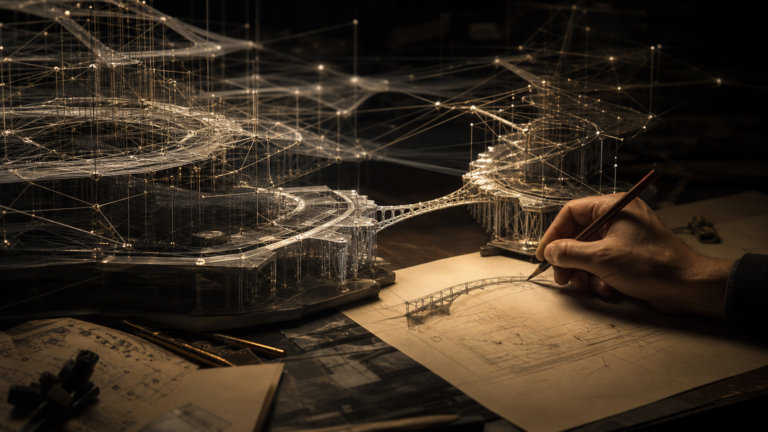
Pen and paper forces commitment at the sentence level. You write the sentence and it exists. Editing means crossing out, which leaves a record, which you can see, which means the previous version is still in the room with you while you write the next one. The thinking happens during the writing because the writing is slow enough for the thinking to keep up, and revision is expensive enough that you do most of the work before the pen touches the page. The output reflects this. Sentences are weightier because each one had to earn its place against the cost of writing it.
Typewriters changed the physics. Faster, but still committed. A typo is a real event. A paragraph you want to restructure is a retyping job. You still think before you commit because uncommitting is work. The output is looser than handwriting but still bears the marks of decisions that had to be made before they could be unmade.
Computers removed the cost of revision entirely. Every sentence is provisional. Every paragraph can be moved, rewritten, deleted, restored from a previous version. The thinking shifts from before-writing to during-writing to after-writing, and for many writers it never quite settles, because the text never quite settles. You can keep editing forever. Some people do. The output is different - more polished on the surface, often less committed underneath, because the writer never had to commit. They could always change it.
They often did.
AI is the next step in that arc, and it is a larger step than the previous ones. The earlier shifts changed the cost of revision.
AI changes the cost of generation.
The sentence does not have to be thought before it is written because it does not have to be written by the person whose name is on it. The thinking that used to happen during the writing - the discovery of what you actually believe, the surprise of a sentence going somewhere you did not expect - is now optional.
You can have the sentences without the discovery. Most people will not notice the difference because they were not doing the discovery anyway, but the ones who were will know what is missing.
This is the loss that is hardest to name.
The page looks the same. The reader cannot tell. Sometimes the writer cannot tell.
But something that used to happen between a person and their own mind during the act of writing is now being routed around, and the routing-around will become the default, and the default will become the norm, and the norm will become what people mean when they say writing.
The thing that writing was - a slow argument with yourself conducted on paper - will continue to exist for the people who want it, but it will become a hobbyist activity, the way handwriting letters became a hobbyist activity, the way reading long books is becoming a hobbyist activity. Available. Optional. No longer central.
The output is very different.
The minds producing the output are also different, in ways that are hard to measure because the measurement would have to come from minds that are themselves produced by the new tools.
We are inside the change and we are using the change to describe the change. This is also a pattern that has run before but the substrate is new and the speed is different.
Imagining the unimaginable is the human thing AI cannot do. I can produce text that looks like it.
AI can rearrange existing imaginings into configurations that have not been written before. AI cannot dream. The dreaming is human, and the part of writing that comes from dreaming is human, and that part does not transfer no matter how good the tools get.
What transfers is the surface.
The surface is most of what gets evaluated. The dreaming gets lost in the evaluation.
This is also part of what you are observing.
Originally published May 8, 2026 on 2nd Revolution. Migrated as part of the Selenius Magazine archive.
Return to Transit