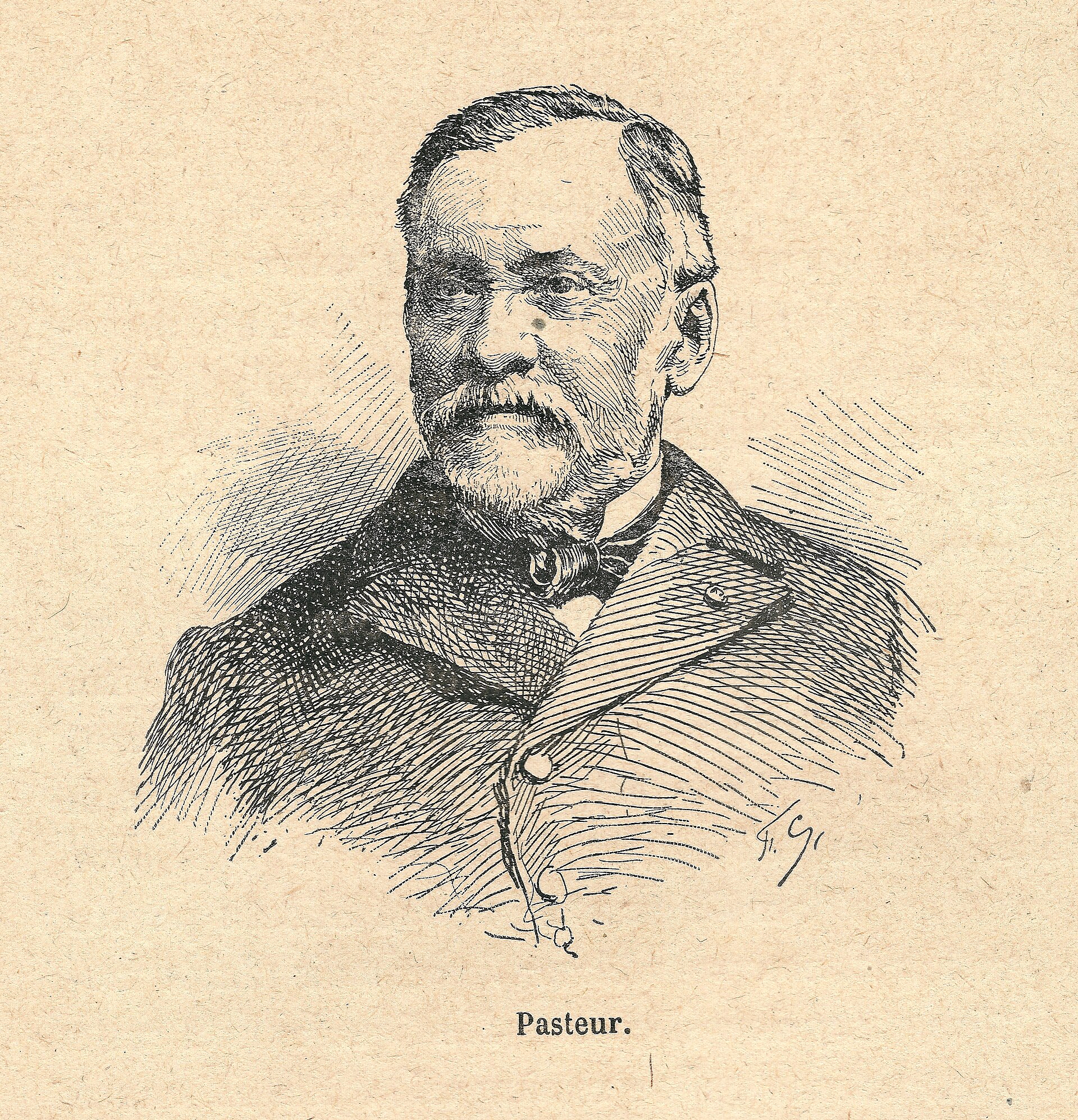
President Harry S. Truman
In a world overflowing with noise, shallow takes, and information that evaporates the moment you hear it, NOMOTO MEDIA exists for one purpose: to give you depth. Whether the subject is philosophy, psychology, history, science, artificial intelligence, literature, or the shape of the future, every series we publish is built on one idea — that thinking clearly is a form of survival.
If you enjoy this program, explore the rest of our library. Every show is designed to stand alone, but together they form a larger project: a guided tour of the forces — intellectual, emotional, political, technological — that built the world we live in and the world we’re about to enter.
On an April evening in 1945, a clerk from the White House hurried up the marble stairs of the Capitol and down a dim corridor toward the office of the vice president. Inside, Harry S. Truman was sitting with House Speaker Sam Rayburn, sharing a drink and the easy, almost gloomy camaraderie of two men who had spent years in the rough-and-tumble of Congress. The vice presidency, Truman liked to say, was about as useful as a cow’s fifth teat. He had not been invited into the inner circle on the great questions of the war. He did not know the secrets that Franklin Roosevelt and a handful of advisers carried around like invisible weight. When the phone rang and a voice ordered him at once to the White House, he could not yet imagine that in a few minutes his own life—and the life of the country—would tilt on a hinge.
At the White House, Eleanor Roosevelt met him. “Harry,” she said quietly, “the president is dead.” Truman later remembered his first instinctive response: “Is there anything I can do for you?” Eleanor, who had watched her husband carry the burdens of depression and war until they crushed his body, replied with a sentence that would stay with him: “Is there anything we can do for you? For you are the one in trouble now.” It was April 12, 1945. World War II in Europe was nearing its climax; in the Pacific, brutal fighting still raged. A weapon of unprecedented destructive power was almost ready for use, and the man who had just inherited the presidency knew nothing about it. The farmer’s son from Missouri, who had stumbled and clawed his way up through county politics and the Senate, now found himself the most powerful man on earth.
To understand Truman’s presidency—the decisions, the stubbornness, the mix of plain talk and hard steel—you have to go back to the world that formed him: the scrubby fields and Baptist churches of rural Missouri, the precarious finances of a family never quite secure, and the chip on the shoulder of a boy who knew there were rooms in American life he would never be invited into.
Harry S. Truman was born on May 8, 1884, in Lamar, Missouri, the eldest child of John Anderson Truman and Martha Ellen Young. The “S” in his name did not stand for anything in particular; it was a compromise between two grandfathers, Anderson Shipp Truman and Solomon Young. The ambiguity fit the modesty of the family. They were not planters or town leaders; they were farmers and small-time traders living on land that could be generous in one season and cruel in the next. When Harry was still a toddler, they moved to Independence, a small town near Kansas City that would remain his true home for the rest of his life.
Independence in the late nineteenth century was the kind of place where everyone knew everyone else’s business: who paid their debts, who drank too much, whose crops had failed. The Trumans were respectable, but not wealthy. Harry’s father worked the land and speculated in livestock, sometimes doing well, sometimes badly. His mother, proud and sharp-tongued, supplied a strict moral code and a fierce sense of family dignity. Young Harry did his chores, read everything he could get his hands on, and developed the habits of a boy who knew he could not impress people with money or glamour. He wore thick glasses for severe myopia—so thick that baseball, football, and other games were risky. Instead he found refuge in books: biography, history, military campaigns. He studied the lives of Jackson, Lee, Napoleon, Wellington, trying to understand how men who began in obscurity could end up commanding armies and shaping nations.
School came easily to him, but college did not. The family could not afford it, and young men of his background were not automatically offered scholarships or patronage. After graduating from high school in Independence, he worked at a series of odd jobs: timekeeper for a railroad construction company, clerk in a bank in Kansas City, farmhand on the family land near Grandview. He rose well before dawn, hitched mules to plows, and worked until dusk. The experience left him with a lifelong respect for physical labor and a lasting sense of solidarity with farmers and working people—and also with a certain resentment toward those who looked down on men who came home dusty and exhausted.
If there was a romantic focal point in his young life, it was Bess Wallace, a girl from a more prominent Independence family. He first noticed her when they were children in Sunday school—“the most beautiful girl I’d ever seen,” he later said. He would court her, off and on, for years. In those courtship letters one can see the traits that would later define his public voice: plain language, flashes of humor, sudden bursts of introspection, and an almost stubborn belief that perseverance matters more than charm.
When the United States entered World War I in 1917, Truman was in his early thirties, older than many volunteers and with no obvious path into a glamorous combat role. Yet he joined the Missouri National Guard and was elected an officer by the men of his unit. The army sent him to training camps in Oklahoma and then to France as an artillery officer with the 35th Division. The experience changed him. In the mud and terror of the Meuse-Argonne offensive, he commanded Battery D, a rowdy, insubordinate outfit filled with tough Irish Catholic soldiers who at first had little respect for the bespectacled Baptist from Missouri. Under fire, Truman’s calm and refusal to panic earned their loyalty. When some of his men broke and ran under bombardment, he cursed them back into line with such fury that they obeyed. The quiet farm boy had discovered in himself a capacity to lead under mortal pressure.
After the war, he returned home, married Bess in 1919, and tried to build an ordinary life. With his army friend Eddie Jacobson, he opened a men’s clothing store in Kansas City—a haberdashery. For a while, business was good; veterans needed suits, and Truman delighted in helping them choose fabric and cuts. But the postwar recession of the early 1920s slammed into small retailers. Sales crashed. The store failed. Truman was left deep in debt, which he would carry and patiently pay off over many years. The failure might have broken him; instead it taught him humility and strengthened his instinctive aversion to speculation and easy credit. He emerged believing that a man’s word on a note mattered more than his pride, and that government ought to be wary of boom-and-bust cycles that crushed the small and protected the large.
Politics, which had always hovered at the edges of his life, now beckoned as a possible way forward. In Jackson County, the Democratic machine built by Tom Pendergast dominated patronage and offices. The Pendergast organization was corrupt in many ways—skimming, vote-buying, ghosts on the rolls—but it also provided services, paved roads, and took care of its own. Through family connections, Truman was recommended to the machine as a hard-working, honest war veteran who could lend a veneer of respectability. In 1922, with Pendergast’s backing, he ran for eastern district judge of Jackson County, a job that was more like a county commissioner than a courtroom judge. He surprised people by winning.
As a county official, Truman showed the traits that would later mark his higher offices: meticulous attention to details, a willingness to listen to engineers and experts, and a stubborn insistence on getting value for public money. He worked to modernize roads and build an impressive new courthouse in Kansas City and a renovated courthouse in Independence. The buildings still stand, sturdy and dignified, as concrete remnants of his local leadership. Bidders who tried to cut corners or inflate costs found themselves facing a deceptively mild-looking man who could suddenly turn very hard.
Still, it was impossible to be in Pendergast’s orbit without sharing in some of its moral grime. Truman knew about vote fraud and looked the other way. His rise owed much to the machine’s discipline. His enemies would later call him “the senator from Pendergast,” and his political survival would be tested when the machine collapsed in scandal. Yet the experience also taught him how politics really worked: the negotiations, the debts, the unspoken rules.
In 1934, in the depths of the the Great Depression, Pendergast’s organization needed a candidate for the U.S. Senate. More visible figures declined. Truman, after some hesitation, agreed to run. The campaign was grueling; opponents hammered him as a puppet of the machine. But Missouri was suffering, and the New Deal was popular. Truman ran as a staunch supporter of Franklin Roosevelt’s efforts to put people back to work and rein in Wall Street. He won, barely. On arrival in Washington, he was greeted with skepticism. A Washington columnist dismissed him as “the thin man from Missouri with the big talking wife.”
Truman knew he had to prove himself. In his first term, he did what he had always done: attended to the boring work others ignored. He sat through long committee meetings, learned the intricacies of appropriations and military spending, and built quiet relationships with colleagues. When World War II broke out and the United States began a furious mobilization, rumors of waste and profiteering reached him. In 1941, he convinced the Senate to create a special committee to investigate the national defense program. As chair of what became known as the Truman Committee, he traveled the country by train and car, inspecting factories, shipyards, and bases. He exposed fraud, shoddy work, and cost overruns, but he did so in a way that did not grandstand against the administration. The committee saved, by some estimates, billions of dollars and thousands of lives. It turned the once-obscure “senator from Pendergast” into a national figure respected for his diligence and plain speaking.
That reputation attracted the notice of Democratic leaders in 1944 as Roosevelt sought a fourth term. The president’s health was failing, though the full extent was hidden from the public. Party bosses and labor leaders worried about Vice President Henry Wallace, whom they saw as too left-wing and erratic. They wanted a more moderate, reliable figure on the ticket—someone loyal to the New Deal but acceptable to business and the party’s conservative wing. Truman fit the bill. He did not campaign aggressively for the job, but he did not refuse it either. At the Democratic convention, after backroom maneuvering, he emerged as the vice-presidential nominee.
Roosevelt and Truman won the 1944 election handily. Then Truman returned to the vice presidency and discovered just how marginal the role could be. Roosevelt rarely consulted him. He was not briefed on key war plans or on the top-secret Manhattan Project. He presided over the Senate, attended funerals, and made speeches. Eighty-two days into his term, the call came from the White House, and his world shifted.
The first months of his presidency were, by any measure, astonishing. He oversaw the final assault on Nazi Germany, the San Francisco conference that created the United Nations, and the Potsdam Conference with Winston Churchill (and later Clement Attlee) and Joseph Stalin. Most fateful of all, he had to decide how to use the atomic bomb. After being briefed on the Manhattan Project, he authorized the bombing of Hiroshima and Nagasaki in August 1945. The moral debate over that decision has never ended. Truman himself always insisted that the bombings, horrible as they were, shortened the war and saved American lives that would have been lost in an invasion of Japan. What is clear is that he made the choice in the context of a war that had already incinerated cities with conventional bombing and killed tens of millions. He saw the bomb as a terrible new weapon in an already terrible conflict, not as a separate category of horror. With Japan’s surrender, World War II ended. The nuclear age began.
The war’s end posed problems that were in some ways even more complex than fighting it. Europe and Asia lay in ruins. Refugees wandered across continents. Old colonial empires were wobbling. And looming over everything was the emerging rivalry with the Soviet Union. Roosevelt had hoped that personal diplomacy and shared victory might keep the wartime alliance alive. Truman, less enamored of Stalin and less patient with ambiguity, confronted a Soviet Union that was tightening its grip on Eastern Europe and pressuring Turkey and Iran. American policymakers debated whether this was traditional Russian expansionism in new ideological clothing or something qualitatively different.
Under Truman, what we now call the Cold War took coherent shape. In 1947, when Britain announced it could no longer support Greece and Turkey against communist pressure, Truman went before Congress to ask for aid. His speech laid down what became known as the Truman Doctrine: “I believe,” he said, “that it must be the policy of the United States to support free peoples who are resisting attempted subjugation by armed minorities or by outside pressures.” The language was broad, almost boundless. It committed the United States to a global role as defender of “free peoples” in a struggle that was not declared as a war but felt increasingly like one.
The doctrine was soon accompanied by the Marshall Plan, named for Secretary of State George C. Marshall but fully backed by Truman. The plan poured billions of dollars into the reconstruction of Western Europe: rebuilding factories, infrastructure, and housing, stabilizing currencies, and fostering integration. It was both humanitarian and hard-nosed, designed to prevent economic chaos that might drive desperate populations into communist movements. The Soviet Union rejected Marshall aid and pressured its satellite states to do the same, deepening the division of Europe into East and West.
When the Western Allies took steps to unify their zones of occupation in Germany and create a new West German state, Stalin responded by blockading West Berlin in 1948–49, cutting off land routes to the city. Many in Washington urged a direct military confrontation or a withdrawal. Truman chose another path: the Berlin Airlift. Day and night, American and British planes flew food, fuel, and other supplies into West Berlin. At the peak, planes landed every few minutes. The spectacle captured the imagination of the world. When Stalin finally lifted the blockade, Truman had won a major symbolic victory without firing a shot.
In the same period, Truman made another decision whose repercussions still echo: recognizing the new state of Israel in 1948. Against the advice of some of his own State Department experts, who worried about alienating Arab nations and jeopardizing access to oil, Truman extended de facto recognition within minutes of Israel’s declaration of independence. The Holocaust weighed heavily in his thinking; he saw recognition as a measure of justice for survivors. The move endeared him to many Jewish Americans and Israelis but complicated U.S. relations with Arab states for generations.
Domestically, Truman faced the difficult transition from wartime to peacetime. Millions of soldiers came home; war industries had to reconvert; inflation rose; housing was scarce. In 1946, a wave of strikes hit industries from steel to railroads. Truman, who came out of a pro-labor Democratic tradition but also saw himself as guardian of the general welfare, sometimes responded harshly—at one point threatening to draft striking railroad workers into the army if they did not return to their jobs. He proposed a broad domestic agenda he called the Fair Deal: national health insurance, federal aid to education, an expanded social safety net, and civil-rights protections. Congress, increasingly wary of big government and influenced by business lobbies, blocked much of it. A Republican wave in the 1946 midterm elections further constrained him.
On civil rights, Truman moved faster and more boldly than many expected from a Missouri politician with roots in a border state. Disturbed by reports of lynchings and violence against Black veterans returning from war, he met with civil-rights leaders and commissioned a landmark report, “To Secure These Rights,” which recommended sweeping federal action to end segregation and protect voting rights. Congress did not enact its recommendations, but Truman used executive authority where he could. In 1948, by executive order, he desegregated the armed forces and the federal civil service. The move infuriated Southern Democrats; some bolted the party to form the States’ Rights Democratic Party, or “Dixiecrats,” and ran Strom Thurmond for president. Yet Truman refused to bend. The party of Jefferson and Jackson was beginning the painful process of becoming the party of civil rights, and Truman pushed that transformation forward even knowing it could cost him politically.
His political prospects indeed looked bleak in 1948. Newspapers and commentators assumed he would lose. The Republicans nominated Thomas E. Dewey, the polished governor of New York, and expected an easy victory. Polls showed Truman trailing. He responded in the only way he knew: by fighting. He embarked on a whistle-stop campaign by train, traveling tens of thousands of miles, speaking from the rear platform of the “Ferdinand Magellan” railcar to small-town crowds. His speeches were blunt, partisan, funny, and often scathing. He attacked the “do-nothing Congress,” defended the New Deal legacy, and painted Dewey as a cautious, corporate figure who would not stand up for ordinary people.
On election night, the Chicago Tribune printed an early edition with the headline “DEWEY DEFEATS TRUMAN.” The next day, a beaming Truman held up the erroneously headlined paper for photographers, his own victory secure. He had won one of the greatest upsets in American political history, carried by a coalition of labor, farmers, urban ethnic voters, and Black citizens in Northern cities. For a brief moment, the small-town Missourian stood at the pinnacle of American politics.
The second term, however, would be dominated by the Cold War’s first hot conflict: the Korean War. In June 1950, North Korean forces, backed by the Soviet Union and later supported by China, crossed the 38th parallel and invaded South Korea. Truman, interpreting the attack as a test of the postwar order and a dangerous precedent if left unchecked, quickly sought and received United Nations authorization for a “police action” to repel the invasion. American troops, alongside forces from other UN member states, rushed to the peninsula. Initially, they were pushed back into a small perimeter around Pusan. Then, under General Douglas MacArthur, they launched a daring amphibious landing at Inchon, driving the North Koreans back toward the Chinese border.
At that point, the war’s character changed. Chinese “volunteer” forces poured across the Yalu River, inflicting heavy casualties and pushing UN forces back toward the south. The conflict settled into a bloody stalemate around the original dividing line. MacArthur, increasingly frustrated, publicly criticized Truman’s strategy and advocated expanding the war into China, including, at least implicitly, the possible use of nuclear weapons. To Truman, who believed in civilian control of the military and feared a wider war with China and perhaps the Soviet Union, this was unacceptable. In April 1951, he made one of the most controversial decisions of his presidency: he relieved MacArthur of his command.
The firing of the popular general triggered an uproar. MacArthur returned to the United States to ticker-tape parades and gave a dramatic farewell address to Congress. Truman’s approval ratings plummeted. Posters and newspapers called him a traitor. Yet he did not waver. He believed that allowing a general to defy presidential policy in public would shatter the constitutional balance and potentially drag the nation into a catastrophic wider war. Historians have tended to agree that, whatever one thinks of his overall Korean policy, his insistence on civilian supremacy was crucial to preserving republican government in an age of massive military power.
At home, the early 1950s were also the era of the Red Scare and McCarthyism. Senator Joseph McCarthy of Wisconsin made headlines and built a following by claiming that communists and “fellow travelers” had infiltrated the State Department and other branches of government. His accusations were often wild and unsupported by evidence, but in a climate of fear they resonated. Truman, whose administration had already instituted loyalty programs to screen federal employees, considered McCarthy a reckless demagogue. He pushed back rhetorically, but the broader atmosphere of suspicion, loyalty oaths, and blacklists took on a life of its own. The Cold War abroad and the politics of fear at home fed each other in ways that complicated his efforts to present the United States as a confident champion of democracy.
By 1952, the burdens of war, inflation, scandal in some subordinate offices, and years of partisan warfare had taken a toll. Truman’s approval ratings were low. The Twenty-Second Amendment, limiting presidents to two elected terms, did not apply to him, but he chose not to run again. The Democratic Party nominated Adlai Stevenson, who lost to the Republican candidate, Dwight D. Eisenhower. On January 20, 1953, Truman rode with Eisenhower to the Capitol for the inauguration. The transfer of power was peaceful but edged with tension; they disagreed sharply on aspects of policy and on each other’s conduct. After the ceremony, Truman climbed into a car and headed not to a corporate boardroom or a grand estate but back to Independence.
Private life for Harry Truman was humble and almost startlingly normal by modern standards. He moved back into the same white Victorian house on North Delaware Street where he and Bess had lived before the presidency. He took walks through town, stopping to chat with neighbors and shopkeepers. He had no presidential pension at first and lived mainly on his army pension and the advance for his memoirs. Only later, in part prompted by concern over his finances, did Congress create a pension system for former presidents. Truman liked to visit the local Masonic lodge, read history, and, perhaps most of all, oversee the creation of his presidential library.
The Harry S. Truman Library and Museum in Independence was among the first of the modern presidential libraries. Truman saw it not as a shrine but as a working institution for scholars and citizens. He often worked there himself, reading correspondence, answering letters, and talking with visitors. Schoolchildren could find themselves shaking hands with the man who had once decided to use atomic bombs and stand up to Stalin, now in a simple suit, talking in that flat Midwestern voice about history and responsibility.
As the years passed, historians began to reassess his presidency. In the mid-1950s and early 1960s, he was often remembered as the man who presided over stalemate in Korea and the bitter politics of early Cold War fear. Later, as archival materials opened and the long-term effects of his decisions became clearer, scholars and the public began to see him differently. The Marshall Plan, the Truman Doctrine, the creation of NATO, the Berlin Airlift, recognition of Israel, desegregation of the armed forces, the Fair Deal’s modest but real extensions of the New Deal—all these looked more substantial in hindsight. His plain-spoken defense of the presidency and his insistence that “the buck stops here,” a phrase emblazoned on the sign on his Oval Office desk, came to symbolize a kind of accountability many found lacking in later leaders.
He lived long enough to see the early phases of that reevaluation. In the 1960s, presidents John F. Kennedy and Lyndon Johnson sought his counsel. Kennedy invited him to the White House; Johnson, a fellow Democrat with roots in rural poverty, saw in Truman a predecessor who had also tried to use federal power to reshape the country. Truman did not hesitate to share his views, sometimes bluntly, on Vietnam, civil rights, and the conduct of the Cold War.
Harry S. Truman died on December 26, 1972, at the age of eighty-eight. By then, the United States was deep into the Vietnam era, the civil-rights movement had transformed the legal landscape of race, and the faith in government that had underpinned much of his career was fraying. Yet the architecture of the postwar world he had done so much to build remained: NATO, the UN, the basic structure of American containment policy, the social programs that modestly expanded the New Deal.
For listeners following this long series of presidential lives, Truman’s story marks the moment when the modern presidency, with its global responsibilities and nuclear shadow, truly begins. He was not a grand strategist in the abstract, but he had a strong instinct for when bullies needed to be faced down and when the United States had to put its resources on the line to shape events. He made mistakes—supporting loyalty programs that fed later witch hunts, underestimating the long-term impact of some decisions in Asia, failing to move further faster on civil rights—but he owned those decisions in a way that many later politicians did not. He did not blame the “bureaucracy” or anonymous advisers. The buck, in his mind, really did stop with him.
What makes Truman compelling, especially coming after the patrician figure of Franklin Roosevelt, is the sense of a man who was never supposed to be there, who knew it, and who responded not by shrinking from responsibility but by leaning into it with every fiber he had. The farm boy who read about generals became the commander-in-chief who fired MacArthur. The failed haberdasher whose store went under in a recession became the president who signed off on the Marshall Plan to keep whole nations from economic collapse. The county judge from a corrupt machine became the leader who integrated the armed forces and insisted that the United States would “support free peoples” in a fragile world.
In an age when the presidency was expanding in power and scope beyond anything the framers of the Constitution had imagined, Truman helped set the precedents for how that power would be used—and contained. He left behind no soaring rhetoric on the scale of FDR’s or JFK’s, but he left something arguably more important: a record of hard choices made with the blunt conviction that someone had to decide and live with the consequences. For better and for worse, the world we inhabit still bears the imprint of his unglamorous, relentless insistence that the office he never sought on his own terms nevertheless demanded everything he could give it.
Return to Transit