Sarah Kane – In-yer-face theatre
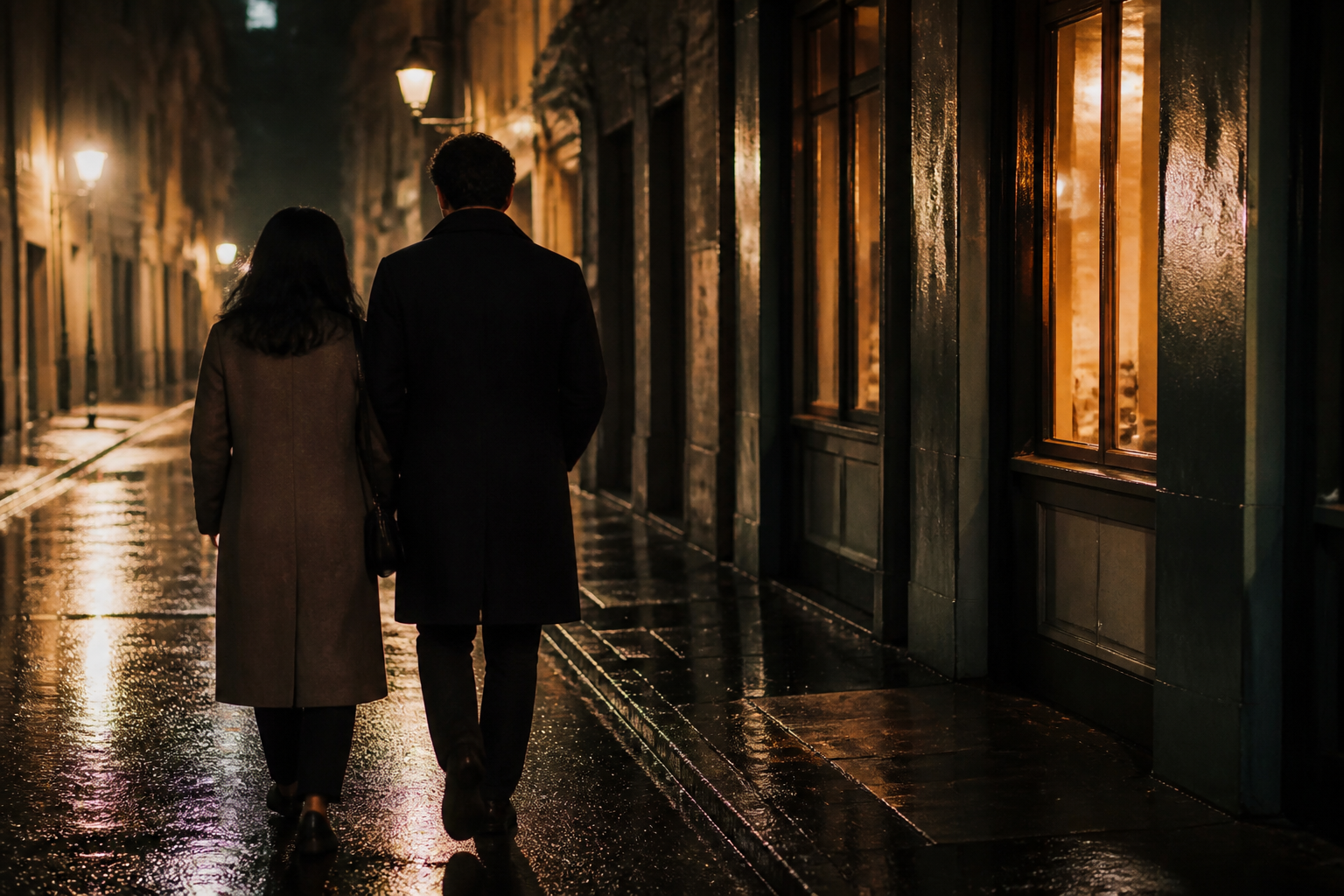
London, January 1995. A cold rain slicks the streets of Sloane Square as theatergoers file into the tiny upstairs auditorium of the Royal Court Theatre. They don’t know quite what they’re in for, but rumors have been swirling: a new play by a 23-year-old woman that is supposed to be shocking beyond belief. The lights dim, and Blasted begins. On stage, a hotel room is meticulously realized: floral bedspread, room service tray, the soft buzz of a TV in the background. A middle-aged man, heavyset and rough around the edges, enters with a young woman, nervous and wary. The first scene proceeds almost like a conventional drama—an uneasy seduction-cum-power-struggle between Ian, a foul-mouthed tabloid journalist, and Cate, a frail, childlike woman in her twenties. The audience settles in, thinking perhaps this will be an intense but familiar chamber piece about abuse or love gone wrong. Indeed, Ian’s crass jokes and Cate’s panic attacks create tension. Then suddenly, about halfway through, reality rips open—literally. An explosion rocks the theatre; the stage goes dark. When lights return, the hotel room’s wall has been blown apart. Rubble is everywhere. And in through the gaping hole steps a soldier with an assault rifle, eyes burning with fury. The play shifts in an instant from personal horror to war nightmare. Over the next brutal scenes, that soldier will terrorize Ian and Cate. At one point, in one of the most notorious moments in modern theatre, the Soldier pins Ian down and gouges out his eyes. Gasps fill the audience; a woman in the third row vomits into her handbag. Some people stand abruptly, stumbling for the exit—one man mutters “This is filth!” as he leaves. But others are frozen in their seats, faces pale, unable to look away from the relentless unfolding of violence and despair on stage.
High above in the tech booth, playwright Sarah Kane watches through the glass window, her heart pounding as hard as the rain outside. She sees the walkouts and shuts her eyes for a second, fighting the wave of doubt that threatens to crash over her. But she steels herself. They need to see this, she thinks. They need to feel something real. Down on stage, Blasted reaches its final tableau: the once swaggering Ian, now blind and broken, lies whimpering on the destroyed floor, reduced to an infantile need. Cate, who has faced her own trials of rape and starvation, enters with a baby—an infant she found dead outside in the war-torn city. In a gesture of desperate compassion, she tries to feed Ian, tearing pieces of flesh from the dead baby for him to eat (yes, cannibalism—the audience collectively flinches and groans). The theatre feels like a battlefield hospital, full of psychic wounded. Finally, Cate leaves to find help. Ian, alone, sobs and says “Thank you” into the darkness—the first truly human thing we’ve seen him do. The stage goes black. There’s a long pause before anyone can applaud, and when they do it’s uncertain, scattered clapping, mixed with sounds of distress.
As the lights come up and the stunned audience shuffles out, the theatre’s artistic director catches up with Sarah Kane backstage. He embraces her and says quietly, “That was… extraordinary.” Sarah, a slight young woman with close-cropped hair and intense eyes, lets out a breath she didn’t realize she was holding. She did it. She put the horror of Blasted on stage exactly as she envisioned. Now, all that remained was to face the world’s response.
And respond the world did. The next morning, Sarah sits in a café with the newspapers spread before her. The Daily Mail’s headline screams: “NASTY SHOCK FOR THE NEW YEAR – THIS DISGUSTING FEAST OF FILTH,” lambasting Blasted as a moral monstrosity. The critic Jack Tinker fumes that it’s a “bucket of bile” poured on audiences. Other tabloids chime in: “Depraved New Play Sickens London”. Sarah’s stomach tightens with each word. It wasn’t that she hadn’t expected controversy—she knew Blasted was as subtle as a hand grenade—but the vehemence stings. They’re missing the point, she thinks. I show rape and war and cannibalism because these things are happening in our world for real. Can’t they see I’m not glorifying it but exposing it? A more thoughtful review in The Guardian defends the play as a valid response to the Bosnian war horrors and violence against women—comparing Sarah to a young Edward Bond (another playwright whose early work scandalized). But those voices are drowned in the tabloid furor. She feels both furious and despairing. Yet, somewhere under that, a small flame of grim satisfaction burns: she wanted to shake the establishment, and she certainly has.
Sarah Kane’s journey to this incendiary debut had been short and intense. Born in 1971 in Essex, England, she was raised in a comfortable, religious family. As a teenager, she was fervently evangelical Christian—until she wasn’t. By university, she’d lost her faith in God but found a new faith in theatre as a means of truth-telling. She studied drama at Bristol University, where she devoured works by Samuel Beckett, Howard Barker, and especially the “in-yer-face” contemporaries like David Mamet and her British peer Mark Ravenhill. She admired how theatre could confront audiences with uncomfortable truths. She also loved poetry and the raw emotion of music; Joy Division’s haunting lyrics, for example, resonated with her. She went on to get an MA in playwriting at Birmingham University, where a prominent playwright, Edward Bond (known for his own shocking play Saved in the 1960s), became a mentor. Bond told her to write with total honesty, without fear of offense. Sarah took that to heart.
Blasted was written as the Yugoslav Wars raged in the early 90s. Each night, Sarah saw on TV news images of Sarajevo under siege—snipers shooting civilians, mass rapes being used as a weapon of war. She felt anger and impotence. Meanwhile, she also saw, closer to home, the everyday brutality of tabloid culture, the way people—especially women—were objectified and violated in society. In Blasted, she daringly drew a connection between the two: the domestic abuse of a young woman by an older man and the war violence “out there” were two ends of the same spectrum of cruelty. The explosion in the play that brings the war into that Leeds hotel room was her theatrical metaphor made horribly literal: the distant war comes home, the personal and political fuse. It was a stroke of genius or insanity, depending on whom you asked.
In the weeks following the premiere, Sarah Kane became a name everyone knew, but not always kindly. She was dubbed an enfant terrible, a deviant. She got hate mail. Yet quietly, theatre artists and some critics began rallying to her defense, saying Blasted was the most important new play of the decade, heralding a new voice unafraid to depict the dark side of humanity with compassion. Sarah, who had a witty, self-deprecating side, joked in an interview, “No one’s going to ask me to write The Lion King 2, that’s for sure.” She noted, though, that the outrage only proved how sanitized people wanted their art, and how unwilling they were to confront violence unless it was safely distant or aestheticized. She famously said: “The reading I did of the war in Bosnia was not in newspapers but in people’s eyes on the tube.”
Despite the initial backlash, Blasted didn’t end Sarah’s career—it ignited it. The Royal Court, known for championing new writers, stood by her. Over the next few years, she wrote four more plays, each distinct and bold. Phaedra’s Love (1996) was a modern retelling of the Greek myth, turning it into a pitch-black comedy of royal dysfunction that ends in gore and nihilism (one scene had a character casually masturbating while watching TV—again, audiences squirmed). Cleansed (1998) took place in a surreal concentration camp/university where love is tested via torture—people have limbs severed, undergo forced sex changes—all presented in poetic, dreamlike sequences. Many critics threw up their hands: What is this relentless obsession with brutality? But others, increasingly, saw the fierce tenderness beneath Sarah’s work. Because, for all the shock, she wrote love stories at their core: twisted, painful love, but love nonetheless, striving for expression in hellish circumstances.
After Cleansed, Sarah Kane’s style began to shift. Crave (1998) came next, under a pseudonym initially (perhaps to escape the baggage of her reputation). Crave surprised many: it had no explicit violence, no stage directions even—just four voices (A, B, C, M) delivering interwoven monologues about longing, memory, and despair. It was lyrical, influenced by abstract poetry. Some of the early detractors of her work were confounded—This is the same Sarah Kane? She was showing another facet: the interior emotional devastation behind the outward horrors she had portrayed earlier.
Around this time, those close to Sarah noticed her own interior darkness growing. She struggled with depression. Perhaps the weight of what she wrote—the trauma she explored—took a toll, or it was a long-standing condition exacerbated by the pressures of sudden fame and continued controversy. She had always been intense, but now that intensity sometimes turned inward, against herself.
Her last play, 4.48 Psychosis, is in many ways a 75-minute suicide note set to theatre. She wrote it in 1999, a raw, fragmented exploration of clinical depression, named for the time (4:48 a.m.) when clarity—or despair—strikes the insomniac mind before dawn. The text has no specified characters or stage action; it’s a stream of consciousness—sometimes lucid and poetic (“Love keeps me a slave in a cage of tears”), sometimes clinically detached (there are passages listing antidepressant drug dosages), sometimes splintered voices arguing with themselves. It’s harrowing in a completely different way from Blasted—not a single act of external violence is depicted, yet it’s like staring directly into the naked agony of a soul.
In February 1999, Sarah Kane took her own life. She was only 28. The theatre world was shocked. Some of the very papers that had vilified her work ran obituaries that were surprisingly gentle, even apologetic in tone, as if recognizing they had misunderstood the sensitive person behind the provocations. For those who had championed her, it was a tragic loss of a burgeoning genius. 4.48 Psychosis was staged posthumously in 2000, and watching it knowing the author’s fate made it all the more poignant and devastating. There is a line in it: “Watch me vanish,” which echoed painfully with her death.
Yet, Sarah Kane did not vanish. In the years after, her plays have been produced around the world, and attitudes towards her work have undergone a considerable shift. What was initially seen by some as gratuitous shock is now often hailed as profound, fearless artistry. Blasted, in particular, was re-staged in 2005 at the Royal Court to great acclaim—critics now called it a modern classic that predicted the merging of domestic and global violence (indeed, after 9/11 and conflicts in Iraq and elsewhere, the theme felt more resonant). Her influence is seen in countless younger writers who push boundaries in content and form.
So what remains with an audience after experiencing a Sarah Kane play? It’s not the shock for its own sake—it’s the emotion, the raw empathy she conjured for people in extremis. She once said she wanted her plays to ask one question: “Given the appalling nature of the world, why keep on living?” And her plays, dark as they were, implicitly answered: because amidst the horror, there are moments of love, of grace, however fleeting. After the ashes of everything, an Ian can say “Thank you,” a gesture of gratitude and connection, however small. In Cleansed, after unspeakable suffering, two characters perform a halting dance together—love, however doomed, persists. In 4.48 Psychosis, even as the voice yearns for oblivion, there’s a desperate desire to be understood, to be loved.
Picture a scene not on stage, but in a rehearsal room. It’s 1998, Sarah is working with actors on Crave. She’s gentle and collaborative, in contrast to the brutality of her writing. An actor is puzzled: “Sarah, what does this line mean? ‘It’s myself I’ve never met, whose face is pasted on the underside of my mind.’” Sarah, barefoot in a baggy sweater, thinks a moment and says, “I’m not sure I know yet, either. Let’s find out together.” They explore through rhythm, through intonation. She encourages them to trust the feeling even if logic lags behind. In a break, she might crack an irreverent joke or go out for a smoke (she was a known chain-smoker). There’s laughter. Those who worked with her recall her wicked sense of humor and generosity. It’s a reminder that the person and the work aren’t identical; Sarah’s soulfulness and need for connection drove her to write such extreme things to cut through complacency.
By the time of her death, the term “in-yer-face theatre” had been coined to describe the wave of young British playwrights of the 90s (like Kane, Ravenhill, McDonagh, etc.) who put taboo subjects and visceral content on stage to jolt audiences. Sarah Kane became a symbol of that movement—something she might have been uneasy about, as she didn’t write to fit a trend, she wrote from necessity. Still, her legacy is firmly entrenched as a catalyst that expanded the vocabulary of modern drama. She showed that anything truly, painfully human—no matter how disturbing—can be material for theatre if treated with honesty and artistry.
Let’s end with the final image from 4.48 Psychosis, as it often is staged: A dim light on an empty stage, and a single voice (or multiple voices speaking as one) says the last lines: “Please open the curtains.” It’s ambiguous—perhaps the speaker yearns for light, for a revelation, or, as in a theatre, signaling the end of the performance. Then darkness. When the lights in the auditorium come up, the audience is left with silence and their thoughts. In that silence, one might feel an ache, for Sarah, for all who suffer. But also, surprisingly, a sense of kinship—because by sharing the darkness so openly, she’s bridged the lonely gap that mental anguish creates. An audience member sits there, tears on their cheek, thinking, I have felt that despair, and she knew it too. In that recognition lies a strange comfort, a lifeline.
That was Sarah Kane’s gift: through some of the most harrowing scenes imaginable, she reached out a hand in the dark to say, You are not alone in feeling pain; and even in the darkest pit, there is a flicker of love. It might be small. It might not save us. But it’s there. And that, ultimately, is why we keep on living, and why her brutal, beautiful plays affirm life even as they portray its collapse. They shock us into remembering the value of empathy, of the gentle and good that we cling to when everything else is blasted away.
Return to Transit