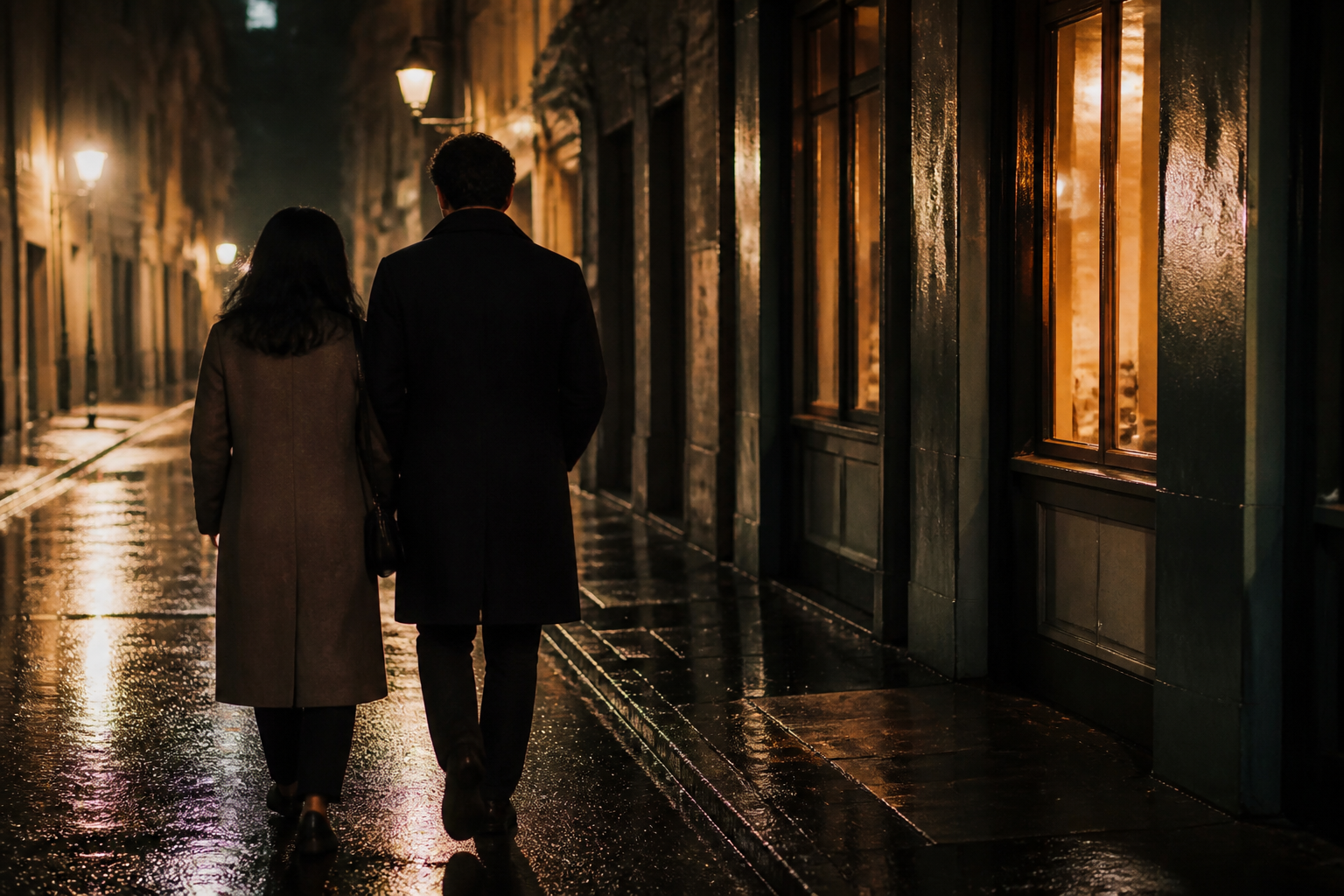
Why do we have anxiety?
Anxiety is the number one human emotion. It is older than language. It is older than the species. It is older than most of the cognitive equipment we now use to talk about it. It is the inherited inheritance of every animal that survived long enough to reproduce, in every environment that was dangerous enough to require continuous threat assessment, which is essentially every environment in which life has ever been lived. To be alive and aware is to be anxious. The two cannot be separated. Pretending they can is the foundational error of the discourse on mental health, and the error has produced an industry that is treating a feature as a bug, with predictable results.
Throughout most of human history, almost everything was potentially lethal. Children were born by twelve and were grandparents or dead by twenty-five. The plants you ate could kill you. The animals around you could kill you. The neighboring tribe could kill you. The weather could kill you. The water could kill you. Childbirth killed a substantial fraction of mothers. Infections killed a substantial fraction of everyone. The night was actually dark. The forest was actually full of things that wanted you in particular. In this environment, the humans who survived to have descendants were the ones who anticipated trouble before it arrived, who read small signals as evidence of larger danger, who slept lightly, who startled easily, who imagined the worst and prepared for it. The ones who did not anticipate did not pass on their genes. The ones who did, did. We are the descendants. We carry their nervous systems. The nervous systems were calibrated for a world that no longer exists, by mechanisms that cannot recalibrate within a few generations.
The conditions have changed. The traits have not. Most readers of this sentence live in environments where the actual risk of dying today is extremely low. Cars are dangerous, but we manage them. Disease is dangerous, but we mostly treat it. Strangers are sometimes dangerous, but rarely fatally. The forest does not have predators that hunt humans. The water is, for the most part, drinkable. The food is generally not poisoned. The night is illuminated. The neighbors are usually not preparing to attack. By any honest measure, the average modern person is safer in their daily life than any human who has ever lived. The nervous system has not received this update. The nervous system continues to operate as if the threats were everywhere, because the nervous system was built for a world where they were, and there is no easy way to tell the nervous system that the world has changed.
This is why we are anxious without immediate cause. The cause was real, in our ancestors. The cause has thinned. The system that responded to the cause has not. We are running ancient software on hardware that no longer faces the original threats. The software keeps scanning for danger because that is what it was built to do. When it cannot find an immediate danger, it constructs one out of whatever material is available. Work. Money. Relationships. The future. The past. The internet, when it became available, turned out to be an enormous source of free anxiety material, because the internet brings you news of every threat in the world simultaneously, and the nervous system processes that news the way it would have processed a tiger in the next valley, which is by becoming alert and slightly afraid, and the alertness is then carried into the rest of the day with no tiger to discharge it.
The medical model of anxiety treats this state as a malfunction. The model assumes that the absence of immediate threat should produce calm, and that anxiety in the absence of immediate threat is a chemical imbalance to be corrected. The model is partly correct. There are people whose anxiety is so severe that it disables them, and for some of those people, medication produces real relief, and the relief is enough to allow them to function, and that is a genuine good. The model is also partly wrong. It is wrong because it treats a baseline human condition as a deviation from a non-existent norm. The norm of relaxed unconcerned existence is not the human default. The default is mild ongoing anxiety, with spikes when something specific triggers it, and troughs when conditions are unusually safe and absorbing. Most humans are in the mild ongoing state most of the time. Treating this state as pathological is treating the species itself as pathological, which is incoherent.
The other problem with the medical model is that it treats anxiety as if it were content-free. As if it were just an emotional weather system that needs to be cleared. Anxiety is not content-free. Anxiety is a signaling system. The signal may be miscalibrated, but the signal is information. The signal is saying: pay attention. Something here may need addressing. The thing may be in your life or it may be in your head. The anxiety does not always know which, because anxiety was not built to distinguish them. It was built to keep you alert. The alertness has to be interpreted by you. Sedating the alertness without interpretation is removing the signal without solving what the signal was trying to tell you, which is occasionally fine and frequently not.
There is also the question of what happens when anxiety is treated chronically with medication. The chemistry is real. The relief is real. The long-term consequences are less well understood than the marketing suggests. The dependence is sometimes physical and sometimes psychological and often both. Withdrawal is unpleasant and can be dangerous. The original anxiety usually returns when the medication stops, sometimes worse than before, because the system has been recalibrated by the medication and now responds to its absence with a stronger version of the original signal. None of this means the medication should not exist. It means the medication should be used carefully, for cases that warrant it, with the understanding that what is being treated is not always a malfunction but is sometimes the underlying human condition itself. Treating the human condition with chemistry is a project with a long history and uneven results.
Anxiety is not a disorder. Anxiety is awareness. Being anxious implies being aware that something could go wrong. Being aware implies emotions, because emotions are the body's way of registering significance. Emotions imply intelligence, because intelligence in any biological sense includes the capacity to evaluate situations and respond differentially to them. The chain is rough but it points in the right direction. The capacity for anxiety is not separable from the capacity for thought. The two emerged together. They serve each other. Removing one does not improve the other. Removing one degrades the other.
The practical question is what to do with the anxiety, given that the anxiety is going to be there. The standard answer in modern medicine is medication. The standard answer in older traditions is something like work, ritual, prayer, community, or physical activity that gives the activated nervous system something to do. The older traditions were correct about something the newer medicine has lost track of, which is that anxiety responds to discharge. The system was built to mobilize the body for action. When the body acts, the system completes its cycle. When the body does not act, the system stays in its mobilized state, and the mobilization persists, and the persistence is what we call chronic anxiety.
The most reliable anxiety treatment that has ever been discovered, by any culture, anywhere, is physical activity. Running, specifically, has been studied so extensively that the result is no longer in dispute among researchers, even if it has been slow to penetrate the clinical practice. Running discharges the anxiety because running is what the system was built to mobilize the body for. The system says: there is danger. The body runs. The body returns from the run. The system, having seen the body discharge the energy it was prepared, recalibrates briefly to a state of completion. The completion is what we mean by calm. Calm is not the absence of anxiety. Calm is the post-discharge state of an anxious system that has done the thing it was prepared to do.
This is why running, walking, swimming, lifting, hiking, and any other form of sustained physical exertion produces, in most people, a noticeable reduction in anxiety. The reduction is not because the exercise has solved anything in your life. Your problems are still there when you return. The reduction is because the system has discharged. The system will rebuild. You will be anxious again tomorrow. The discharge is daily. The practice is therefore daily. This is why every wisdom tradition that has thought seriously about how to live has included some form of daily physical practice, and why every tradition that has lost the practice has produced populations that report feeling more anxious despite living in conditions that should produce less anxiety.
Writing serves a similar function for some people, though through a different mechanism. Writing does not discharge the anxiety physically. It discharges it cognitively, by giving the activated mind a structure within which to channel its scanning. Anxious minds scan continuously for threats. When the scanning has nowhere to go, it produces ruminations. The ruminations are unproductive because they are not directed. Writing directs them. The mind scans, finds material, processes it through language, and produces a sentence. The sentence is the discharge. The next sentence requires another scan. The scanning is now in service of something. The service is itself relieving, because purpose is what the anxious system has been looking for, and purpose has been found, and the system can briefly settle.
Most things one can do as a daily practice will reduce anxiety if they are done daily. The mechanism varies but the effect converges. Cooking. Gardening. Building things. Repairing things. Caring for animals. Caring for people. Music, played or made. Crafts of any kind that require attention and produce small visible results. The medical literature has been catching up to this for decades and has now mostly conceded that what the older traditions called purposeful activity is, in fact, one of the most effective interventions for anxiety that has ever been identified. The literature uses different language. The conclusion is the same.
Treating anxiety with medication, when other options have not been tried or have been tried only halfheartedly, is something like removing a foot to address the inconvenience of having to wear shoes. The foot is not the problem. The shoes are not the problem. The relationship between the foot and the shoes can be managed in many ways before amputation becomes the appropriate intervention. The medical model has been good at offering amputation. It has been less good at offering the other options, partly because the other options cannot be patented and prescribed and reimbursed, and partly because the other options require the patient to do something rather than to take something, and doing is harder to scale than taking.
This is not an argument against medication. Medication has its place. The place is real. The place is not the front line of treatment for the average anxious person, who is anxious because they are human, and whose anxiety is mild ongoing alertness rather than disabling pathology. For the average anxious person, the front line is movement, structure, daily practice, and the slow recalibration of the nervous system through repeated cycles of mobilization and discharge. This works. It has always worked. The fact that it cannot be packaged and sold is its strength as well as why it is undersold.
The deeper move, beyond practical management, is to befriend the anxiety. Not to celebrate it. Not to pretend it is pleasant. To recognize it as the signal that you are still capable of registering significance, of caring about what happens, of being awake to the conditions of your life rather than dulled by sedation or distraction. The dulling is available. Many forms of it are available. Alcohol is one. Streaming media is another. Social scrolling is a third. Each of these reduces anxiety briefly by routing the activated system away from itself. Each of them produces, over time, a state that is worse than the original anxiety, because the original anxiety was at least connected to the conditions of your life, while the dulled state is connected to nothing. The dulled state is the anxiety still present underneath, no longer doing its work, accompanied by the additional cost of whatever was used to dull it.
Befriending the anxiety means accepting that the alertness is part of being awake. It means treating the daily mild anxiety not as an enemy to be eliminated but as a companion that needs to be given something to do. The companion will not leave. The companion has been there since before the species had a name for itself. The companion will be there for the rest of your life. The choice is what to do with the companion, not whether to have one.
I have tried both approaches. I have spent periods medicating the anxiety and periods working with it. The working with it has been better, for me. This is not a prescription. Different people have different versions of the underlying signal, and what is mild in one person is severe in another, and the severe versions sometimes require chemical intervention to become workable at all. I am describing what is true for the median anxious person, which is most readers of this sentence, who are not disabled by their anxiety but are inconvenienced by it, and who have been told that the inconvenience is a malfunction when it is actually the residue of being a particular kind of animal in a particular kind of moment.
The moment is, by historical standards, an unusually safe one for the people who have access to write and read essays like this one. The safety is not evenly distributed. Many people on the planet are still living in conditions where the original anxiety calibration is appropriate, where the threats are real and immediate and chronic. Their anxiety is doing its job. The anxiety of the readers of this essay is mostly doing a job that no longer needs doing, which is why it feels groundless, which is why it produces the sense that something must be wrong with the person feeling it. Nothing is wrong with the person. The system is functioning. The function is just no longer matched to the conditions, and the mismatch is what is being felt.
The anxiety will not be solved. The anxiety can be reduced, redirected, befriended, and made productive. It can also be sedated, suppressed, and treated as a problem until the treatment becomes its own problem. The choice is available. The default in the current culture is the second path. The first path is older and slower and harder to monetize and is, for most people, what actually produces a workable life.
Take up running. Or writing. Or anything that gives the system something to do. The anxiety will be there tomorrow. You will be there tomorrow. The relationship between the two of you is the practice. The practice is the life.
So far so good. Still not great. Bette
Return to Transit