Gregor Mendel – The Monk of Ratios
Johann Mendel - You’re listening to “Scientific Giants Who Changed Our Understanding of the World We Live In.” Each episode stands beside one mind and follows a thread of curiosity until it ties to the world we inhabit. Today we step into a cloistered garden behind a monastery wall in Moravia, into a rectangle of beds cut as neatly as paragraphs, where trellised vines climb twine and little white tags, stiff with shellac, knock softly against their stakes when a breeze moves through. The air smells of damp earth and green sap. A friar with round spectacles and the posture of a careful teacher lifts a blossom between finger and thumb, slides a fine brush across its anthers, and taps a dusting of pollen into a paper packet he has folded with a stationer’s precision. He closes the packet, writes a code in a small compact hand—year, cross, trait—and ties it to the stem. In his other pocket a notebook rides in the warmth against his robe. Every afternoon the pages fatten with numbers and little signs. The friar’s name in religion is Gregor. His family name is Mendel. He is about to take the blur out of heredity.
He begins far from here, in a village where soil is the first alphabet a child learns. In 1822 Johann Mendel is born to a German‑speaking farming family in the Silesian hamlet of Heinzendorf, a patch of the Habsburg empire where the harvest is an argument with weather and you can read a season’s fortune in the color of rye. The boy is quick and poor. A gifted teacher helps him to a gymnasium; the family sells fruit trees and pinches coins to keep him there. He learns Latin names for plants with the same delight with which he learns their local ones; he studies mathematics because it feels like clean water. He is gentle and austere in appetite. When the family’s fortunes sag, he spares them the expense of a worldly education and walks through a gate that will give him room to think. In 1843 he presents himself at the Augustinian abbey of St. Thomas in Brünn—Brno in Czech, a city of mills and workshops, music and argument. He takes vows, a new name, and a library.
Do not make the mistake of imagining that he has stepped out of the world. The abbey is a hive in which prayer and learning borrow each other’s discipline. The Abbot, Cyrill Napp, has a head for accounts and a taste for science. “What is inherited, and how?” he asks in a report to a learned society, not as a rhetorical flourish but as an agenda. There is a greenhouse at the monastery and a ward for the poor, a meteorological station where temperature and pressure are written down as faithfully as psalms, students to be taught, a city to serve. Mendel reads in the library and looks out the window. He goes to the front of classrooms and comes home with a fever that teaching cannot cure: the need to count.
His path is not smooth. In 1850 he sits for a teacher’s certification examination and fails the part that asks for a polished display of natural history. The prior sends him to Vienna, to study harder and differently, and there he is given, without fanfare, the instruments his century is making for minds like his. In lecture halls he hears Christian Doppler talk about waves and how their pitch shifts when a source moves; he hears Franz Unger, a botanist the clergy distrust for his liberal views, talk about the cell as a unit and plants breeding as farmers breed animals; he learns probability, not as a metaphysical idea but as a workman’s tool. He learns to look at a problem until it admits its units. He restores to himself the right to be examined, returns to Brünn in 1854 as a substitute teacher of physics and natural history, and takes charge of the abbey’s greenhouse. In the beds outside he plants ordinary peas.
The choice is not romantic. It is methodological. Peas, Pisum sativum, are forgiving: they grow fast; their flowers are mostly self‑pollinating, so crosses can be controlled; their characters come in clear alternatives you can name without lying: round seed or wrinkled, yellow cotyledon or green, purple flower or white, green pod or yellow, inflated pod or constricted, axial flower or terminal, long stem or dwarf. Mendel avoids the beguiling traits whose categories blur. He wants facts that stand on the same side of the ledger each time you add them. He selects parents that breed true for each trait by selfing them for generations until the trait behaves like a habit. He emasculates flowers, dusts stigmas with foreign pollen, protects blossoms in muslin, and ties tags like signatures.
It looks like gardening until you open the notebook. Then it looks like commerce. He counts. He records the shape and color of thousands upon thousands of seeds. The numbers begin to fall into lines that have discernible rhythms. Seed color in the first generation of a cross—yellow with green—comes out all yellow. There is a uniformity in the hybrids. Then, when those hybrids are selfed, the yellow returns in about three parts out of four, the green in one part out of four. It happens again in other trait pairs: wrinkled yields to round in the first generation, then reappears among the grandchildren at about a quarter. When he separates off the green or the wrinkled and grows them out, they breed true again. When he selects a yellow seed out of that three‑quarters and grows it on, it behaves like a mixed bag: about a third of those yellows stay yellow forever; about two thirds carry the capacity to throw green young without showing green in themselves. In that bag you can hear ratios clicking together like gears.
What is he counting? He forbids himself from metaphysics and talks instead in the names his paper will teach to say aloud without blushing: dominant and recessive. In his language, dominant characters—yellow seed, round seed, purple flower—appear in every hybrid that carries them; recessive characters—green seed, wrinkled seed, white flower—hide when a dominant is present and appear only when a plant carries two doses of the recessive tendency. He is too careful to pretend that he has seen inside a cell; he speaks instead of “elements” that do not blend, that pair and part, and that are passed from parent to offspring singly, not dissolved into a common essence. In his mind, and gently in his diction, now exists the concept students will later memorize as if it were a law of weather: there are factors, later genes, and they come in pairs; a pair separates when gametes are formed; union restores the pair in the next generation. With that picture the ratio 3:1 stops looking like numerology and becomes the arithmetic of combinations.
By the time the numbers settle into confidence for single‑trait crosses, he is already building the next demand into his work: what happens when two different characters are considered at once? If seed color obeys one habit and seed shape another, do the habits talk to one another? He crosses doubly; he records color and shape together and watches the offspring’s seeds pour into categories until the border between piles is clear. The predicted nine‑to‑three‑to‑three‑to‑one pattern appears in the F2 like a mosaic you cannot unsee once someone points it out: nine parts round yellow, three round green, three wrinkled yellow, one wrinkled green. It is not magical. It is the combined effect of two independent 3:1 splits, the product of two separations happening at once. He repeats the performance with other pairs. Where independence holds, the pattern holds. Where it does not—because, as later workers will learn, two factors live on the same chromosome and therefore travel together more often than not—the pattern wobbles, and he notes the wobble but refuses to overinterpret it. The habit he is training in himself is the habit his century needs to learn: when a pattern breaks, treat the break as a clue, not a scandal.
He speaks with the hesitation and stubbornness of a man who wants to deserve belief. In February and March of 1865 he reads his results aloud at meetings of the Natural Science Society in Brünn. The lectures are attended, the paper printed in the society’s journal the following year under the modest title “Experiments on Plant Hybridization.” He frames his claims in a craftsperson’s voice. He does not claim to discover unseen substances; he claims to have found regularities in the behavior of characters and in their numerical mix among offspring, regularities that can be predicted, reproduced, and, above all, explained by a simple picture of how contributions from parents combine without dissolving. Nobody accuses him of bragging. Most readers do not accuse him of anything at all. The journals of the centers of power—Berlin, Paris, London—do not rumble. Botanists at a distance ask him to try other genera. One, Carl Nägeli in Munich, a figure of weight, suggests hawkweeds—Hieracium—whose reproduction, unbeknown to them both, often bypasses sex and makes clones that mock the rules Mendel has drawn. The trials with hawkweed do not teach the same lesson peas taught; they teach a different one: that nature is untidy in its means, and that the means matter. He writes letters, keeps his temper with difficulty, and returns to peas and to other plants that obey sex honestly. The world remains, for the moment, uninterested in being improved by arithmetic.
He is made abbot of his monastery in 1868 and his days fill with invoices and disputes. He tackles administration like an experiment—methodically, cheerfully when he can, with heavy steps when he must. He is drawn into a long quarrel with the new state over taxes levied on religious houses. He refuses to collect a levy from his canons he believes unjust; he fights through courts; civil servants grow cold; newspapers say what newspapers always say when money and piety shake hands in public. The energy drain is complete. His notebooks grow lighter.
None of this changes the rightness of his method. He has done what a civilization can use forever: he has shown that a problem most people regard as a fog can be turned into a ledger. Momentum continues in other minds for a while to move away from him and then, years later, toward him all at once. In 1900, working independently and jealously, three men—Hugo de Vries in the Netherlands, Carl Correns in Germany, and Erich von Tschermak in Austria—publish papers that recover, in their own words and their own crosses, the laws Mendel had taught under that name nobody had bothered to learn. Priority tugs at pride. There are polite bows and less polite footnotes. Correns finds Mendel’s paper and says it plainly: he had it first. A small society’s publication, printed in a minor town, becomes the center of a network. The peas in Brünn return to shake a century by the collar.
What changes is not merely a textbook chapter. The idea that inheritance is particulate—that something discrete goes from parent to child, assembling into pairs that part and reassemble—dissolves the stubborn classical picture of traits blending like paints. Blending made selection weak, because any improvement diluted itself in the bloodstream of the tribe. Particles make selection strong, because a favorable element does not fade; it rides the generations like a passenger that can be counted. In the first expansion beyond Mendel’s paper, the little “elements” he postulated find homes in structures you can see when you stain cells and watch them divide. Under microscopes, threads now called chromosomes pair and pull apart with a drama that echoes the logic of his careful crosses. In 1902, Walter Sutton will argue that the behavior of chromosomes at meiosis—the halving of the genetic stock before union—is the physical basis for Mendel’s laws. The picture becomes a mechanism, the mechanism becomes a discipline, and the discipline breeds subdisciplines by the dozen: linkage maps that measure distance in recombination; pedigrees that write a family’s sorrows and joys in a way doctors can trust; population genetics that turns the play of genes into equations; molecular biology that trades “factor” for gene and then gene for stretched strings of bases you can read and copy.
But stay where he stood for a few minutes more before the world races ahead. What made the laws possible was not the monastery, nor the peas as such, nor even the taste for arithmetic. It was his refusal to flatter the eye. If you plant a garden as a layperson, you admire the vigor of a plant, its sweetness, its color. If you plant it like Mendel, you admire these things for a memoir but not for a paper. What he wants is an argued case for how inheritance works. He invents a way to make the invisible audible by counting. He invents test crosses to distinguish a plant that looks like it breeds true and a plant that simply carries its difference hidden. He counts enough to separate the murmur of chance from a chorus. He replicates in different years, because seasons are fickle and the soul takes comfort in a second try. He keeps the paper bags dry.
There is a gentler quiet to his life that makes the method beautiful. In a letter to a friend he writes how much relief he finds in a day when the greenhouse warms and a hesitation in a table of numbers finally resolves. He writes with a provincial modesty that saves him from two sins common among inventors: the sin of declaring a law universal when he has only shown it in one place and the sin of treating exception as an enemy to be beaten into conformity. He is content to say, “Here, under these constraints, with these plants, this arithmetic holds, and it can be explained by a picture that is simple and generous.” He does not deny variation. He does not deny that some plants confound the rules. He gathers those confounders into boxes and sets them aside to be returned to by hands less threadbare than his. A century that made idols of giants later would have done well to remember the scene: a man in an apron opening a notebook, wiping his hands, and writing, in a firm quiet script, what the world has forced him to see.
Between his quiet and our noise, a few controversies remain to trouble celebrants and teach caution. In 1936, a statistician of genius, Ronald Fisher, will publish an analysis that claims Mendel’s data fit his expected ratios too well—that some generous thumb, conscious or not, pressed scales to make the 3:1 and 9:3:3:1 sit straighter than chance would allow. The charge of fraud has hovered and subsided and hovered again. One plausible rescue is human: a helper discarding a seed here or there when categorization was doubtful; a monk who, without malice, rounded a count inward toward expectation. Another rescue is technical: the methods developed after his time—tests of goodness‑of‑fit, criteria for sample size—were not available to him; he did not shape his experiment to satisfy tests not yet invented. What survives the debate is not a saint but a method. Even if a soft bias moved a few seeds, the laws stand; the structure of heredity has verified itself in mice and flies, corn and people, bacteria and yeast and every creature whose matings we can control. Mendel remains a working noun in laboratories that never read his German.
He read Darwin. The German translation of On the Origin of Species lay in his hands and fed his patience. It is lovely to imagine the two men corresponding, trading ideas in letters with handwriting strong enough to win a student’s trust. Whether a paper traveled between them is argued in libraries. The truth that matters is practical: Darwin’s long argument needed a mechanism that would not smear beneficial change into the tribe and Mendel’s elements needed a world where selection could favor combinations without foresight. Between them a new science hangs like a bridge. The modern synthesis of the early twentieth century—Fisher, Haldane, Wright—will write the mathematics that marriage required. Mendel’s ratios and Darwin’s pressures make a joint grammar that every schoolchild now inherits with the words “gene” and “evolution.” It is hard to be grateful enough to two men who never met.
The city beyond the cloister was not sleeping while he counted. Industrial looms clattered; nationalist politics sprouted; the empire shifted its weight as modernity moved across Europe like a weather front. In the abbey he wrote the weather down with a barometer and a thermometer and then did the braver thing: he wrote it down in a living ledger of seeds and pods. When later sciences leaned into big machines—spectrometers, cyclotrons, gene sequencers—the abbey experiment remained a moral picture of how knowledge can be made without condescension. It is possible to change the world with a brush, a bag, a plot of earth, and stubborn inference.
When the rediscovery made his name a banner, institutions fastened medals to their jackets and put his portrait in corridors where portraits are the furniture of pride. The monastery’s greenhouses and beds did not become shrines; gardeners kept gardening. The large science that followed did not always keep his manners. Think of those manners as a small catechism for empiricism: choose traits that can be scored without flattering your desire; count until noise falls; put each step where a stranger can repeat it; do not bury exceptions; where a pattern holds, propose the simplest picture that could make it hold; write gently; refuse to hate the plants that have humiliated you today.
It is tempting to leave him eternally in his garden, forever young and counting. He did not remain there. As abbot he walked corridors with the heavy tread of responsibility. He managed properties, argued with ministries, and signed letters on matters of finance. The fight over taxes made his last years bitter; those who chose to see a stubborn prelate refused to see a man who had once amended nature by patiently noting her own habits. He died in 1884, kidneys failing, the argument with the state still open. Friends and fellow monks carried his coffin. The city moving past the abbey gates paid more attention to its factories than to the passing of a friar. In a way, this is the happy ending a scientist should wish: that a method survives the name.
If you wish to practice gratitude without sentiment, take a handful of dried peas to a table on a winter night and do what he did in thought. Mark seven coins with pairs of letters for traits and flip them in pairs to feel in your wrists the logic of independence. Read the column of heads and tails and watch 3:1 appear in miniature. Then remember that in the garden it is not coins but living things, with sap and rot, raincraft and insect appetite and the indifference of seasons. The ratios appear there, too, if you humble yourself to count long enough, if you cover blossoms when needed and uncover them when safe, if you learn to be a little cruel to sentiment and a little kind to machines of the mind. That is why Mendel’s work feels, even now, like a secular liturgy. It gives human beings a way to know a difficult thing without punishing anyone for their ignorance.
A century and more later, the picture his numbers painted has filled itself in with colors he could not have guessed. The “factors” are genes, encoded in lengths of nucleic acid whose four letters can be read and typed and edited by enzymes with appetites that feel like intelligence. The straightforward dominance he described has given way to a zoo of other manners—co‑dominance, incomplete dominance, epistasis, pleiotropy—that are exceptions only in the way grammar’s richness is an exception to the first lessons of a language. His second law—the independence of assortment—admits local failures and becomes truer for being conditional: where genes sit on the same chromosome, they travel together more than chance would have it. Recombination loosens their embrace and makes distance measurable in fractions of exchange. Hardy and Weinberg, writing in the early twentieth century, translate Mendel’s ratios from the garden into the street: in a population where certain conditions hold, allele frequencies stay steady from generation to generation unless something pushes them. Now selection and drift take their places as forces with numbers attached.
All this abundance returns to the garden where a friar kept a ledger. A hospital’s genetic counselor sits with a couple and writes squares on paper to show probabilities that a child will inherit a disease. A plant breeder chooses parental lines to produce drought‑tolerant corn and writes little letters for the alleles to fit in his own head’s ledger. A forensic scientist tests DNA to write “did” or “did not” with confidence in a courtroom. A grandmother bakes a stew of peas and smiles when a child asks why some are wrinkled, and on the other side of the table someone says, “Because an enzyme that packs starch sometimes fails, and the failing changes the shape,” and the explanation does not feel like a theft of delight but an addition to it. Mendel walks that sentence like a path he helped cut.
If you need a final scene to carry him away in, keep the one you started with, but add winter. The glasshouse is cold but not frozen. Snow leans against a sash, making a line that keeps the eye honest when it looks for straightness. He steps in from the yard, shakes his sleeves, and moves slowly down the central aisle, touching tags at the end of beds to be sure he has not dreamed them. He opens a notebook with thick paper and breathes, once, to settle his hands. He writes the date and the weather—clear, 2 degrees below freezing—and then writes the numbers that carry a summer’s work through winter: 547, 182, 61, 20. He performs the small division in his head and smiles the smile of a man who has seen a promise kept. He closes the book. Outside, the city hurries. Inside, a law is being born that will not age in the way bodies do.
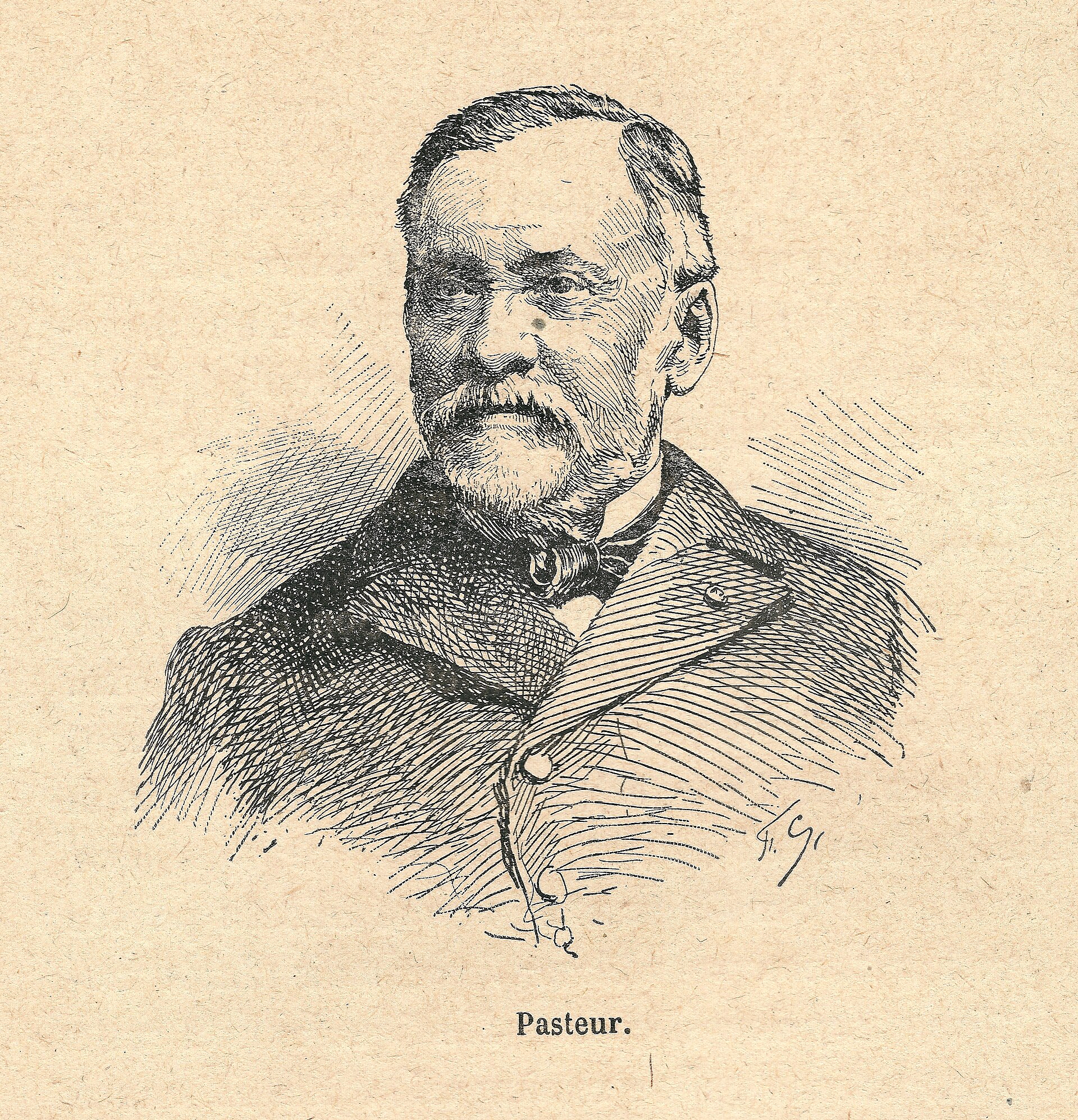
You have been listening to “Scientific Giants Who Changed Our Understanding of the World We Live In.” Today we stood in a monastic garden and a greenhouse, and watched a patient friar turn blossoms into tests, tests into tables, and tables into a grammar for heredity—a language without which Darwin’s great sentence would have remained eloquent but incomplete, and without which our medicine and agriculture and law would still guess in the dark. In our next episode we will follow the thread from seed and stable to wound and ward, crossing to Paris to watch a chemist tilt swan‑necked flasks, rescue wine and silk, and teach a skeptical century that life begets life and that invisible agents can be beaten by cleanliness and courage—Louis Pasteur, who will give germ theory its working proof and make hospitals safer and food surer.
Return to Transit