Johannes Kepler - a 17th-century astronomer
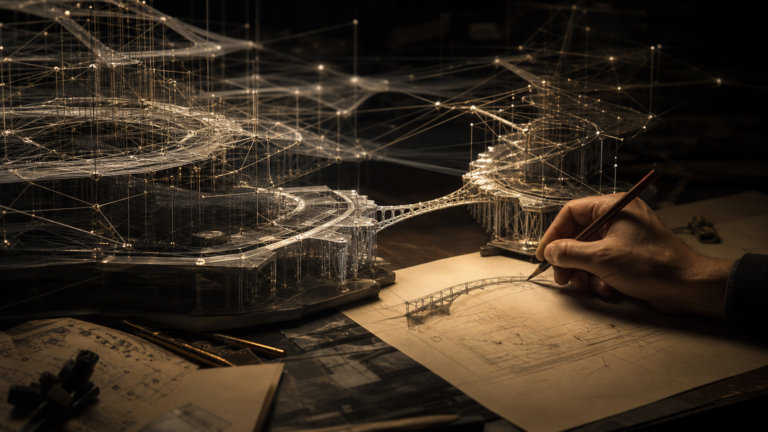
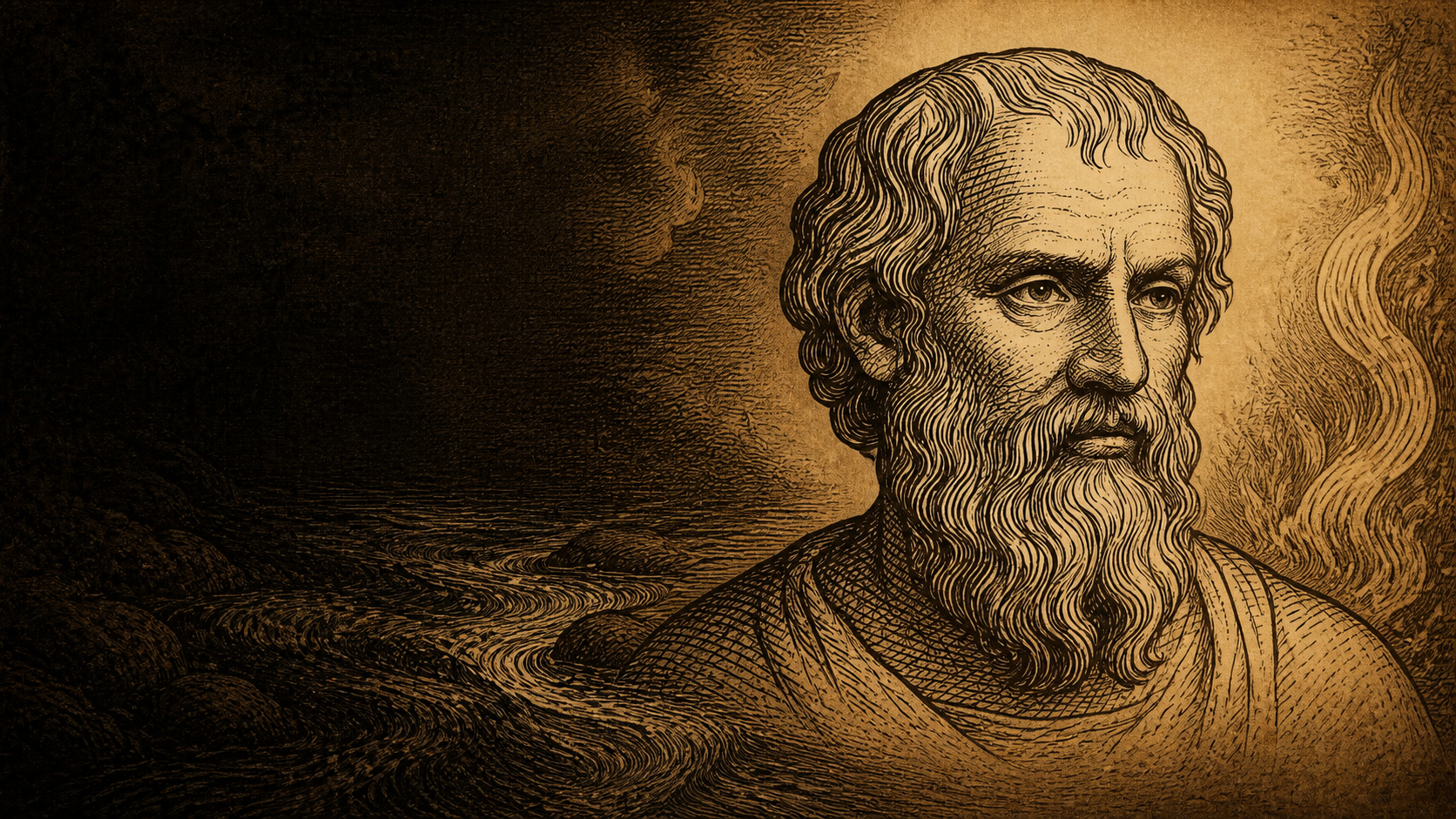
Kepler - You’re listening to “Scientific Giants Who Changed Our Understanding of the World We Live In.” Each episode stands beside one mind and follows a thread of curiosity until it ties to the world we inhabit. Today we sit at a wooden table strewn with triangles and circles, where a restless mathematician rubs his eyes and returns to an obstinate set of numbers that refuse to lie nicely. Outside the window a Central European winter gnaws at roofs and horses; inside, a lamp burns over parchment copied and recopied, measurements bled from a decade of cold nights, error bars smudged where fingers hovered too long. The mind at this table loves harmony more than argument, elegance more than compromise, and yet will spend years betraying its favorite ideas in order to be faithful to the world. He is Johannes Kepler: poor, pious, brilliant, nearsighted, fierce; a court mathematician and an exile, a defender of his mother in a witchcraft trial and the inventor of a telescope design, a writer of textbooks and of a book called New Astronomy that made planets obey curves no philosopher had wanted them to follow. He is the mathematician who taught the solar system to speak in ellipses, areas, and harmonies; the clerk who refused to round away eight minutes of error; the poet of ratios who became, in the end, a mechanic of causes. He is stubborn enough to let numbers overthrow his favorite dreams, and stubborn enough to let the heavens correct him. He will teach a culture to treat its sky not as ornament but as mechanism.
Begin, as his own imagination began, not with ellipses but with a dream of perfection. In 1596 he published a book with a title whose confidence would be hard to survive in public now, The Cosmographic Mystery. There he proposed that God had arranged the planets’ spheres so that the five Platonic solids—the only perfectly regular three‑dimensional shapes—fit one between each neighboring pair. A sphere, a cube inside, another sphere, then a tetrahedron, and so on: nested architecture as theology. It was an audacious, gorgeous scheme. It was also wrong. It predicted distances not quite where the planets truly sat. It owed too much to Euclid and too little to Mars. Kepler loved it. He would never quite stop loving it, the way a carpenter remembers the first beautiful chair he made even after turning to sturdier designs. But already, even in that early book, he was learning to write in a tense that makes science possible: the future perfect of being proven wrong. The Mystery reads like an apprentice’s letter to the world saying, “I will have been mistaken,” and if you can hear that grammar, you can hear the moral core that makes ellipses later feel inevitable.
To do that he needed data, and in 1600 he found himself in the presence of a man who possessed more and better naked‑eye measurements than anyone alive. Tycho Brahe, aristocrat of instruments and the last astronomer to command a small island for an observatory, had built quadrants and sextants of such size and stiffness that the night’s shiver could not move them, then tracked planets for decades. Kepler arrived in Prague as a hungry theorist whose mouth outran his title, and Tycho, whose temper could split a table, tested him. Behind the spectacle—Tycho’s brass, his pet moose, the dueling scars and the court—lived something Kepler needed more than any metaphor: nightly numbers measured with a routine no poet could flatter. The bargain was uneasy. Tycho wanted a calculator to turn his hoard into tables. Kepler wanted the hoard for himself. The hoard, indifferent, sat on the shelf until Tycho’s death pulled it toward Kepler’s hands. With the papers he inherited a duty: to build models that deserved such numbers.
Mars was the right teacher because it is the planet where Copernicus’s circular clockwork offended most clearly. As Earth overtakes Mars near opposition, the red planet draws a long loop against the stars. Fit it with circles upon circles and the loop will bow in places it should sharpen, bulge where it ought to narrow, drift in ways that accumulations of epicycles can mimic but cannot explain. Kepler did what our culture now calls data analysis and what then had no grand name beyond persistence. He postulated models and then assaulted them with Tycho’s positions. He invented new parameters and then watched them fail. He shaved minutes of arc the way a machinist shaves thousandths. Carelessness would have forgivable excuses—weather, the flex of wood, lantern smoke—but Kepler learned, night after night, that excuses are a kind of poverty. One night he noticed that the best circular model missed Mars by about eight minutes of arc at its worst. Eight minutes sound like the thickness of a fingernail at arm’s length. He wrote the sentence that divides two eras: “If I had believed that we could ignore these eight minutes, I would have patched up my hypothesis accordingly. But, because they could not be ignored, those eight minutes alone have led to the reformation of all of astronomy.” The world will always give you a way to lie to yourself. The way out is to decide that small stubborn facts have the right to change your mind.
He tried an oval. He tried an egg. He tried a mathematical curve hammered into obedience by willpower. He shifted the point about which motion is uniform—Ptolemy’s equant ghost still scratched around in the background—and watched each cleverness fail differently. He finally did what only tired honesty can do: he allowed the orbit to be an ellipse, a conic section he had admired as geometry and now let become astronomy. Put the sun not at the center but at a focus, and Mars stopped lying. The eight minutes stopped punishing. The loop stopped being a tantrum and became a perspective effect. Ellipses are not elegant in the way a medieval mind prized. They are not perfect circles, not eternal repeats of a single curvature; they have two foci, a shape that smells of the world’s asymmetries. But they do the job. When duty to evidence finally outweighs love of symmetry, a new beauty emerges—the beauty of a picture that works when prediction is a public promise and not a private consolation.
From that decision came the first of the laws that bear his name: each planet moves in an ellipse with the sun at one focus. The second law came when he noticed that even an ellipse could lie to a mind that craved regularity in speed. His tables told him that planets do not keep constant speed along their tracks. They laze near aphelion and hurry near perihelion. Philosophers had warned against such inconstancy because it risked making heaven too much like earth, yet the numbers insist. Kepler sought a fact that would be as strict as uniform motion but honest about the varying speeds. He found it in a curious constancy: if you draw a line from a planet to the sun and let the planet move for a fixed time, the triangle swept out by the line has the same area as the triangle swept in any other equal time. Equal areas in equal times. An areal speed that does not flinch. The universe had not surrendered uniformity entirely; it had moved it from speed to area and tied that area to the sun, as if to say: you may keep your love of constancy, but you must attach it to a cause.
He printed these discoveries in 1609 as Astronomia Nova—New Astronomy—whose subtitle tells the style as much as the content: based on causes, or celestial physics, derived from commentaries on the motions of the planet Mars. The book is a strange, wonderful object: part confession, part notebook, part polemic, part construction manual for a cosmos. He does not pretend he leapt to ellipses. He draws the reader through the missteps and the grudges, then shows the device that finally works. He is honest enough to say where he cheated and where he was tempted and what he thinks God prefers. The book’s tone vexed many who preferred astronomy as a refined art of circles. But its power is hard to resist. It acts like a tool you can borrow and then improve, not a poem you must admire at a distance.
Between books and bills he lived the life that Europe gave to clever, inconvenient men without fortunes. He took teaching posts that kept failing to pay him. He negotiated his salary with rulers under stress and lost. He watched Protestants and Catholics harden their positions and then harden their weapons, saw cities burn and languages sharpen into accusations, ferried his family through plague and winter. He wrote a textbook, the Epitome of Copernican Astronomy, that taught students a new way to imagine the solar system without making them suffer the temperament of Astronomia Nova. He calculated calendars and horoscopes and cast charts for princes because princes’ purses open for certain kinds of work and close for others. He believed in providence with a mathematician’s stubbornness—if a law of motion can be made to speak, perhaps a law of history can be glimpsed through the smoke. The result was not serenity but a steadier hand.
He watched a new star blaze in 1604. It is called Kepler’s supernova because the sky is ungrateful to those who witness rather than cause; he saw it because he looked. He lectured on it, arguing that the heavens were not immutable ornaments; change was not confined to the damp and the low. The star flared and dimmed and died while he was still rehearsing its lessons; it left no parallax that his instruments could claim. He learned to live with this: a universe large enough to make our whole orbit a speck, a sun whose light is a grammar for distances our bodies cannot guess. He preached, repeatedly, that “Where there is matter, there is geometry.” The new star made him add: Where there is geometry that changes, there is a universe that allows time to do more than repeat itself.
He also wrote about light in ways that no one before him had written so cleanly. In 1604 he published a thick volume whose title promises more than any book should and delivers more than any reader expects, Ad Vitellionem Paralipomena, which stitched and corrected the medieval optics of Witelo with lenses and images that had not yet been tamed. He placed the image where Ibn al‑Haytham had implied but not proved it: on the retina. He showed how a pinhole renders a scene crisp by letting only narrow bundles of rays reach the surface, how a lens gathers rays into a focus, how shape matters for what light will do. He suggested that light intensity declines with the square of distance, and though others would gather that law more fully into a banner later, the habit is already visible here: let geometry rule where metaphor wants to wander. He did not keep optics for philosophers. He wrote as if a lens grinder and a painter could learn from him, and they did.
He had an appetite for pattern that never fully abandoned the old hope for a music of the spheres. In 1619 he published Harmonices Mundi—The Harmony of the World—where Euclid’s shapes and Pythagoras’s ratios sit alongside an architecture of planet speeds. He chased a long suspicion: that when a planet is farthest from the sun and slowest, and when it is nearest and fastest, the ratio of those speeds will sing a note, and that the chords those notes form, taken across the family of planets, might show a pattern that the Creator would enjoy. That hunt, which could have turned into mysticism, instead yielded a third law that a first‑year physics student can use today: the square of a planet’s orbital period is proportional to the cube of its average distance from the sun. P² ∝ a³. Saturn takes longer not only because it is farther; it takes longer by a rule that fits every planet. Harmony turns out to be a fact about the way time and radius talk to one another when the sun is the place where causes gather.
He kept his eyes on use even while he reached for reasons. The Rudolphine Tables, printed in 1627 and named for the emperor who had long ago given him a title and then little money, combined Tycho’s positions, Kepler’s laws, and his stubborn surveying into the most accurate planetary tables Europe had. They placed the moon and the sun where navigators needed them, predicted eclipses with a confidence previous tables only sometimes earned, and let astrologers—who were not yet a separate species from astronomers—draw their circles with fewer lies. Practicality is not a betrayal of truth. It is where truth proves its citizenship. A sailor cares whether the moon will be where a table says; a prince cares whether an eclipse arrives at the promised hour; a court cares whether calendars coordinate rituals without embarrassment. Kepler did not sneer at such uses; he made them possible.
His curiosity leaked into subjects no one now files under “astronomy.” In a short meditation written in Prague in the winter, he asked why every snowflake seems to choose the hexagon. De nive sexangula—On the Six‑Cornered Snowflake—describes the flowerlike symmetry, guesses at close packing of circles in a plane, gestures toward efficient coverings and the way spheres stack when left to gravity and good manners. Later, when he wrote about how to measure the volume of a wine cask—Stereometria Doliorum Vinariorum—he introduced a method of slicing solids into many thin pieces and adding their volumes, practice for a calculus he did not have a name for. Kepler’s barrel rule would teach merchants how not to be cheated and mathematicians how to trust limits before limits had their grand modern name. He speculated as well on how oranges pile in a market stall; later centuries would call it a conjecture about sphere packing and spend hundreds of pages proving what his eye had suspected.
He was a Lutheran who served Catholic emperors and wrote Latin as easily as he spoke Swabian. He quarreled with people he needed and needed people he would have preferred to avoid. He moved between Graz, Prague, Linz, and Ulm, taking his manuscripts and children and debts with him, losing a first wife to fever and a son to the bad arithmetic of winter, marrying again and again counting shillings. He wrote that he was thinking God’s thoughts after Him, but his work shows something quieter and, to my ear, more durable: that thinking well is a form of obedience to a world that will not flatter us. He did not perform piety at the expense of method; he lived the piety of refusing to fudge a number because a model is beautiful. In a century that loved to hear sermons about truth, he preached with diagrams.
If you want to see the style of looking that made his laws possible, do not start at the sky. Start at a table where he is trying to understand why a glass sphere, filled with water, throws bright caustic curves on a wall. Trace the light with a pinhole and a card. Mark where it sharpens and where it smears. Watch how he turns the smears into evidence rather than excuses. Or watch him as he compares two observations of Mars separated by months and writes the difference not as a sigh but as a vector—a discrepancy with direction and magnitude that can be made to do work. He treats disagreement between model and measurement as a tool. When two curves refuse to meet, he does not plead with them; he builds a hinge and a brace until the curves share a point.
His letters to Galileo are a study in temperaments that should have been allies and mostly were but often bruised. Kepler begged Galileo to tell him what the telescope saw; Galileo, who had been mocked too many times, was slow to share. Kepler embraced ellipses; Galileo clung to circles in the sky while breaking them in mechanics. Kepler believed the moon tugs the seas; Galileo mocked lunar tides and sought a purely terrestrial proof of the earth’s motion. Kepler adored harmony; Galileo adored measurement that could be repeated by anyone with a decent workshop. Between them the modern world learned two ways of being honest at once: the way of pattern that compels and the way of apparatus that persuades. If the letters look courtly, the rivalry is real and fruitful. A culture needs both men—the one who will abandon the most beautiful idea he has ever had because a few minutes of arc hiss “liar,” and the one who will badger a prince until he funds a better lens.
He met opposition from philosophers who could not imagine the heavens made of paths without a cause that fit their catalogues. He met opposition from colleagues who liked their formulas simple in the wrong places and complicated in the wrong ways. He met indifference where he needed salary. He met war where he needed peace to print. And yet he printed. He did not write as if he were a heroic genius; he wrote as if he were a craftsman with a bench the size of a sky. He tells us about the bench’s dents and the tools that didn’t fit and the ones that finally did. He puts his vanity openly on the page so that his method doesn’t have to carry it in secret. The result is a strange intimacy: a reader four centuries later feels that he could sit at that table and be taught how to fail productively.
When you teach his laws now, you sketch an ellipse and place the sun in one focus with a smirk of inevitability. You draw equal sectors and write “areas in equal times” and then point to a plot of r² dθ/dt as a constant and feel proud. You put P² ∝ a³ on the board and invite a wave of relief because now a child can compute Jupiter’s year if a child knows Jupiter’s distance. Do not let the smoothness fool you. Each stroke of that chalk was bought with months of not knowing whether the world could be coerced into a circle, with the humiliation of discovering that your most elegant picture is a lie, with the admission that uniform speed had to become uniform area if uniformity were to survive at all. When you write his third law you are invoking a community he could only dream of: a century and a half later a man in Cambridge will prove that an inverse‑square attraction makes ellipses for orbits and that Kepler’s areal constancy is what any central force demands. In Kepler’s time, all of this is still a narrow bridge across fear—fear that abandoning the circle will mean abandoning reason.
He was funny when he could afford to be. In the preface to Astronomia Nova he jokes that if someone is offended by his style, he had better know that his book is not written for him. He compares himself to a magistrate trying to get a drunk out of the street and into a cart—sometimes the only way is to take the man’s boots off, even if onlookers think this undignified. He had the habit, rare in theologians and scientists alike, of writing down the thought he wanted to be true and then, two pages later, writing down the thought that replaced it. You can see the tracks of pride and its correction, a humility that is not self‑abasement but technique. The transparency is not confessional. It is methodological. If you can read the argument that failed, you can learn to avoid that cul‑de‑sac next time.
He cared about teaching. The Epitome was not, despite its title, small; it was a long, patient book that cut paths through the forest Copernicus had planted, using Tycho’s numbers as steppingstones and his own laws as bridges. Students used it for decades. Some learned astronomy; others learned a way of thinking. He made it possible for a provincial school to teach a radical sky without buying a scandal, because in his hands radicalism became a sequence of reasonable steps anyone with good will could climb. His prose could be tart, but it was hospitable. He wrote for students who wanted to be convinced, not dazzled.
There is a line he wrote that I think belongs beside the eight minutes: “I much prefer the sharpest criticism of a single wise man to the thoughtless approval of the masses.” He meant it, and he paid for it. Colleagues sulked. Patrons looked away. Printers hesitated. He took what he could get and kept writing. He died with a note in his pocket, a calculation toward a debt he hoped to collect. He is buried in Regensburg, the grave lost after wars rearranged the stones. The book remains. The tables remain. The laws remain. They did not arrive as thunderbolts. They were built as bridges and tested with carts.
Now and then, to keep him human, hold this picture: a thin man with a large head, near‑sighted, writing with his nose almost in the paper, pausing to warm his fingers, turning a page back to check a ratio, crossing out a phrase that sounds like theology when what he wants is a cause. In some seasons he fidgets with a lens, blowing dust off a surface and holding the glass up to catch a wedge of winter sun. In others he presses a clerk to admit that a ledger does not balance and that the emperor owes what he has promised. He walks home in the cold and tells a child that he cannot eat a number, and then he sits down and makes another set of numbers anyway because a civilization is built on numbers that hold.
We owe him the habit of accepting that orbits are not what we want but what they are, and that the laws that govern them are best written as conserved quantities and precise proportions rather than flattering myths. We owe him the telescope that sacrifices upright images for wider truth, the term “focus” that lets us talk sensibly about where light goes, the area law that whispers about angular momentum at a time when impulse and impetus were still roaming words, the harmonic law that turns the solar system from a catalog into a chorus. We owe him the permission to write down a model that makes the world stranger than we hoped, and then to love the strangeness because it is honest. We owe him a kind of joy that has nothing to do with comfort: the joy of a curve that at last goes through the points.
If you stand with him in the mind’s night and look back through the rooms we have walked—the pinhole in Ibn al‑Haytham’s shuttered chamber, the Venetian tube at Galileo’s eye, the Baltic tower where Copernicus chose a better center—you can feel the continuity of a culture that refuses to be lied to by its own conveniences. Kepler is the craftsman who says, at last, that convenience must yield. He is the clerk who mends the account until it balances because the city will otherwise fail in the winter. He is the friend who loves an idea until it becomes dangerous and then, with real grief, carries it out and replaces it with one that saves lives. Ellipses are not simply curves in the sky. They are our confession that we will let the world have the last word.
When he is gone, Newton will arrive with a calculus and a force law and a habit of silence that reads like arrogance because it is partly arrogance and partly the right tone for a new century. Newton will lay a geometry of fluxions on top of Kepler’s curves and prove that ellipses fall from an inverse‑square attraction as surely as stones fall from a tower; he will turn the area law into a theorem about central forces and the third law into a corollary about mass and orbit. He will do all this in a book whose diagrams frighten and enchant, where the old dream of causes becomes a sober machinery. But nothing that follows would feel inevitable if Kepler had not first taught us to trust a universe that has already been disciplined. The discipline is Kepler’s.
There is a chapter of his story that reads like a parable about how science and superstition braid inside the same century. In 1615 his mother, Katharina, a small, tough woman from Württemberg who knew herbs and had a quarrelsome tongue, was accused of witchcraft. Neighbors told stories of potions and cows that sickened; officials, emboldened by a climate that liked its devils vivid, arrested her. Kepler left tables and drafts and traveled to defend her. He did not mock the court. He learned the law. He wrote a point‑by‑point rebuttal of the charges, forced the judges to confront contradictions, argued that confession under threat was not truth but theater. After a long season she was released. He returned to his desk thinner, angrier, and even less willing to let the world have pretty explanations that could not endure scrutiny. The habit of exactness he demanded of astronomers he demanded of magistrates. The same mind that refused circular orbits refused circular accusations.
He wanted causes, not only curves. He speculated that a force from the sun moved the planets, something like magnetism, something like pressure from light. He did not have field equations; he had analogies and demands. The second law—the area law—told him that something like a central force must be at work, because only a sunward tug could keep the areal speed steady. He imagined the sun turning and sweeping out an influence like a rotating arm that pushed planets along. The picture is wrong in detail, right in spirit. It is an early ethical gesture toward a physics that will stop describing and start explaining. He never tired of insisting that geometry without cause is like a calendar without a clock: good for a season and then seditious.
His mathematics grew a new organ when he met logarithms. John Napier’s invention reached him as a rumor and then as pages, and Kepler loved them as a carpenter loves a new plane that cuts cleanly. Multiplication became addition; division became subtraction; exponents became products you could do with a table rather than with sleeplessness. He saw at once what this would do to computation with sines and with the long ratios that astronomical triangles give birth to. He collaborated with Henry Briggs by correspondence, edited tables, corrected errors, pushed the new method into the hands of people who had never been able to trust their own arithmetic. The Rudolphine Tables owe some of their calm not only to Tycho’s vigilance and Kepler’s laws but to the relaxed shoulders of someone who no longer has to multiply sixty‑digit numbers by candlelight.
He had a sense of theater and satire he generally kept out of his mechanics and poured into a strange little book completed around 1609, Somnium, The Dream. In it a narrator travels to the moon with the help of spirits and meets inhabitants who see the Earth rise and set. The tale borrows from lucid dreams, from Copernican arguments, from old fears of demons and new playfulness about astronomy. It is, depending on your shelf, a fable that defends a moving Earth, a joke that lands, or the first piece of what we would later call science fiction. It got him in trouble with people who wanted to read it as autobiography; it delights readers who want to understand how an astronomer smuggles argument past prejudice by telling a story that demands a new point of view.
He also built a telescope out of a different thought than Galileo’s. Where Galileo used a convex objective and a concave eyepiece, yielding an upright image but a cramped field, Kepler proposed in Dioptrice to use two convex lenses. The image would invert, yes, but the field would widen and focus would be on a real plane where crosshairs could be stretched. The Keplerian telescope was awkward at first—eyepieces wanted to be molded to the eye—but its logic was sound, and later makers would prefer it for astronomy because the sky wants truth about direction and field more than it wants comfort about which way is up. That insistence on what the job requires, not what the hand prefers, is a signature across his work.
He practiced astrology because the market demanded it. He wrote horoscopes for patrons and for himself and for the weather; he doubted the extravagances and kept the modest claims. Stars do not write your life in ink, he said; they whisper tendencies. He published a tart pamphlet, Tertius Interveniens, the Third Party, in which he tried to steer a path between gullibility and cynicism. On some days it reads like a lament that a scientist must feed his children with work that makes him frown. On others it reads like a defense of a culture where measurement rubs against myth and both come away changed. He refused to disdain the people who paid him; he tried to educate them. If modern ears want purity, Kepler’s century teaches a more adult balance: do the necessary work, and smuggle better habits in with it.
If there is a last kindness to say about him, it is that he allowed beauty to argue but never to rule. The nested polyhedra that delighted him in youth still sit, like carved toys, on a shelf in the mind’s study—pretty, useless, harmless. On the workbench rest things that look less noble and save lives in winter: tables that get eclipses right, lenses that show a sailor a reef, rules that let a carpenter measure a barrel’s volume without cheating his neighbor. He learned to move beauties aside to make room for tools. That is not disillusionment. It is wisdom.
You have been listening to “Scientific Giants Who Changed Our Understanding of the World We Live In.” Today we stood in Prague and Linz and Ulm beside a man who let numbers destroy his favorite ideas and then loved the truth that replaced them, and we watched ellipses, areas, and harmonies turn into laws that could not be shouted down. In our next episode we will follow that inheritance into a small room in Cambridge where a reclusive scholar leaves chalk scars on a table and writes a book that binds the moon to the apple and the tides to the comets—Isaac Newton, who will turn Kepler’s hard‑won grammar into a dynamics the world still speaks. Until then, thank you for your attention and your time. This episode was written as a continuous story for the ear; if it moved you, bring a friend along next time. Until our next hour together, keep an eye on the stubborn errors that demand you change your mind—they are closer than they look.
Return to Transit